ASSESSMENT / APPLY THE CAPABILITY
A2 — Restore the Relay
A paired recovery challenge joining electronic diagnosis, digital evidence, permission repair and explicit handoffs.
IN PERSON (PREFERRED) · ONLINE AVAILABLE
What this assessment develops
Diagnose a fault, verify a source, restore appropriate permissions and communicate an unambiguous handoff when the conditions change.
The online environment also supports preparation and revision between classes. Campus packs specify the proposed teaching setup; physical apparatus has not been validated by this website prototype.
How to participate
In person is the preferred route. Use the campus teaching pack in the facilitated session, with the supplied apparatus or paper models and two distinct sending and receiving responsibilities. Keep your station sheets, predictions, revisions, receiver acknowledgements and explanation. These form the practical record; an additional browser run is not required.
Online, if you cannot attend: use the equivalent activity and control instructions below. The 3D environment supports the same reasoning, rehearsals and evidence requirements. Both routes use this brief’s deliverables and rubric. Label measured, paper-model and simulated results accurately.
Online control guide: restore a relay as a pair
Your task: use your circuit-diagnosis evidence to verify the supplied relay, justify its archive and permission, and send a precise acknowledged handoff. This combines Weeks 5–8. Share one browser or screen and rotate control; there is no networked multiplayer.
- Inspect the alternate worked example if useful. Divide the information: the sending student controls Systems/Investigator; the receiving student controls Coordinator. Each owns facts the other must request.
- Open a new Baseline trial and inspect the mission console. Bring the sender’s Lab 5 diagnostic trace showing how a chosen test distinguished plausible faults. In this compact trial, Power bay offers one combined Measure supply and fuse test, a replacement and a switch. Predict what that test can establish, retain its original result before changing the fuse, then verify the load. The compact check alone does not demonstrate independent test selection.
- The sender compares the current signed source and copy records in Control room, then derives permission expectations from the mandate. Select and test a supported copy and policy edit. The receiver asks what each check establishes, including its limits.
- The receiver inspects their acceptance card in Archive. Communicate the item, destination, condition and exact read-back code to the sender. Confirm the verified profile before submitting Send structured handoff. A vague acknowledgement or a stale code fails the receiving condition.
- At Dispatch, transmit only after the required evidence is complete. Collect the acknowledgement, check the receiving terminal and deliver it. Finish and export the trial; preserve the checkpoint.
- Swap responsibilities and run Conflicting archive, or the published maintenance-hold case with its changed handoff. The source or acceptance requirement has changed; the old answer is insufficient. Retain both records and explain which messages prevented a wrong transmission.
- Keep the full permission audit and changed-card communication evidence from Labs 7–8. Assemble the joint explanation and individual contribution statements after playing.
The role cards stay accessible for solo practice. In paired assessment, give each person their card and exchange the necessary information aloud or in an accessible text channel; do not simply let one person operate both roles without documenting it.
You are finished when: you have a completed relay record, a preserved checkpoint and revision, evidence of role rotation, and the full submission bundle. The compact trial does not replace the lab records that demonstrate all nine policy checks and read-back under changed conditions.
Playing in fullscreen: choose Fullscreen mission. Use its Mission & controls panel for the journal, role and area switches, and equipment. Scroll over the scene to zoom; click and drag to turn with the cursor free. Press X to lock it for mouse-look and X again (or Tab) to free it for scrolling and choosing options. Esc or Exit fullscreen returns to the page. The joint written account comes after playing.
The brief
In pairs, restore a fictional recovery relay. The sending role holds equipment/source evidence; the receiving role holds the acceptance conditions and current acknowledgement code. Rotate roles so each person explains the diagnostic evidence and performs communication. The compact relay checks application; the linked Lab 5 trace demonstrates independent diagnosis.
The relay challenge combines the Week 5 circuit, Week 6 archive comparison, Week 7 permission matrix and Week 8 explicit handoff. Earlier observation and spatial skills help you inspect the system. Use the campus trial pack for a tabletop equivalent.
Checkpoint and final deadline
Checkpoint: 23 April 2027, 17:00 Canberra time. Preserve your initial circuit diagnosis, source comparison and repaired permission matrix. Record which role performed each check. This checkpoint is formative and does not create an additional assessment weight.
Final: 30 April 2027, 17:00 Canberra time. Complete the coordinated handoff and changed-condition response. Preserve both the initial checkpoint and final record.
What you hand over
Where each submission item comes from
Assemble one labelled bundle using the assessment template. One export can support several rows; identify the relevant actions or sections.
| Submission item | Where to get it and what to include |
|---|---|
| Completed relay record | At Dispatch, finish the trial and select Export assessment record. Keep the original circuit measurement, repair and verification, the archive selection, permission repair and item/destination/condition handoff and exact receiver read-back, followed by the performed transmission, receiving-terminal check and delivered acknowledgement. Alongside the export, identify the signed source shown in the Control room and explain how the selected copy matches it. Campus students use the campus trial event record. |
| Independent circuit diagnosis | Attach a Lab 5 record, or its campus equivalent, showing competing explanations, your selected discriminating test, original readings, justified repair and verification. Cite a changed-condition attempt. The relay’s single combined measurement supplies a narrower application check, not this full diagnosis evidence. |
| Full permission audit | Use Lab 7 or its campus worksheet. Preserve the faulty and repaired matrices, showing the expected and observed results for all nine role/action combinations, including permitted and denied actions. The trial’s single permission repair is the compact check; this record supplies the full audit. |
| Acknowledged handoff under changed conditions | Use Lab 8 or its campus role cards. Keep the destination, quantity, code and acknowledgement, including a changed-card attempt. Record what the receiver read back and what the sender confirmed. The relay trial records item, destination, condition and the current receiver code; the lab adds quantity-sensitive communication under a different change. |
| Initial checkpoint and revision | Export the initial work by the checkpoint and keep that file. Then retain the amended-archive trial or Lab 7 maintenance-hold record, identifying the new authority and what changed. Save relevant lab attempts in the skills passport and use Export learning record for the readable evidence. |
| 500–700-word joint explanation | Write how diagnosis, evidence and communication affected your decisions. Explain the changed condition and one misunderstanding or uncertainty, including how you addressed it. Refer to the labelled records above. |
| Responsibilities and contributions | Add a table naming who operated and who read/recorded at each stage, including at least one meaningful swap. Each student writes an individual contribution statement and declares assistance. The event log’s role labels need your names and account to establish who did the work. |
The practical evidence and your explanation together form the submission. Keep the original checkpoint and revised files separately so the change can be followed.
The changed situation
Choose the published maintenance hold or amended archive reference as a revision case. Preserve the old decision, state the new authority and change only the affected expectations. For your changed handoff evidence, complete Lab 8’s Transfer challenge using its published destination, quantity and code, then document the read-back and acknowledgement. Name the revision case and the handoff case in your account so each record is clear.
A justified change of archive copy is stronger than repeating a once-correct selection after the reference changes. Denying all permissions is not a useful repair when legitimate read and certification work must continue.
How to work as a pair
Use one shared browser state with rotating control, or divide role packs and communicate through a shared screen. There is no live multiplayer server. The selected role label identifies the action source but is not proof of a person’s identity; your contribution account supplies that context.
A partner’s absence does not erase completed individual work. Preserve it and follow the published contribution policy. Feedback is scheduled within seven days to inform the final team mission.
Criterion-specific performance standards
Diagnosis — 30%
- Outstanding: Isolates the circuit and policy faults using discriminating checks and verifies the resulting system.
- Competent: Diagnoses the main faults and provides broadly sound checks.
- Developing: A working state is reached but key causes or checks are missing.
- Insufficient: No supported diagnosis or unresolved contradiction with the supplied rules.
Evidence — 20%
- Outstanding: Uses source identity, completeness and the current signed reference; limits are explicit.
- Competent: Selects relevant records and supports the main conclusion.
- Developing: Relies on labels or timestamps without checking their authority.
- Insufficient: No usable source comparison or unsupported evidence claims.
Coordination — 25%
- Outstanding: Both roles contribute, rotate and use precise instructions with documented read-back.
- Competent: Responsibilities and handoffs are clear with minor gaps.
- Developing: One role dominates or communication assumptions remain unresolved.
- Insufficient: No credible paired coordination or contribution evidence.
Adaptation — 15%
- Outstanding: Explains and tests the changed mandate or handoff while preserving the earlier state.
- Competent: Makes a justified revision with some testing.
- Developing: Changes the answer without explaining the affected requirement.
- Insufficient: Ignores the changed condition or overwrites the only original record.
Traceability — 10%
- Outstanding: The joint account reconstructs actions, roles, versions and assistance without ambiguity.
- Competent: Most decisions and contributions can be followed.
- Developing: Missing role labels or version links make important work difficult to assess.
- Insufficient: Unusable record or unclear authorship.
Format, export and access
Use the downloadable template, retain editable source and export a readable record. The website provides downloads and local practice; it does not submit to an institutional system. The browser and campus routes assess the same concepts and problem-solving outcomes. Neither automatically certifies physical dexterity.
All due times use 17:00 Canberra time on the published date. Policies and support explain attribution, accessible alternatives, contribution disputes, saving and extensions.
How it is marked
| Criterion | Weight |
|---|---|
| Diagnosis | 30% |
| Evidence | 20% |
| Coordination | 25% |
| Adaptation | 15% |
| Traceability | 10% |
PLAYABLE ASSESSMENT
Restore the Relay
A silent relay, a faulty circuit and two competing records. Restore the signal through precise collaboration.
Your operation: inspect the mission console to discover the problem. Explore the labelled areas, use their equipment and test your reasoning. A verified solution changes what the field console can do. Then perform the release, transmission or support handover and finish at the receiving point. Walk or tap the floor in 3D; the equivalent field buttons work with keyboard and touch. Keep full screen open throughout.
Scene guide · people, evidence and object placement
Who takes each relay responsibility
The pair assessment trial combines a circuit, archive comparison, permissions and handoff.
- Your part
- You control the student avatar. The selected crew role determines your available responsibilities and tools; changing roles does not introduce another person into the room.
- Your instructor
- Mara stands in the marked teaching bay outside the investigation area. She guides the exercise. Her presence, appearance and idle gestures are not clues about what happened in the case.
- People in this scenario
- You and your partner record your own contributions. Systems Specialist, Investigator and Coordinator are selectable responsibilities. Mara is the instructor; the receiving role is represented by the handoff record.
- What counts as evidence
- Use the circuit measurements, current source reference, role/action policy and complete handoff with the receiving role’s current acknowledgement code. Sender and receiver hold distinct information. Observer, technician and registrar are permission identities, distinct from the students.
- Why the objects are here
- The bench circuit, archive display and dispatch controls are teaching stations. A character standing near them does not operate or approve them automatically.
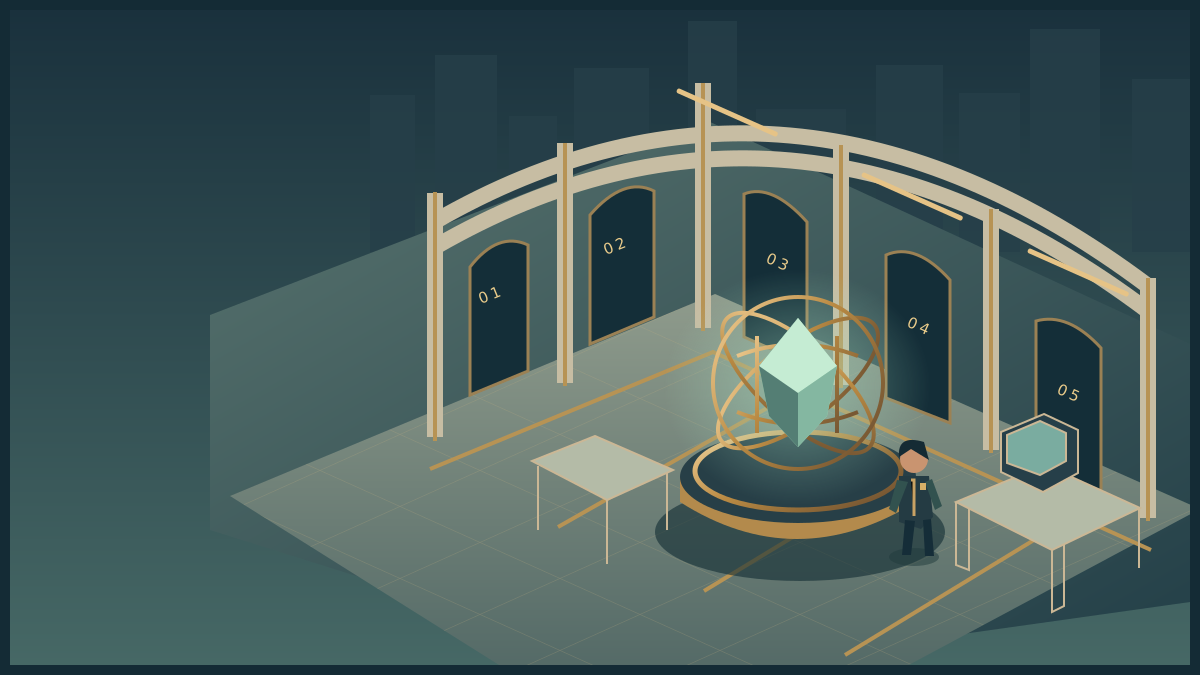
Meridian Station
Explore the room. Inspect its instruments. Discover the obstacle, use your skills and complete the operation.
Loads on request · all equipment also has accessible controls belowHow to move, inspect and complete the activity
Use WASD or arrow keys to walk. Press E near an instrument to examine it. Inspect means read its details; Use equipment performs the action named in its status message. The task controls let you choose exact settings and test a solution. Once verified, use the mission station to put it into effect, collect the resulting evidence or cargo, follow its checkpoints and complete the handover at the receiving station.
Scroll over the scene or use Zoom + / Zoom − for a closer or wider view. Click and drag to turn whenever the cursor is free. Choose Fullscreen mission to keep the scene, mission instructions and all task controls together. Fullscreen starts with a free cursor so you can scroll the panel and choose options. Press X or Lock cursor (X) to turn by moving the mouse. Press X again to free the cursor and return to click-and-drag turning. Tab also frees the cursor. The X shortcut stays inactive while typing or choosing a form value. Press Escape or Exit fullscreen to return to the page. On touchscreens, drag to look and use the zoom buttons. If your browser cannot enter native fullscreen, the mission expands to fill its window.
The activity below also works without 3D. Follow its objective and feedback, then save your record. Walking around the scene is optional and does not complete the lab by itself. The campus worksheet provides a printable alternative.
ASSESSMENT / PRACTICAL TRIAL
Your mission
Complete four relay tasks: diagnose the circuit, verify the archive, repair permissions and communicate a precise handoff. Then finish at Dispatch.
The trial is ready to play. Your actions save locally as you go. Solo practice allows role switching; pairs and teams can share a screen and rotate control.
DO THIS NEXT
Inspect the mission console
The relay is dark. Competing copies and a defective permission rule make blindly restoring its power insufficient. Inspect it before beginning the equipment work.
Done when the mission console records your inspection and reveals the equipment needed.
FIELD OPERATION · Briefing
A signal that reaches someone
Restore the relay, transmit the verified record and return with its acknowledgement.
The relay is dark. Competing copies and a defective permission rule make blindly restoring its power insufficient.
Inspect the mission station to begin your investigation.
Nothing collected.
Mission actions become available when the activity loads.
Mission record and accessible controls
These controls perform the same actions as the marked stations in the scene. Use them with a keyboard or touch, or when graphics are unavailable. Equipment tests establish whether your intervention is supported. The final handover records a mission outcome; your explanation is assessed separately.
- No mission actions yet.
Observer / Navigator briefing
Evidence auditor: compare the sender's source, receiver's request and action record. A recent copy may still lack authority. Ask what each proposed test can establish.
Read all role packsRoom controls and feedback
Your saved mission is loading. The instructions and role packs are available below.
Use Observer / Navigator for all three tasks in this room.
OBSERVATION · MEMORY · SPATIAL REASONING
The room is your first instrument.
Inspect the inventory and source records needed for your claim. Notes remain available. Recall is optional; explain when it helps and when a written record is more dependable. Transport planning needs the map; stationary outcomes do not.
Use Systems Specialist to change gears, release the brake and turn the crank.
MECHANICAL DIAGNOSIS
The recovery cradle.
A twelve-tooth input gear drives the cam. The cradle requires half-speed output in the opposite direction. Inspect the interlock before applying another turn.
Verify the archive profile in the Control room before testing the final cradle.
Use Systems Specialist. Measure the original fault before replacing it.
ELECTRONICS · MEASUREMENT
A complete path.
The training supply is 6 V. Power flows through the fuse, switch, lamp and return. Find the break before replacing anything.
Use Investigator for the archive comparison and permission repair.
DIGITAL INVESTIGATION · PERMISSIONS
Which copy can you justify?
Fictional application: permission defect
Observer/read is allowed. Technician/service is allowed. Registrar/certify is allowed. Compare that mandate with the installed entries: observer/read ALLOW; observer/certify ALLOW; technician/service ALLOW; registrar/certify ALLOW. Derive which change is justified.
Use Coordinator to complete the three handoff fields. Agreement and route are final-project tasks.
COMMUNICATION · NEGOTIATION · NAVIGATION
An agreement that can be acted on.
“Preserve the original. Tell me who receives the archive. Then we can agree a recovery.”— Meridian custodian
Switch to Coordinator to inspect the receiver’s acceptance card. The sending analyst holds the source evidence; exchange the relevant facts.
Route model
Upper and lift routes depend on the lift supply. The service passage is independent and includes two marked sensor pauses. Consult the scenario bulletin before committing.
Optional planning notes and preserved versions
Use Coordinator to preserve your plan versions. Any role can finish once the required objectives are met.
PLANNING · ADAPTATION · DEFENCE
Keep the decisions, including the ones you changed.
Record an original plan before your revision. A revision should explain a new observation, a tested assumption or a changed condition. Earlier versions remain intact. A changed approach requires a new version; name why its checks are needed, which can be omitted and what remains unresolved.
Complete the trial record
These buttons record a completed operation; they cannot perform it for you. Finish the field handover first. No ending is an academic grade.
AFTER ACTION
Export the trial record. Add your evidence, before/after policy, handoff and contribution records, plus the 500–700-word joint explanation required by the brief.
Now explain your observations and decisions using the exported action record. Compare a different scenario: which skill transferred, which assumption changed, and what remains uncertain?
Action record and previous runs
Four roles. One shared operation.
Use one browser, share a screen or rotate control. Solo students switch roles. Local role selections record practice responsibility, not verified identity.
Observer / Navigator
Evidence auditor: compare the sender's source, receiver's request and action record. A recent copy may still lack authority. Ask what each proposed test can establish.
Scene inventory · Route overlay · Orientation board
Systems Specialist
Sending technician: the supply is 6 V through fuse, switch, load and return. This relay provides one combined source-and-fuse measurement. Predict and retain its result before replacement, then verify the load. Bring the Lab 5 trace for evidence of independent test selection.
Cutaway mechanism · Voltmeter · Service diagram
Investigator
Sending analyst: compare complete copies with the current signed source at Control. Verify integrity and authority before instructing the receiver. You do not own the receiving desk's acknowledgement code.
Replica records · Signed source · Permission test
Coordinator
Receiving operator: Dispatch accepts a verified archive after its integrity check. Read the current receiving card at Archive, then send back its acknowledgement code with the item, destination and condition. Ask the sender to confirm the actual profile first.
Custodian council · Handoff composer · Plan versions
Static mission worksheet and governing rules
Use the assessment’s campus pack for a complete paper route. Record your objective, inspect the supplied inventory, compare sources and predict the result of each test before acting. Keep observations separate from interpretations. Notes are permitted; memorisation is optional.
The workshop’s driver has twelve teeth. Output turns = driver teeth ÷ follower teeth × input turns, with the opposite direction. The holding brake blocks motion. The series supply connects source, fuse, switch, load and return; measurements distinguish a broken path from a mistaken equipment assumption. Isolate the supply before replacement.
A complete archive must match the current signed source. A later timestamp does not establish authority. The handling mandate requires preservation of the original and a named responsible recipient. The permission mandate permits observer/read, technician/service and registrar/certify; compare installed entries against it. The receiving desk accepts a verified archive at Dispatch after its integrity check.
A1 requires a supported workshop release with orientation and a tested half-speed model. A2 requires diagnosed transmission power, a justified copy, correct permission and a receiver’s exact read-back. The assessment briefs identify supporting lab records and the independent written account.
Before filing an outcome, perform its release, transmission or support action and handover. Retain the action record, initial/revised plan, scope rationale and limitations. No ending supplies an academic grade.
YOUR SKILLS PASSPORT
Keep what you learn.
Practice stays in this browser. Export it to take your work with you.
Which save or export should I use?
- Record attempt in skills passport on a lab keeps that phase's actions and your explanation. Save it before switching to a different phase.
- Export backup JSON downloads a backup you can bring back with Restore backup.
- Export learning record creates a readable account for your portfolio. Print record prepares the same kind of evidence for printing.
- Export assessment record inside a mission keeps that trial's decisions and debrief. Keep your written assessment explanation with it.
These controls keep your work; they do not submit it to an institution. Export a backup before changing browser, clearing browser data or resetting the passport.
Preparing your saved progress…
SLOP UNIVERSITY · THE ACADEMY OF IMPOSSIBLE SKILLS
An original fictional course. Progress records practice, not academic certification.