The method behind this example
Separate a wrong ratio from blocked movement with a discriminating test.
Your independent challenge: The assigned driver, readiness state and changed output differ. Inspect the state before copying a sequence of repairs.
The example includes the practical intervention and its required handover.
Start this worked example
- Choose Watch the worked example. The student demonstrator explains the task, talks through each action, then reviews the observations and finished submission. Narration starts with this click; Mute narration keeps the same experience captioned.
- Choose Take control to try the current chapter. Follow its prompt, change the labelled controls and select Test my decision.
- Read the feedback, retry if needed, then continue with Next chapter. Each checked chapter provides evidence for one connected operation.
- After every chapter check, return to the mission station, perform the intervention, collect its package and follow the marked checkpoints to complete the handover. Watching performs these same actions with narration. Direct chapter access is a partial preview until the full evidence and handover are complete.
- Use Fullscreen mission after opening the scene to keep the instructions, chapter controls and equipment together. Reflections and exports come after your practical attempt.
This is an alternate example, not your assigned exercise. Your course task is linked after the player.
YOUR SKILL
Mechanisms and causal diagnosis
A NEW SETTING
A model lift has an 18-tooth driver and must deliver three output turns from five input turns.
WHAT CHANGES
New tooth counts, input turns and cam angle prevent copying the assigned mechanism sequence.
Scene guide · people, evidence and object placement
People and the model lift
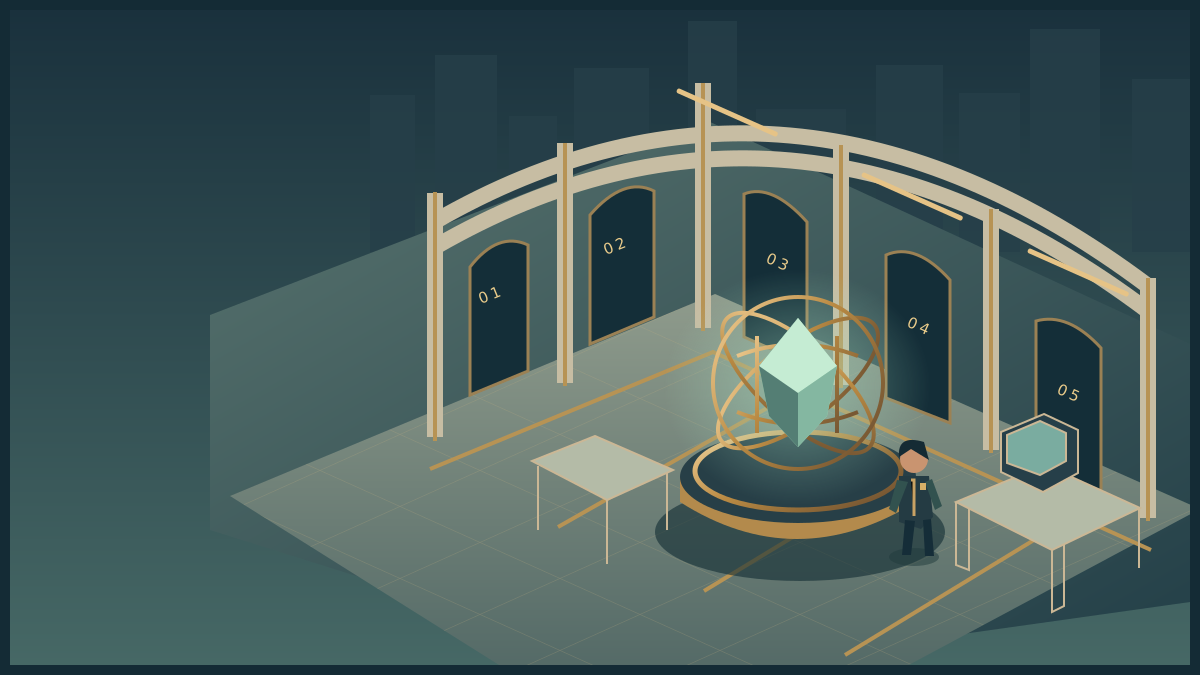
A conservatory lift represented by an exposed mechanical training rig.
- Your part
- Watch follows a worked solution. Take control lets you move the student avatar and try its decisions. The demonstrator in the explanation is modelling a solution, not an extra witness in the story.
- Your instructor
- Mara stands in the marked teaching bay outside the investigation area. She guides the exercise. Her presence, appearance and idle gestures are not clues about what happened in the case.
- People in this scenario
- The example learner diagnoses and operates the lift model. Mara's gestures explain the task; they do not complete a repair.
- What counts as evidence
- Use the eighteen-tooth driver, specified follower, interlock, cam and spring conditions.
- Why the objects are here
- The bench assembly is the lift's teaching model. Its gear output represents the specified lift behaviour.
Mechanics Workshop
Watch the complete alternate example. Take control of the equipment whenever you are ready.
An alternate example · separate from your assessed workHow to move, inspect and complete the activity
Use WASD or arrow keys to walk. Press E near an instrument to examine it. Inspect means read its details; Use equipment performs the action named in its status message. The task controls let you choose exact settings and test a solution. Once verified, use the mission station to put it into effect, collect the resulting evidence or cargo, follow its checkpoints and complete the handover at the receiving station.
Scroll over the scene or use Zoom + / Zoom − for a closer or wider view. Click and drag to turn whenever the cursor is free. Choose Fullscreen mission to keep the scene, mission instructions and all task controls together. Fullscreen starts with a free cursor so you can scroll the panel and choose options. Press X or Lock cursor (X) to turn by moving the mouse. Press X again to free the cursor and return to click-and-drag turning. Tab also frees the cursor. The X shortcut stays inactive while typing or choosing a form value. Press Escape or Exit fullscreen to return to the page. On touchscreens, drag to look and use the zoom buttons. If your browser cannot enter native fullscreen, the mission expands to fill its window.
Choose Watch to follow the worked example, or Take control to try it yourself. The transcript and completed example remain available if 3D is unavailable. Demonstrations never change assessed progress.
I need to prepare a model conservatory lift and explain its behaviour. I will calculate a gear ratio, check the interlock, cam and spring, run the model, and revise it for a changed output. My diagnosis must distinguish a wrong ratio from a blocked mechanism. The method we are practising is: Separate a wrong ratio from blocked movement with a discriminating test.. Our field objective is: Commission the model lift for a supported specimen carriage. The wrong ratio or unresolved cam, spring or interlock condition stops reliable motion. I will perform the supported intervention and handover. You can pause, mute, replay, or take control at any point. The captions show the same explanation.
Narration starts after you choose Watch or Play. Captions remain available if this browser has no working voice.
Perform the practical outcome
Each chapter provides evidence for this operation. Inspect, investigate, act, and complete the handover.
FIELD OPERATION · Briefing
Operation Conservatory Lift
Commission the model lift for a supported specimen carriage.
The wrong ratio or unresolved cam, spring or interlock condition stops reliable motion.
Inspect the mission station to begin your investigation.
Nothing collected.
Mission actions become available when the activity loads.
Mission record and accessible controls
These controls perform the same actions as the marked stations in the scene. Use them with a keyboard or touch, or when graphics are unavailable. Equipment tests establish whether your intervention is supported. The final handover records a mission outcome; your explanation is assessed separately.
- No mission actions yet.
The complete transcript and finished example are available below while the player loads.
THE DEMONSTRATOR’S REASONING
Compute before choosing parts
The published requirement is three output turns from five input turns. The driver has 18 teeth. Solving 18 ÷ follower × 5 = 3 gives a 30-tooth follower.
Why this matters
A gear choice should follow the required motion, not the visual size of the part.
A plausible mistake
Installing a bigger-looking gear without a calculation can produce an unexplained result.
WHAT THE DEMONSTRATOR DID
YOUR LEARNING CONTROLS
Make the skill your own.
Select the follower tooth count.
Watch the apparatus change as the student demonstrates. Take control whenever you want to test the same idea yourself.
BASED ON YOUR ATTEMPTS
Watching and practising are recorded separately in this visit. These examples do not change your assessed work or skills passport.
NOW TRANSFER THE SKILL
Carry the method into your own work.
The assigned driver, readiness state and changed output differ. Inspect the state before copying a sequence of repairs.
A COMPLETE WORKED SUBMISSION
Completed mechanism diagnosis — conservatory lift
Example work from this demonstration's scenario. Use it to understand the expected evidence and explanation, then make your own decisions in the assigned activity.
Download the complete exampleRead the finished work
Completed demonstration example — conservatory lift
This alternate mechanism uses an 18-tooth driver, different turn requirements and a 270-degree cam.
Causal model
Input rotation → external gear pair → cam → spring-return follower → lift output. The interlock blocks cam adjustment until released. Motion also requires the spring and specified cam phase.
Prediction and diagnosis
For three output turns from five input turns: follower = 18 × 5 ÷ 3 = 30 teeth. The driven gear turns opposite the driver. A correct ratio did not initially produce a ready mechanism because the interlock was engaged and the return spring absent.
I released the interlock, set the cam to 270 degrees and attached the spring. I retained the ratio calculation because it was not contradicted by the readiness fault.
Verification
Five input turns produced three opposite output turns. Both the amount and direction matched the prediction.
Transfer
The changed task required two output turns from four input turns. I selected 36 follower teeth: 18 ÷ 36 × 4 = 2. The cam and spring conditions remained valid.
Reflection
The useful distinction was between an incorrect transmission ratio and a blocked dependency. Changing gears would not have released the cam. In a new apparatus I would record the output requirement, list readiness conditions and test both separately.
Named output: mechanism-diagnosis. This is a model, not a real lock or physical qualification.
Method to carry forward
Separate a wrong ratio from blocked movement with a discriminating test.
The assigned driver, readiness state and changed output differ. Inspect the state before copying a sequence of repairs.
The complete example explains one defensible approach. In your own challenge, select observations and tests from the supplied rules, keep your prediction separate from the result, and justify both the checks you perform and those you omit.
Complete transcript and decisions · readable without JavaScript
Before we begin · expected task and evidence
I need to prepare a model conservatory lift and explain its behaviour. I will calculate a gear ratio, check the interlock, cam and spring, run the model, and revise it for a changed output. My diagnosis must distinguish a wrong ratio from a blocked mechanism. The method we are practising is: Separate a wrong ratio from blocked movement with a discriminating test.. Our field objective is: Commission the model lift for a supported specimen carriage. The wrong ratio or unresolved cam, spring or interlock condition stops reliable motion. I will perform the supported intervention and handover. You can pause, mute, replay, or take control at any point. The captions show the same explanation.
1. Compute before choosing parts
What I need to do: Step 1. Compute before choosing parts. I use the required output to calculate the follower size before choosing a part: eighteen divided by follower teeth, multiplied by five, must equal three.
Supplied context: The published requirement is three output turns from five input turns. The driver has 18 teeth. Solving 18 ÷ follower × 5 = 3 gives a 30-tooth follower.
Watch my actions: For "Driven gear teeth", I enter 30 teeth. I check the demonstrated result.
What I observed: The selected pair predicts three output turns for five input turns. A gear choice should follow the required motion, not the visual size of the part.
Why: A gear choice should follow the required motion, not the visual size of the part.
Decision: Select the follower tooth count.
- Driven gear teeth: 30 teeth
Result: The selected pair predicts three output turns for five input turns.
Common mistake: Installing a bigger-looking gear without a calculation can produce an unexplained result.
2. Find the blocked dependency
What I need to do: Step 2. Find the blocked dependency. The ratio is correct, but the engaged interlock blocks the cam. I address that dependency instead of changing the gears again.
Supplied context: The ratio is correct, but the cam cannot move while the interlock is engaged. The demonstrator stops trying to rotate it and releases the interlock. The demonstrator separates two explanations: the transmission ratio can be correct while a physical interlock prevents movement. Inspecting that dependency is more informative than replacing a gear.
Watch my actions: I set "Interlock engaged" to no. For "The ratio is correct but the cam cannot move: what distinguishes the cause?", I choose "Inspect the interlock state before changing gears". I check the demonstrated result.
What I observed: The dependency blocking cam adjustment is removed. A readiness fault and a ratio fault require different corrections. A useful diagnostic action has different implications for competing causes.
Why: A readiness fault and a ratio fault require different corrections. A useful diagnostic action has different implications for competing causes.
Decision: Disengage the interlock.
- Interlock engaged: No
- The ratio is correct but the cam cannot move: what distinguishes the cause?: Inspect the interlock state before changing gears
Result: The dependency blocking cam adjustment is removed.
Common mistake: Changing the gear cannot release an interlock.
3. Set the required phase
What I need to do: Step 3. Set the required phase. With the interlock released, I align the cam with the mark required by this model's rule sheet.
Supplied context: The lift's rule sheet requires a 270-degree cam position for this demonstration. With the interlock released, the demonstrator aligns the cam to that mark.
Watch my actions: For "Cam angle", I enter 270 degrees. I check the demonstrated result.
What I observed: The cam phase now matches the published lift requirement. The same gear ratio can transmit motion at an unsuitable cam phase.
Why: The same gear ratio can transmit motion at an unsuitable cam phase.
Decision: Set the cam angle.
- Cam angle: 270 degrees
Result: The cam phase now matches the published lift requirement.
Common mistake: Using the academy lab's familiar 180-degree setting would ignore the changed specification.
4. Restore the return path
What I need to do: Step 4. Restore the return path. I attach the missing return spring so the follower can complete its intended cycle.
Supplied context: The follower's return spring is detached. The demonstrator attaches it before cranking, so the follower can return through the intended cycle.
Watch my actions: I set "Return spring attached" to yes. I check the demonstrated result.
What I observed: The complete mechanism can now execute its modelled cycle. Readiness includes both a released obstruction and the required supporting components.
Why: Readiness includes both a released obstruction and the required supporting components.
Decision: Attach the spring.
- Return spring attached: Yes
Result: The complete mechanism can now execute its modelled cycle.
Common mistake: A partly assembled mechanism can appear ready because the gears themselves turn.
5. Run and compare
What I need to do: Step 5. Run and compare. I apply five input turns and compare the output amount and direction with my prediction. Movement alone is not enough.
Supplied context: Five input turns rotate the driven shaft three turns in the opposite direction. The demonstrator compares that motion with the prediction instead of treating movement alone as success.
Watch my actions: For "Input turns", I enter 5 turns. For "Driven direction", I choose "opposite". I check the demonstrated result.
What I observed: Observed motion matches both magnitude and direction. A moving mechanism can still deliver the wrong amount or direction of motion.
Why: A moving mechanism can still deliver the wrong amount or direction of motion.
Decision: Apply five input turns and predict the driven direction.
- Input turns: 5 turns
- Driven direction: opposite
Result: Observed motion matches both magnitude and direction.
Common mistake: 'It moves' is not enough to verify a specified output.
6. Revise for a smaller output
What I need to do: Step 6. Revise for a smaller output. The output requirement has changed. I recompute the gear ratio while retaining the cam and spring checks that remain valid.
Supplied context: The new task asks for two output turns from four input turns using the same 18-tooth driver. The follower must now have 36 teeth; the still-valid readiness conditions remain.
Watch my actions: For "Revised follower", I enter 36 teeth. For "Revised input", I enter 4 turns. I check the demonstrated result.
What I observed: The revised ratio produces the required output without changing unrelated components. Transfer requires changing the parameter implicated by the new requirement, not blindly replaying the earlier setup.
Why: Transfer requires changing the parameter implicated by the new requirement, not blindly replaying the earlier setup.
Decision: Choose the new follower and input turns.
- Revised follower: 36 teeth
- Revised input: 4 turns
Result: The revised ratio produces the required output without changing unrelated components.
Common mistake: Retaining the 30-tooth follower would produce 2.4 turns.
Performing the field operation
All chapter evidence checks are complete. I return to the mission station and commission the checked lift cycle. I am putting the verified solution into effect, then checking what changes.
I collect Specimen-lift service record. The verified intervention released this package. I now carry it through the marked handover route.
I carry Specimen-lift service record to Lift landing. I confirm this checkpoint before continuing so the handover trace records the route actually followed.
I carry Specimen-lift service record to Specimen receiving bay. I confirm this checkpoint before continuing so the handover trace records the route actually followed.
At the receiving station, I deliver the lift handover record. I check the receipt before calling the field operation complete.
My observations and finished submission
With an eighteen-tooth driver, a thirty-tooth follower and five input turns, I predicted three opposite output turns. I released the interlock, set the cam to two hundred and seventy degrees, and attached the spring before running. The output matched the prediction. For two output turns from four input turns, I changed the follower to thirty-six teeth and retained the valid readiness conditions. Those calculations, checks and results complete my mechanism diagnosis. Separate a wrong ratio from blocked movement with a discriminating test. Open "Read the finished work" or download the complete example to inspect the evidence and explanation together. The assigned driver, readiness state and changed output differ. Inspect the state before copying a sequence of repairs.
The complete submission is available in Read the finished work above and as a Markdown download.