THE WHOLE PRODUCT Act V · iPod · 2001–2007
  1. 1 · Apple II
  2. 2 · Lisa/Mac
  3. 3 · NeXT
  4. 4 · iMac/Cube
  5. 5 · iPod

Act V · 2001–2007

iPod, and an iPhone Epilogue: The Machine Disappears

Central question

Can technology become simpler by hiding its complexity?

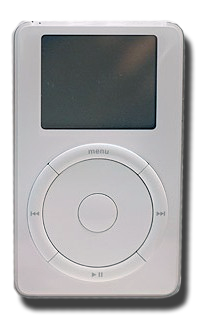
First-generation iPod, a white portable music player with a mechanical scroll wheel
iPod, 1st generation. Photo: Rjcflyer, CC BY 2.5, via Wikimedia Commons.
Exhibit G · iPod · 2001

iPod

The promise. That carrying your entire music collection could feel like carrying nothing new at all — no menus to fight, no manual to read, just a wheel and a screen.

The object. Tony Fadell was brought in to build it and assembled the hardware team; Jon Rubinstein oversaw the engineering, sourcing the small Toshiba hard drive and the PortalPlayer chip that made a pocketable design possible; Jony Ive designed the exterior; the mechanical click wheel was refined with Apple's interface designers into something you could operate one-handed, without looking.

The outcome. A success, but not an overnight one — the first iPod worked only with Macs, and it took Windows compatibility in 2002 and the iTunes Store in 2003 before it became the cultural object it's remembered as today.

What remained. A working demonstration that an interface could be simplified until the device itself felt like it disappeared behind the task — an idea that shaped every touch-driven Apple product that followed.

Technical record
Released
October 2001
Design
Tony Fadell (project lead); Jon Rubinstein (hardware engineering); Jony Ive (industrial design)
Storage
5 GB, "1,000 songs in your pocket"
Compatibility at launch
Mac only; Windows support added 2002

Epilogue: iPhone, 2007

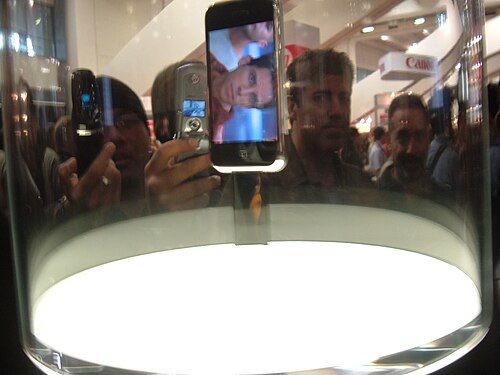
Original iPhone displayed under glass at its first public unveiling in 2007
First public showing of the iPhone, Macworld 2007. Photo: ArnoldReinhold, CC BY-SA 4.0, via Wikimedia Commons.
Epilogue exhibit · iPhone · 2007

The iPhone is an epilogue here, not a full exhibit — its story is really the next museum's problem. It was built by large internal teams under Jobs: Scott Forstall led the software, hardware groups under Fadell and Rubinstein built on what the iPod had learned, and Jony Ive's team designed a slab with no keyboard and no stylus, betting entirely on a capacitive touchscreen — multitouch technology Apple had acquired with FingerWorks in 2005.

The 2007 original was more limited than nostalgia usually allows: 2G/EDGE data only, no copy-and-paste, and no App Store — that arrived in 2008, a year later. What it did deliver at launch was the same wager the iPod had already proven at a smaller scale: hide as much of the machine as possible, and let the interface carry the whole product.

That wager is where this museum's guided path ends. Whether hiding the machine kept making technology more human, or just moved the complexity somewhere less visible, is a question this exhibition leaves for its visitors — not its curators — to answer.