THE WHOLE PRODUCT Act II · Lisa & Macintosh · 1983–1984
  1. 1 · Apple II
  2. 2 · Lisa/Mac
  3. 3 · NeXT
  4. 4 · iMac/Cube
  5. 5 · iPod

Act II · 1983–1984

Lisa and Macintosh 128K: The Graphical Dream

Central question

Should people learn the computer, or should the computer learn people?

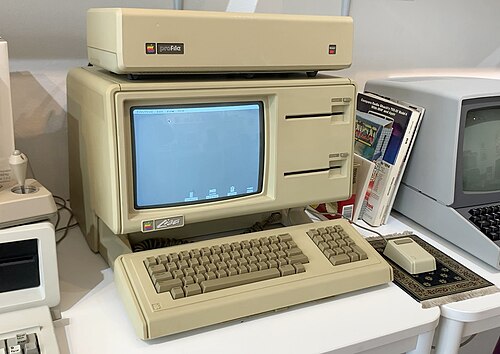
Apple Lisa computer with beige case, monitor and separate keyboard, on museum display
Apple Lisa, museum display. Photo: Timothy Colegrove, CC BY-SA 4.0, via Wikimedia Commons.
Exhibit B · Apple Lisa · 1983

Lisa

The promise. That an office computer shouldn't require memorising commands: point at what you mean, and see what you're doing as you do it.

The object. Led by engineer John Couch, the Lisa team built the first commercial computer with a graphical desktop, a mouse and overlapping windows — ideas the team saw demonstrated at Xerox PARC in 1979 and turned into shipping software, with Bill Atkinson central to writing the graphics routines that made it work smoothly enough to sell. (Jobs himself had been removed from the Lisa project early on, and started a rival internal project instead — the Macintosh, below.)

The outcome. A commercial failure. At $9,995, underpowered for the interface it was running, it sold poorly and was discontinued within a few years.

What remained. Almost everything except the sales figures: the desktop metaphor it proved was possible went on to define the Macintosh, and eventually the rest of the industry.

Technical record
Released
January 1983
Design
John Couch (project lead); Bill Atkinson (graphics/GUI software)
Price at launch
US$9,995
Interface
Desktop metaphor, mouse, overlapping windows, icons
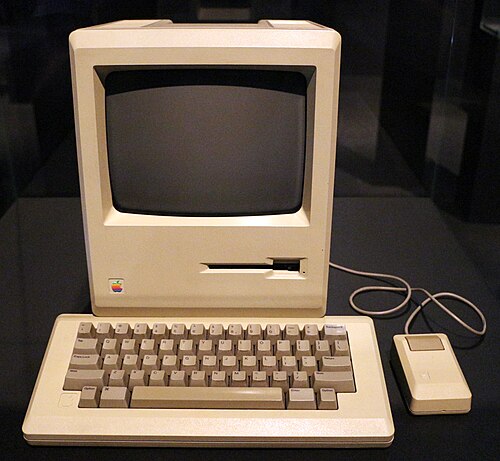
Macintosh 128K computer with compact beige case and built-in monitor, on museum display
Macintosh 128K, All About Apple museum. Photo: Sailko, CC BY 3.0, via Wikimedia Commons.
Exhibit C · Macintosh 128K · 1984

Macintosh 128K

The promise. The Macintosh project was started in 1979 by Jef Raskin, who wanted a small, genuinely inexpensive "appliance" computer for people who had no interest in computers as such. Jobs took the project over in 1981, pushed Raskin out, and steered it toward the Lisa's graphical approach instead — the promise shifted from "cheap appliance" to "the graphical dream, affordable."

The object. A single compact unit — no separate boxes to cable together — running a graphical interface built by a team that included Bill Atkinson (QuickDraw, the graphics engine), Andy Hertzfeld (system software) and Susan Kare, whose icon and bitmap-font designs gave the interface its friendly, legible face.

The outcome. A landmark launch — the 1984 Ridley Scott commercial is still cited as one of advertising's best — but a slower commercial story than the myth suggests: early sales cooled once buyers ran into its limited memory and thin software library, and it took later, better-specified revisions to make the platform durable.

What remained. A commercially viable graphical interface for ordinary buyers, and — through Kare's icon language especially — a visual vocabulary for "friendly computing" that outlived the machine itself.

Technical record
Released
January 1984
Design
Jef Raskin (project origin); Bill Atkinson & Andy Hertzfeld (system software); Susan Kare (icons, typefaces)
Memory
128 KB RAM
Display
9-inch built-in monochrome monitor

Two teams, one company, and two different answers to the same question: Lisa proved the graphical desktop could work; Macintosh proved it could be sold. Between them, "learn the computer" stopped being the only option.

Not every answer to that question stayed at Apple. In 1985, the man who had pushed the Macintosh toward this graphical dream left the company — and started over, with no sales targets to answer to and no case to convince anyone else.