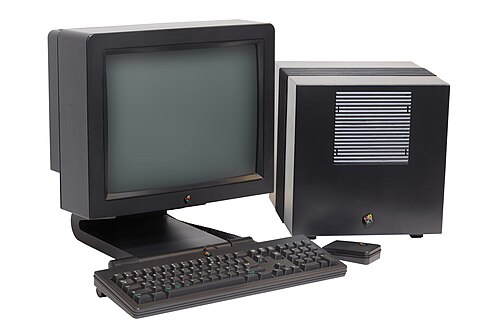
NeXT Computer / NeXTcube
The promise. Freed from Apple's shareholders, Jobs set out to build a computer with no compromises: an elegant object running a genuinely advanced operating system, aimed first at universities and researchers rather than a mass market.
The object. The distinctive one-foot magnesium cube case (NeXTcube, 1990) was designed with Hartmut Esslinger's frog design studio. Its real achievement was underneath: NeXTSTEP, an advanced object-oriented operating system built by a NeXT engineering team that included Avie Tevanian, running on a Mach kernel with a development environment years ahead of its contemporaries.
The outcome. A commercial failure as a hardware company — the machines were expensive and the market NeXT had chosen was small — and NeXT stopped making its own hardware in 1993 to focus on software alone.
What remained. More than the sales figures suggest. Tim Berners-Lee built the first web server on a NeXTcube in 1990. And in 1997, Apple bought NeXT — bringing Jobs back to the company he'd been forced out of, and bringing NeXTSTEP with him as the foundation of what became Mac OS X.
Technical record
- NeXT Computer released
- 1988
- NeXTcube released
- 1990
- Design
- Hartmut Esslinger / frog design (case); Avie Tevanian and the NeXT engineering team (NeXTSTEP, Mach kernel)
- Operating system
- NeXTSTEP — later the basis of Mac OS X, from 2001
- Notable use
- First web server, built by Tim Berners-Lee, 1990