
Special and Limited Leica Cameras
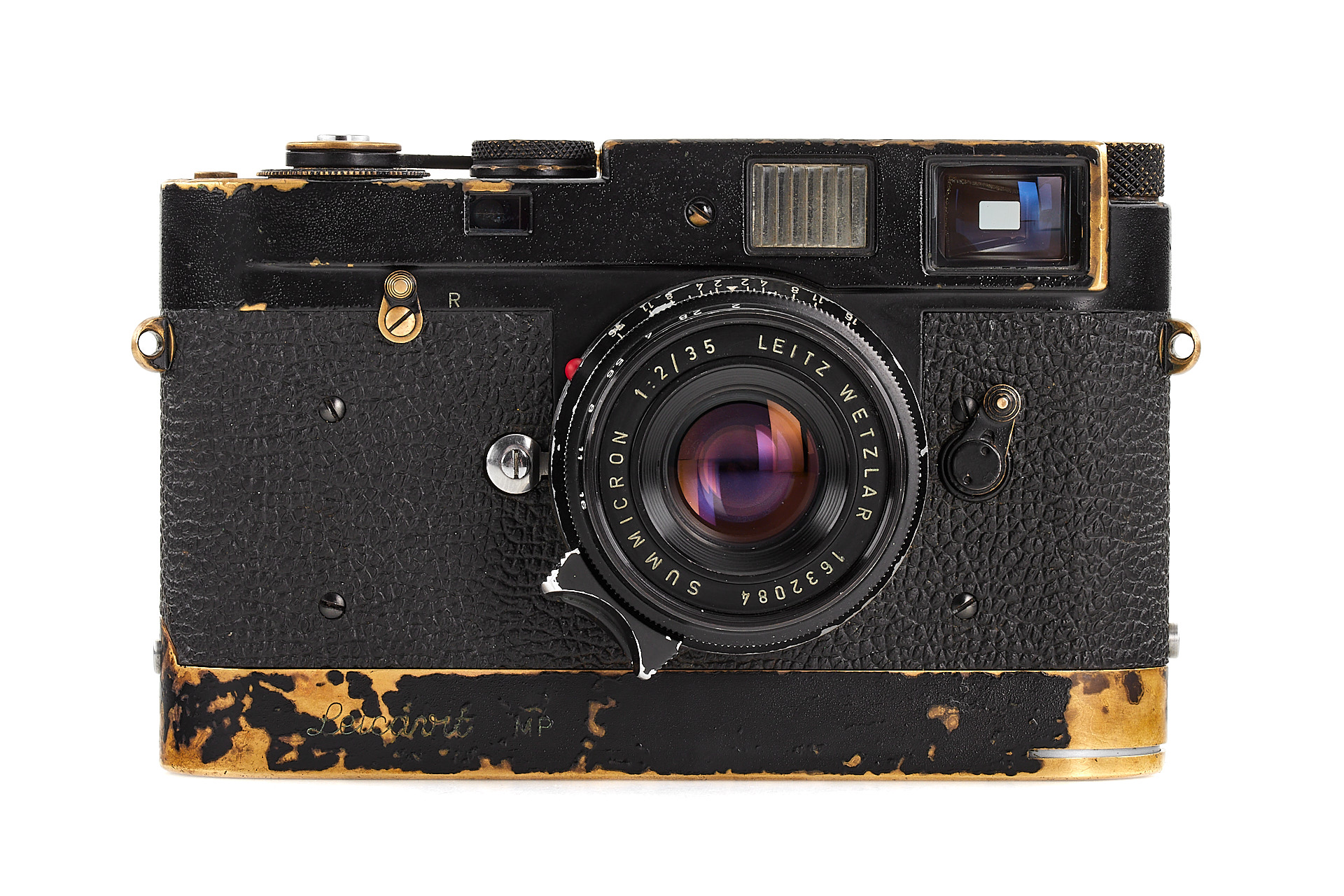
Black paint cameras
Before the 1960s, chrome-finish Leicas were the standard consumer option and black paint finishes were the less common, often special-order alternative favoured by press and documentary photographers who wanted a body less likely to draw attention. The black lacquer wears unevenly with use, letting the brass body underneath show through at the edges and corners — a look photographers call "brassing". That wear pattern, once simply a sign of a well-used working camera, has since made original black paint bodies among the most sought-after and expensive cameras Leica ever produced.
- Leica M3: Originally produced in small batches, genuine factory-original black paint M3s are incredibly rare today.
- Leica M2: Positioned as a professional workhorse with 35mm framelines, many black paint M2s were heavily used by photojournalists, often showing significant and beautiful brassing.
- Leica M4: The last of the classic M cameras to offer traditional black paint as a standard finish option before the transition to black chrome.
A note on collecting: Verifying an original black paint Leica often relies on specific serial number ranges. However, because Leica occasionally repainted cameras or assembled them out of sequence, experts also rely on inspecting the finish, engravings, and internal records.
Military-issued cameras
Leica bodies saw military service on more than one side of the twentieth century. Wehrmacht-contract Leicas from the Second World War carry distinctive engraved unit and property markings, and Luftwaffe-issued bodies are particularly documented among collectors. After the war, surplus and specially procured Leicas were also issued to Allied forces and, later, to various national armed services, each leaving its own engraving conventions for identifying issued equipment.
- Luftwaffe (Air Force): Usually based on the Leica III, IIIa, IIIb, or IIIc models, these often bear the prominent "Luftwaffen-Eigentum" (Air Force Property) engraving.
- Heer (Army): Cameras issued to the army might feature "W.H." (Wehrmacht Heer) engravings.
- Kriegsmarine (Navy): Among the rarest military Leicas. Only a very small batch is officially documented, sometimes engraved with an "M" for Marine.
- The Leica IIIc "K": The "K" stands for Kugellager (ball bearings). These had special ball bearings in the shutter to ensure reliable operation in extremely cold, high-altitude environments. They were often finished in grey paint due to chrome shortages.
Warning: World War II era military Leicas are heavily counterfeited, often by modifying and engraving Soviet-made Zorki or FED cameras.
Limited editions
Leica has marked anniversaries and collaborations with limited production runs almost since the company's founding, most famously the "Leica 100 Jahre" (100 Years) edition released in 2014 to mark a century since Barnack's original prototype. Special editions have also paired Leica bodies with outside designers, photographers, and other brands, usually distinguished by unique finishes, engravings, or accessory sets rather than changes to the camera's mechanism.
- Leica M9-P 'Edition Hermès': A luxurious collaboration featuring a unique top plate design, silver-anodized lenses, and covered in Hermès "Veau Swift" calfskin. Limited to 100 sets.
- Leica M Edition 60: Created to celebrate 60 years of the M system. Designed by Audi Design, this digital camera famously omitted the rear LCD screen entirely, replacing it with an ISO dial to mimic the experience of shooting film.
- Leica M-P 'Correspondent' by Lenny Kravitz: Designed with the musician, the body and lenses were intentionally aged by hand at the factory to look like heavily brassed, vintage equipment.
- Leica M10 Zagato Edition: A collaboration with the Italian automotive design house. It features a wildly different body design milled from aluminum with fine grooves, completely changing the classic M silhouette.
- Leica M (RED): Designed by Jony Ive and Marc Newson for the (RED) charity auction. Featuring a completely custom milled aluminum and magnesium body, only one was made and sold for $1.8 million.