
Oskar Barnack and the Ur-Leica
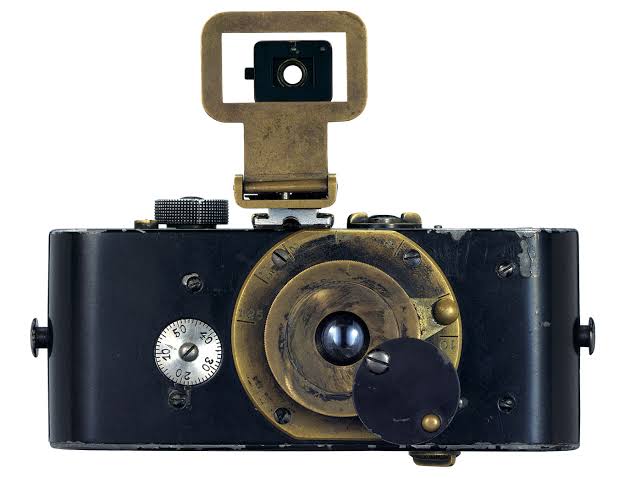
Oskar Barnack was an optical engineer at Ernst Leitz Optische Werke in Wetzlar, Germany, where his job in the early 1910s was developing exposure meters and test equipment for the company's cine cameras. Barnack, who also suffered from asthma and found large-format cameras physically difficult to carry on hikes, wanted a compact way to test 35mm cine film stock before it was loaded into a motion-picture camera.
His solution was to build a small still camera around the same 35mm perforated film used in cinema, run horizontally through the camera rather than vertically as it ran in a movie projector, doubling the frame size to the now-familiar 24×36mm format. The prototype, built around 1913 and known today as the Ur-Leica ("original Leica"), proved the format worked far better than anyone expected: sharp, portable, and able to take far more exposures per roll than any camera of its size.
The First World War and the years of post-war reconstruction delayed any commercial plans, but Leitz's director Ernst Leitz II decided in 1924 to put the design into production. The Leica I ("Leitz Camera") launched commercially in 1925 at the Leipzig Spring Fair, and its success established 35mm as a serious format for still photography — not merely a hobbyist's or cinematographer's substitute.