Week 2: The User Is Not the Customer
Why a system can work great for whoever pays for it and badly for whoever is stuck using it — and why "bad design" always has to name who it's bad for
1 March 2027
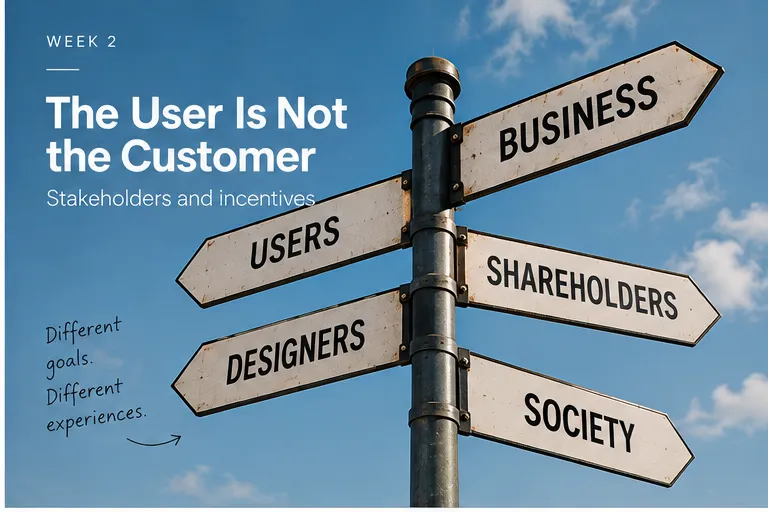
Someone designed the system in front of you, and someone else — not always the person using it — benefits from the choices they made. A cancellation process that takes fifteen minutes can be a genuine failure for the customer and a genuine success for the business measuring how many people give up partway through. Both descriptions are true at once, which is exactly why “bad design” needs a second question attached to it: bad for whom?
Behind almost any bad design there’s a longer list of people than just “the user” — the business paying for it, the advertiser it serves, the government requiring it, the developer who was told to reduce cancellations, not improve them. None of them are lying when they say the design works. It’s just working for somebody else, and the difference between an accident and a decision is usually just who benefits from it.
Outline#
- user goals versus designer, business, institutional and technical goals
- why a design can be bad for one party and excellent for another, at the same time
- the incentives that shape the decision: revenue, retention, data, cost, compliance
- telling an accident from something built that way on purpose
- Follow the Incentive, and what it asks of this week’s session
- what the Hate Catalogue needs before week 3
Teaching team
- Marisol Quaye — convenor