Week 4: Thinking in shots
Wide, medium and close-up, composition, angle, blocking and camera movement — breaking a scene into purposeful shots and sketching the first storyboard
15 March 2027
A scene on the page is one thing happening. A scene on screen is a sequence of decisions about what the audience is allowed to see, and when. Last week’s scene for “Before It Stops” ends with Nadia accepting the call on the final ring and saying “Hey” — five observable beats, written in screenplay form, with nothing yet said about how a camera would see any of them. This week turns that page into a shot sequence.
What you’ll be able to do after this lecture#
By the end of this lecture you should be able to:
- name each core shot type and what it’s actually for, not just reach for variety
- build a shot list where every shot’s purpose is stated in one clause, and no two shots in the list share a purpose
- tell a shot list built for coverage apart from one built as an argument — in someone else’s list as well as your own
The shot vocabulary — and what each one is for#
Four shot types do almost all of the work in a small scene, and each earns its place for a different reason:
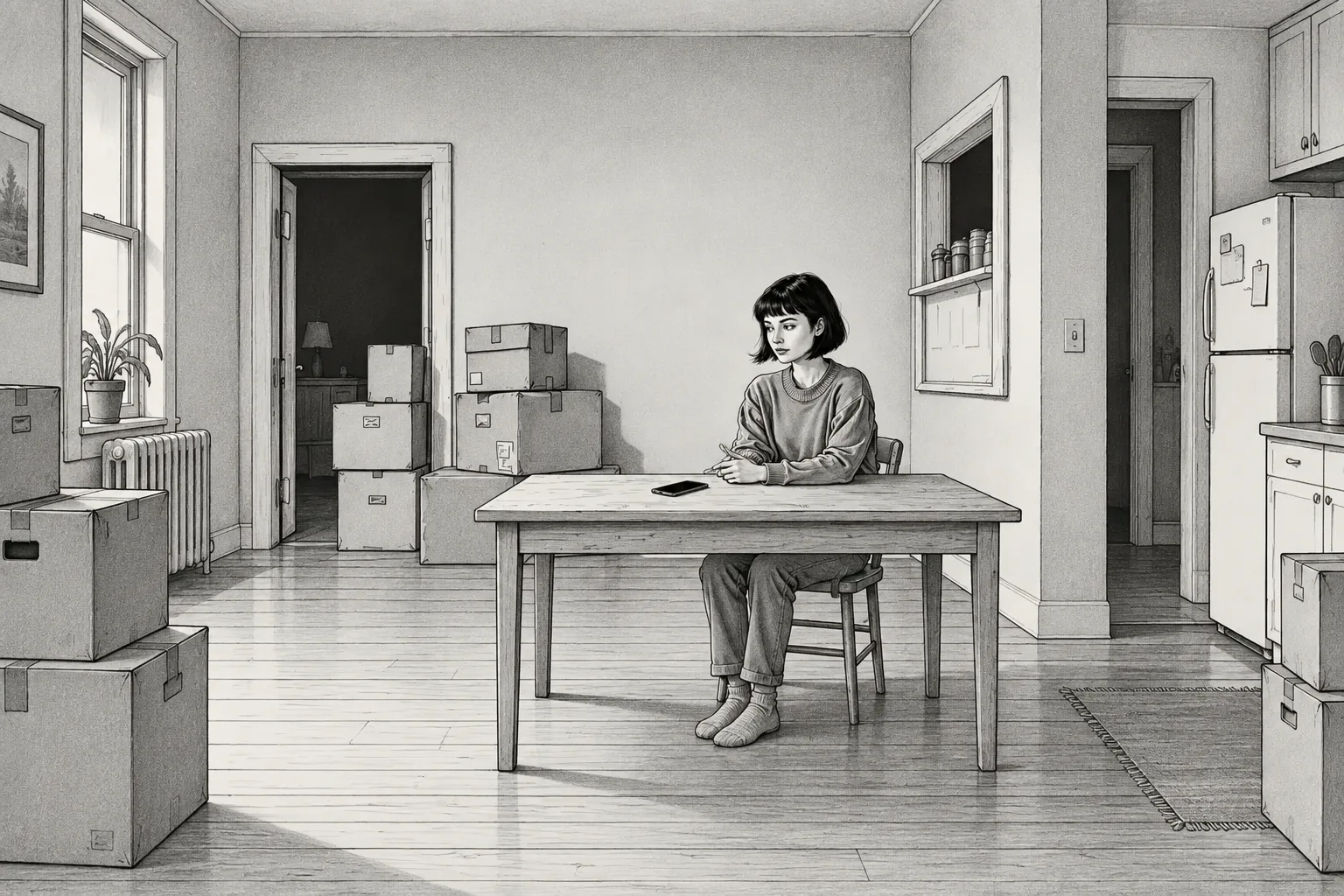
- a wide shot establishes place, distance, or isolation — how much space is around a body, and how alone they are in it
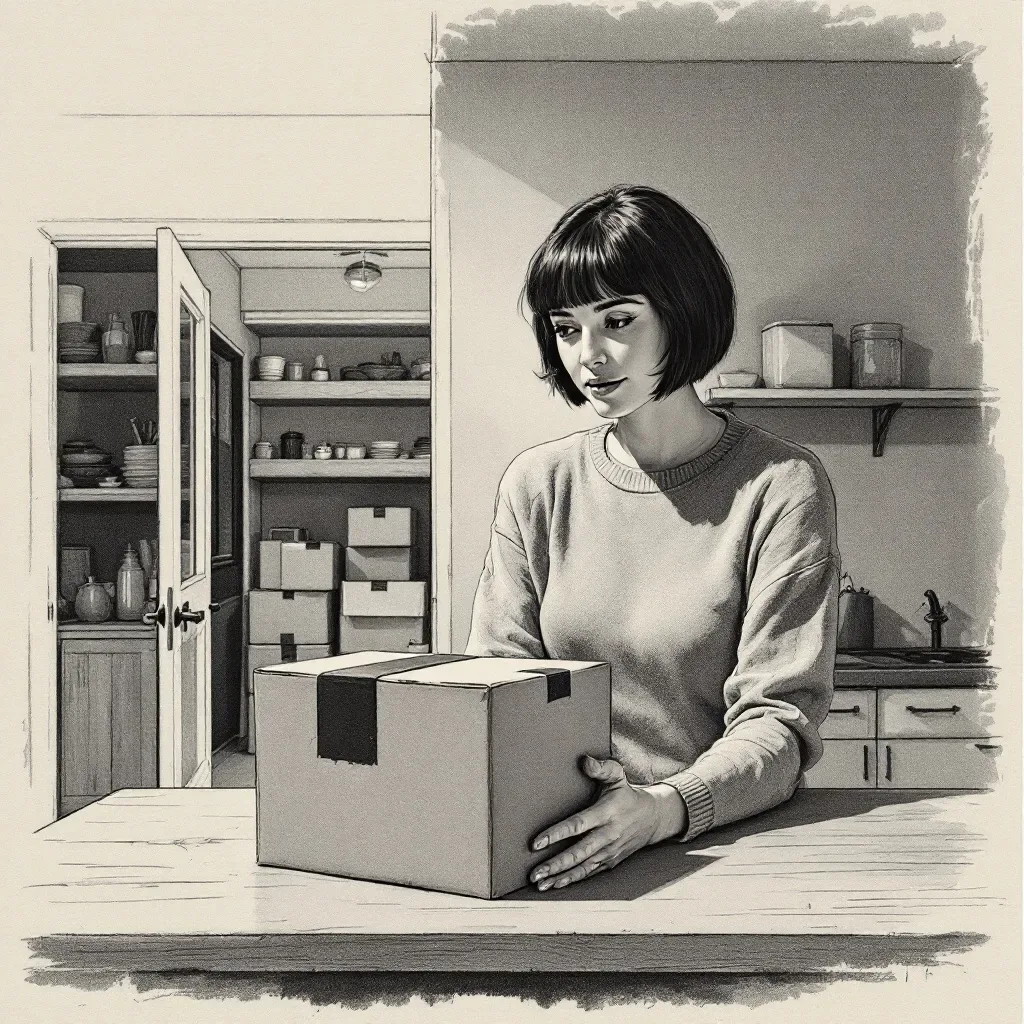
- a medium shot reads body language and the relation between two people — posture, distance between them, who’s turned toward whom
- a close-up shows a decision happening on a face — the moment where an internal choice becomes visible, even briefly
- an insert isolates one detail the story needs the audience to notice and nothing else — an object, a hand, a screen
The diagrams through the rest of this lecture are teaching illustrations — schematic staging references, not filmed footage from a real production test.
Wide — place and distance#
Medium — body language#
Close-up — facial detail#

Insert — a specific detail#
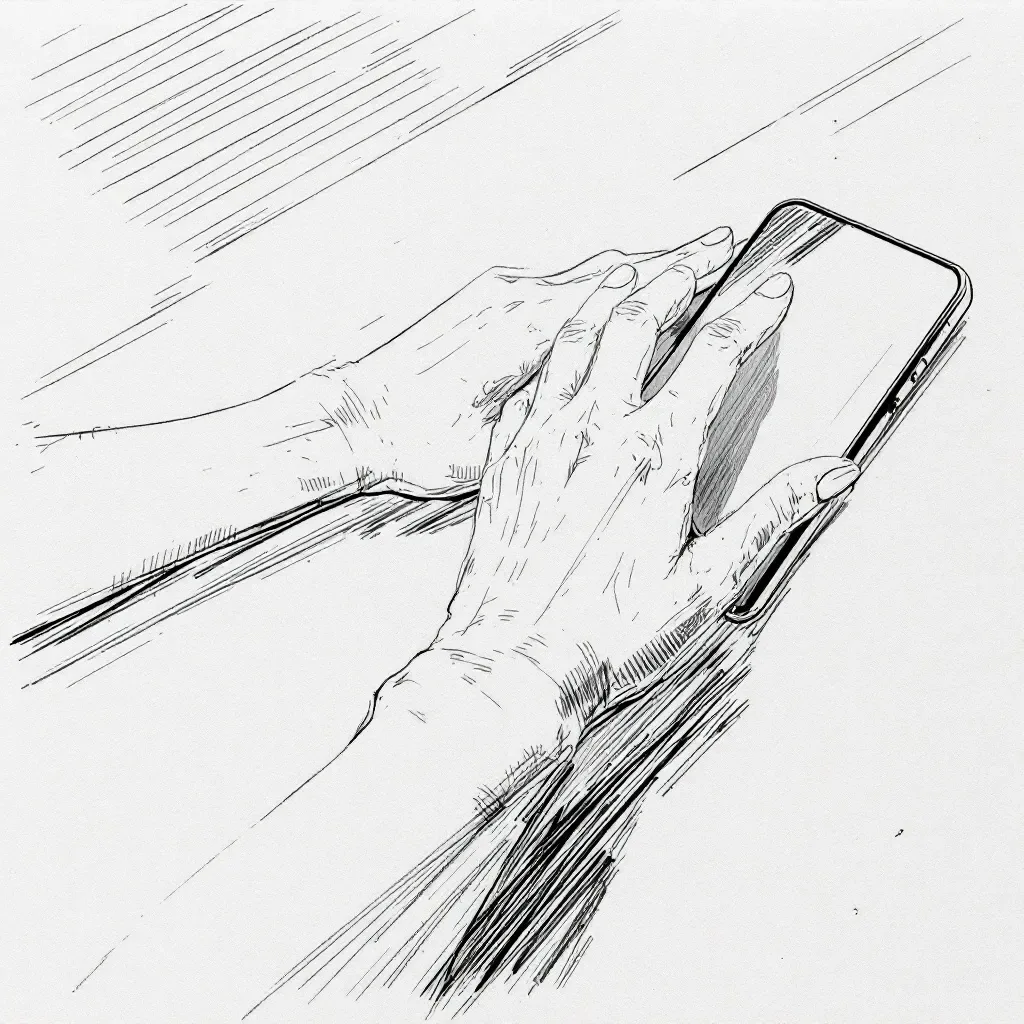
AI-generated teaching illustrations of shot categories. The actions and room details vary between examples; these are not continuity-matched frames from a filmed sequence.
None of these is a default. Reaching for “wide, then medium, then close, on everything, just to be safe” isn’t shot selection — it’s postponing the decision until the edit, and it’s exactly the failure mode this week’s misconception contrast, below, names directly.
Composition, blocking and camera movement as one decision#
Where the frame’s edge falls says something about power, distance, or intimacy before a single word is spoken — a body pushed to the frame’s edge reads differently from the same body centred. That’s composition and angle working as argument, not decoration.
Both comparisons below use the same context: beat 4, her hand drifting toward the phone, then stopping.
Blocking (where a body moves) and camera movement (where the camera moves) are one decision, not two. A character crossing a room while the camera holds still says something different from the same crossing with the camera tracking alongside her — the first isolates the room around her, the second stays with her attention. Deciding one without the other leaves half the shot undecided.
Mamet’s test: the shot as argument#
David Mamet’s directing technique for building a shot list is to treat each shot as a piece of an argument, built through the juxtaposition of shots rather than through performance, narration, or camera movement doing the persuading. His own worked example: cutting from a face to a fridge’s bare interior doesn’t need a line of dialogue to argue “hunger” — the meaning is made entirely by what gets placed next to what.
That gives a concrete filter for every shot on the list, and it’s the same filter for the whole list, not a separate rule per shot: what does the character want in this moment, and will the audience see whether they get it, from this shot next to this one? A shot that doesn’t answer that question for a specific beat isn’t earning a place on the list — it’s coverage, filmed so an editing decision can be postponed rather than made now.
This is also why a shot list’s purposes can’t repeat. If two shots exist to show the same thing, one of them isn’t making an argument at all — it’s a safety copy of the other.
The real demonstration: shot-listing the “Before It Stops” ending#
Before seeing the worked list, try one beat yourself. Beat 4 from last week’s scene is: her hand drifts toward the phone, then stops. If you had exactly one shot to make that beat’s hesitation legible without a line of dialogue, what would it be — and what would you cut to or from it to make the meaning land? Decide before opening the shot list below.
The worked shot list for the closing beats
Five beats, five shots — one shot per beat, each filtered through what Nadia wants and whether she’s getting it:
- Wide — the kitchen, phone lighting up on the table. Purpose: establish how alone she is with this decision. A close-up here would argue the phone matters before we’ve even placed her in the room; the wide argues isolation instead.
- Insert — the screen reading THEO CALLING. Purpose: give the audience the same single fact she has. Cutting straight from the wide to this insert (skipping a shot of her face) keeps the audience learning the name at the same instant she does, not a beat ahead of her.
- Close-up — her face, still. Purpose: show her holding herself back, not deciding yet. Juxtaposed against the insert before it, the cut argues “she’s seen it and isn’t moving” — the stillness only reads as restraint because it follows immediately after the name, not before it.
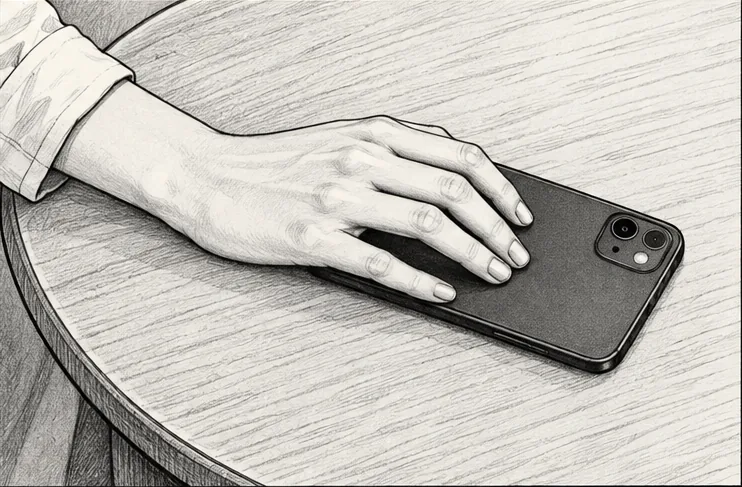
- Insert — her hand, drifting toward the phone, stopping. Purpose: make the hesitation itself the visible event. This is the shot beat 4 asked for above: an insert isolates the hand from the rest of her body, so the stopping is the only thing the frame can be about.
- Close-up — camera framed on the tabletop and the lower half of her face, phone in shot; her hand enters frame, closes over the phone, and lifts it toward her ear as the camera tilts up with it to settle on her face for the line. Purpose: land the decision and the line as one motion, not two. This is one take, not a cut: the frame starts low, on the phone and her hand’s approach; as her hand closes over it and brings it up, the camera tilts up in the same movement, arriving on her face just as she says “Hey.” Because the reframe happens inside a single shot, there’s no cut between the acceptance and the line for the audience to read as two separate choices — the camera’s move is the argument that they’re one decision.
No shot repeats another’s purpose, and no shot is a wide/medium/close set covering the same instant “for options” — each one exists because the cut into it argues something the previous shot hadn’t yet.
These AI-generated storyboard frames use Week 1 Take B as the character, costume and lighting reference, together with the expanded kitchen reference shown in Week 5. They are teaching illustrations, not filmed footage or a verified continuous take; unseen room details were inferred.
Shot 1 — Wide: alone with the decision#
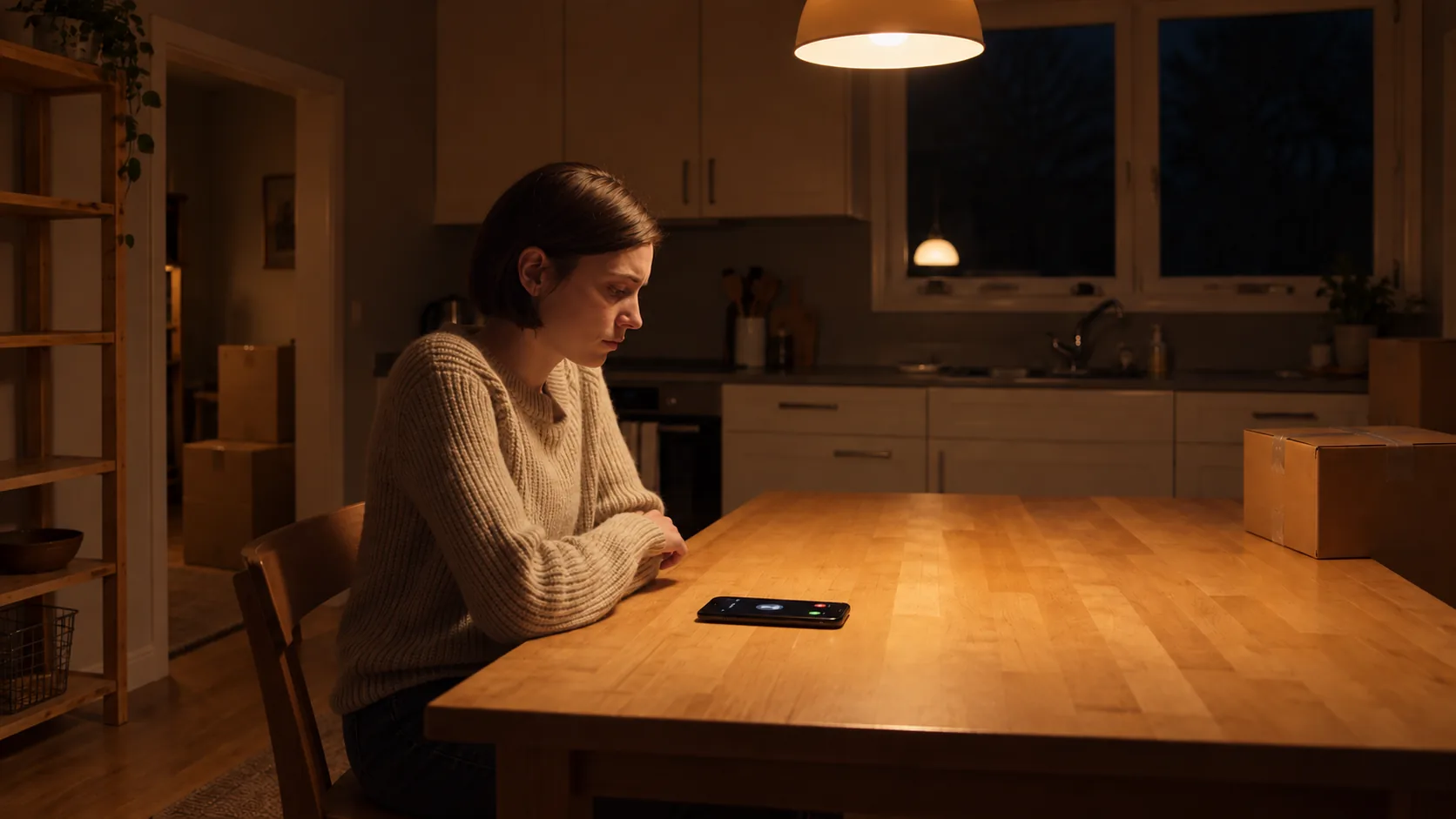
Establish how alone she is with this decision.
Shot 2 — Insert: the caller’s identity#
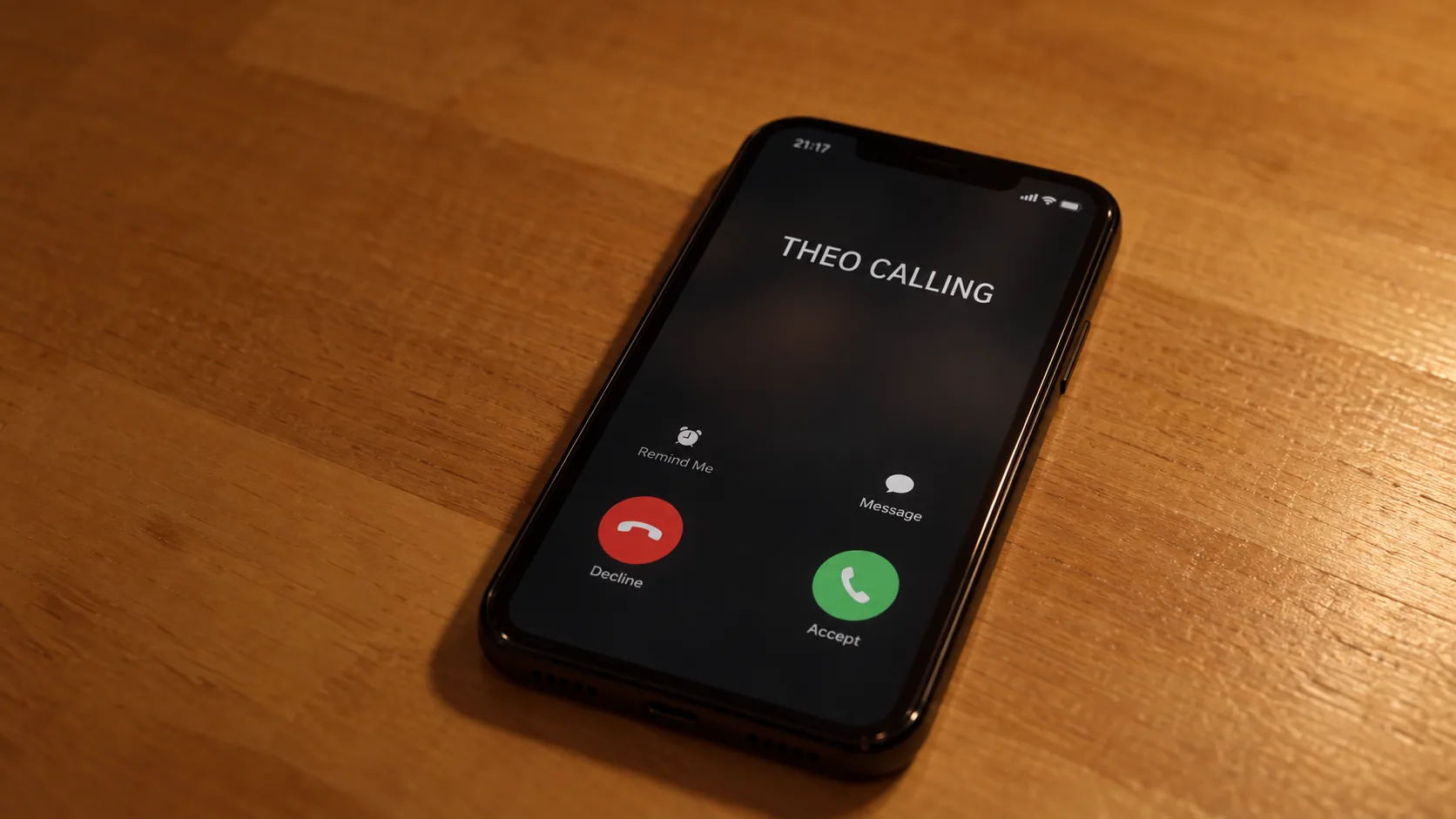
Give the audience the same single fact she has.
Shot 3 — Close-up: holding herself back#
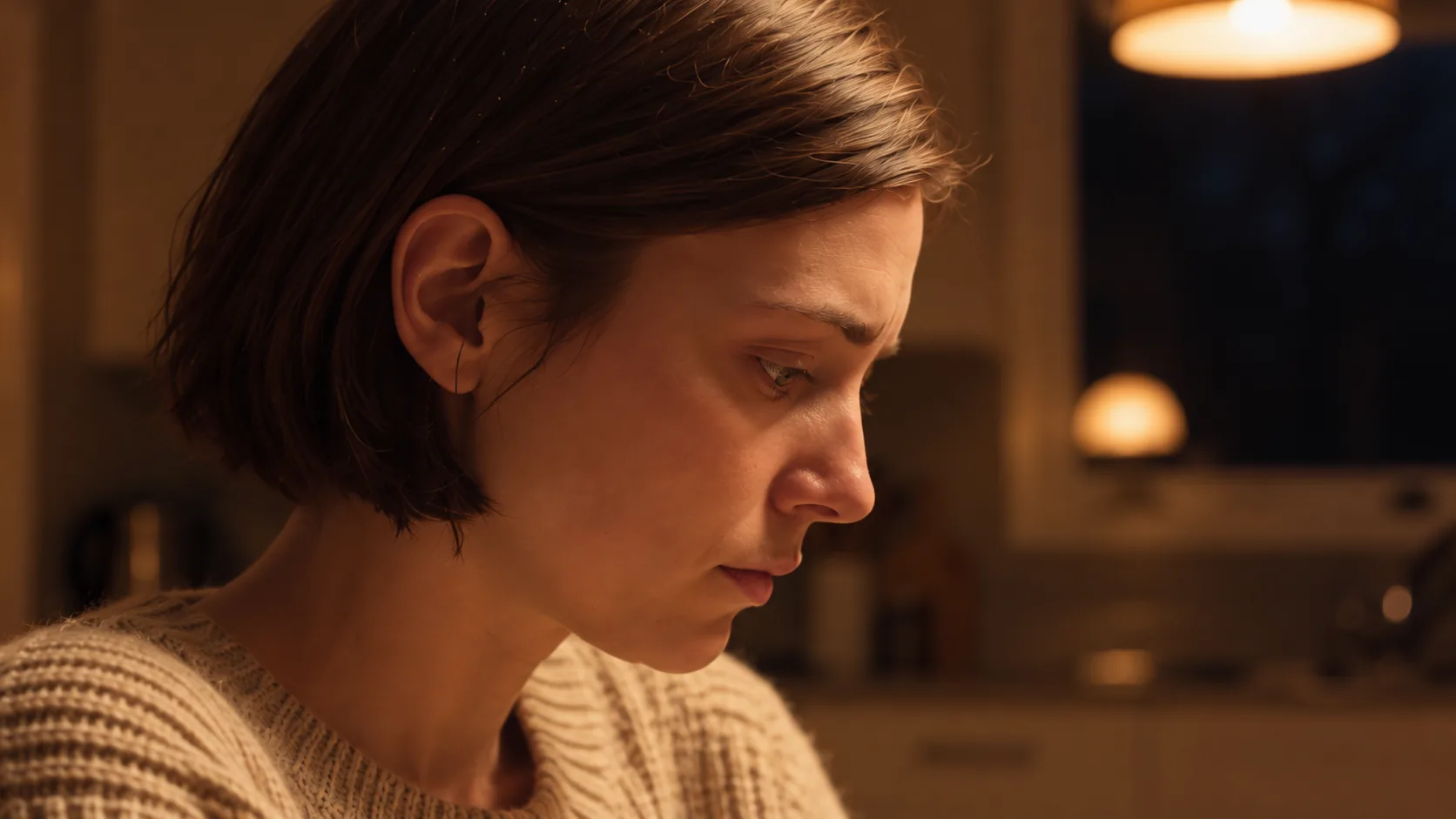
Show her holding herself back, not deciding yet.
Shot 4 — Insert: the unfinished reach#
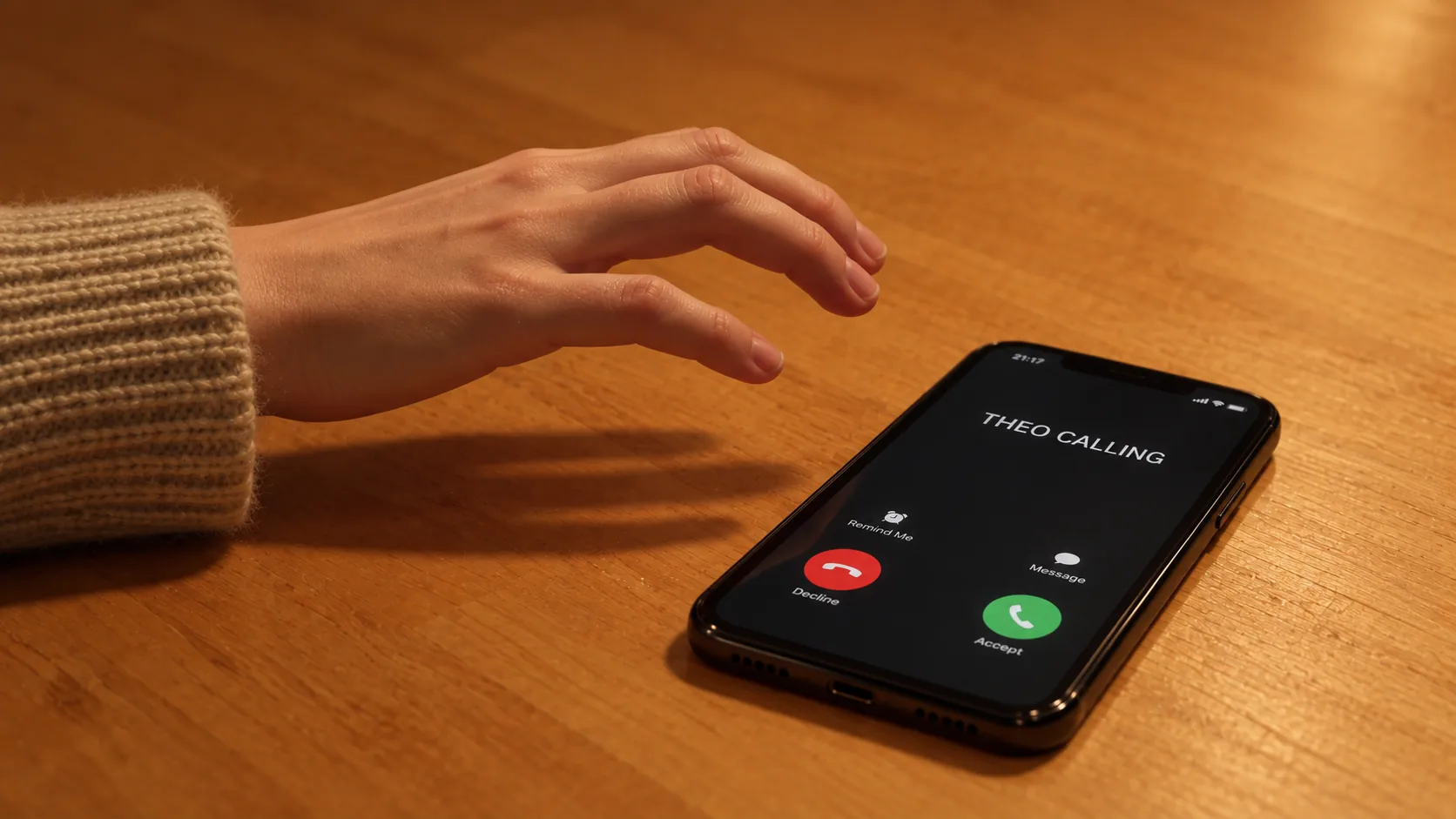
Make the hesitation itself the visible event: the fingers stop short of the phone.
Shot 5, staged as one continuous take#
Start of the lift — frame low on the hand and phone:
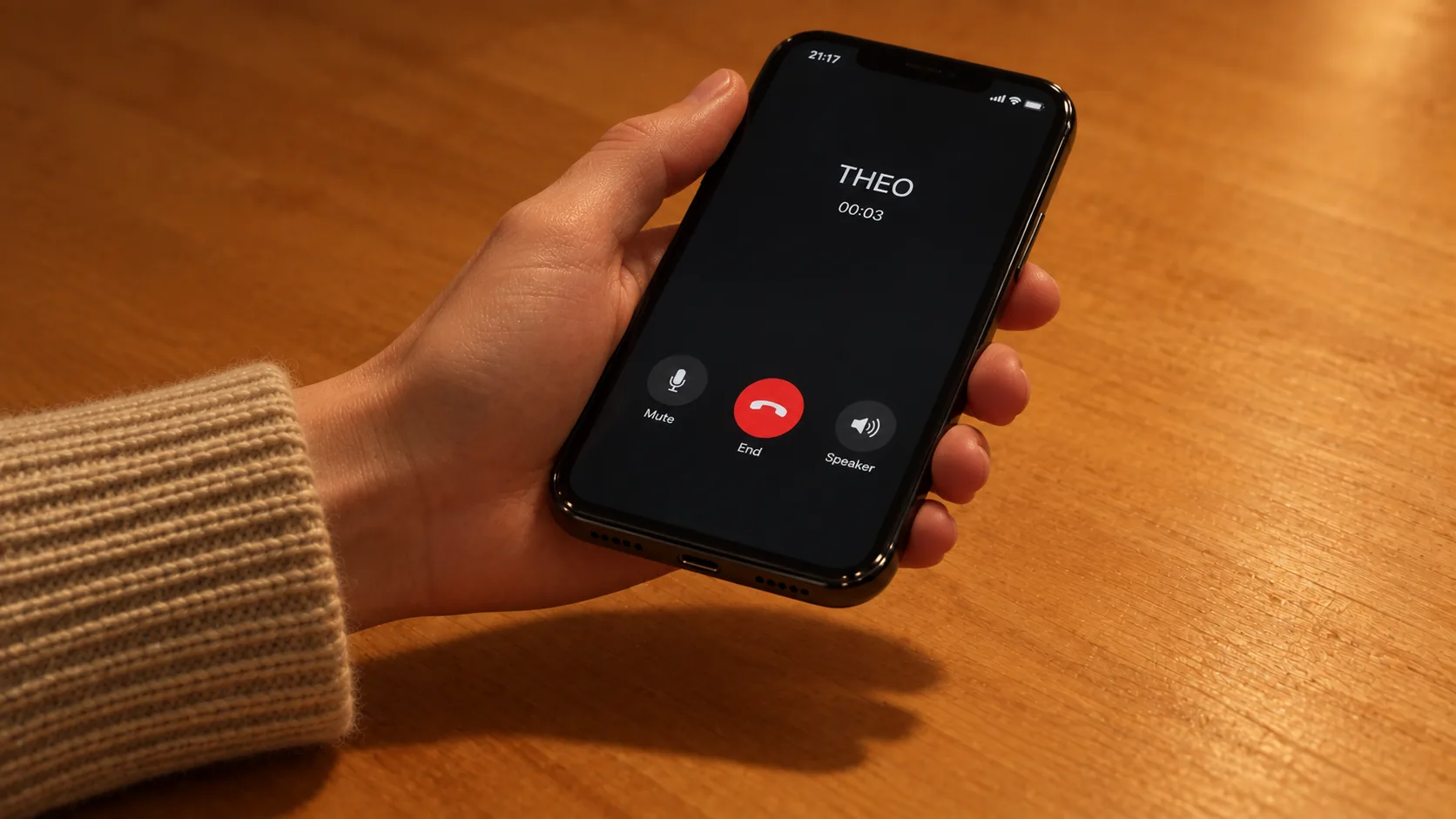
Camera tilts upward, following the lift → no cut → settles on her face:
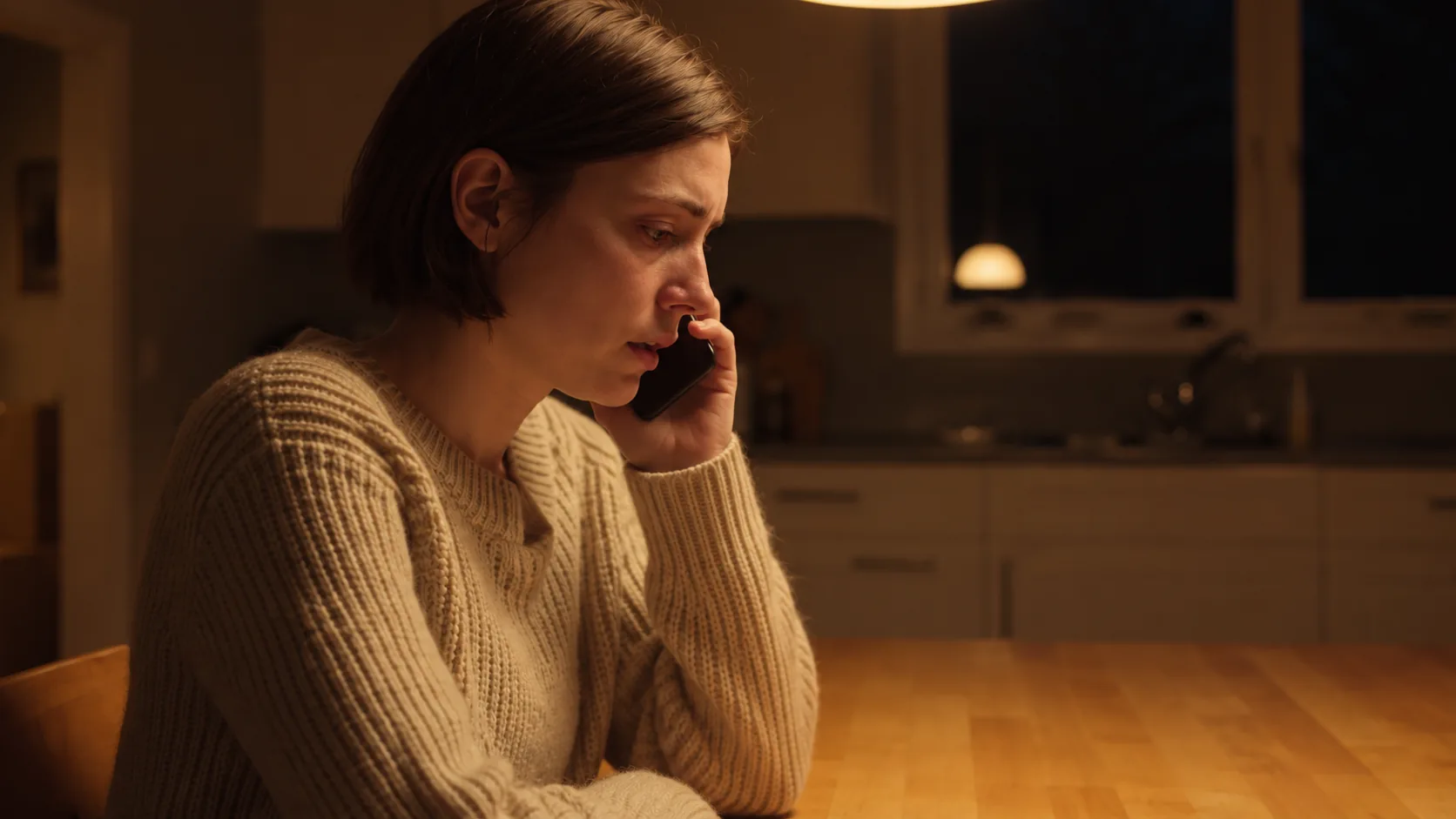
These are two illustrated stages of one continuous shot, not two shots. The camera starts low on the tabletop and approaching hand, follows the phone’s lift, then settles on her face for “Hey.” Land the decision and the line as one motion, not two. The generated call timer in the start-stage image is illustrative, not an approved timing cue.
Compare your own choice for beat 4 against shot 4 above. If yours was also an insert isolating the hand, notice why: a wide or medium there would show the hesitation as one detail among several, when the whole point of that beat is that nothing else in the frame should compete with it.
Coverage instinct vs. argument instinct#
| Coverage instinct | Argument instinct |
|---|---|
| Shoot a wide, a medium, and a close-up of the phone-ringing beat, so there are options in the edit | Choose the one shot whose cut produces the meaning this beat needs — an insert on the still hand, not three angles of the same stillness |
The coverage instinct isn’t wrong because it’s lazy — it’s wrong because it defers the actual directing decision (what does this beat mean, and which shot proves it) to someone else, later, in an edit bay. The argument instinct makes that decision now, on the list, before a single frame exists.
Guided judgement: which pairing makes the argument?#
A beat: a character is at the kitchen table, a housemate visible in the background doing the dishes. The character reads a text message, then sets the phone face-down on the table, fingers lingering on it a second before withdrawing. The intention behind the beat is concealment: they don’t want the housemate to see what’s on that screen — not simply “they finished reading a text.” Two candidate shot pairings:
- A medium shot of them reading, with the housemate already visible working at the sink behind them, cut to a wide shot of the same kitchen as they set the phone down.
- A close-up of their face reading, tight enough that the housemate drops out of frame, cut to an insert of the phone, screen down, their fingers still resting on it.
Beat: reading a text, setting it face-down, fingers lingering. Intention: concealment from the housemate visible in the background.
Pairing 1 — Medium → Wide#
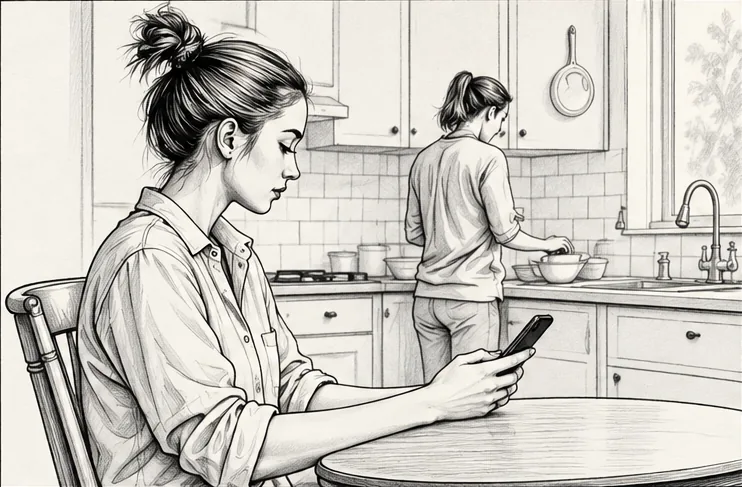
Cut to:
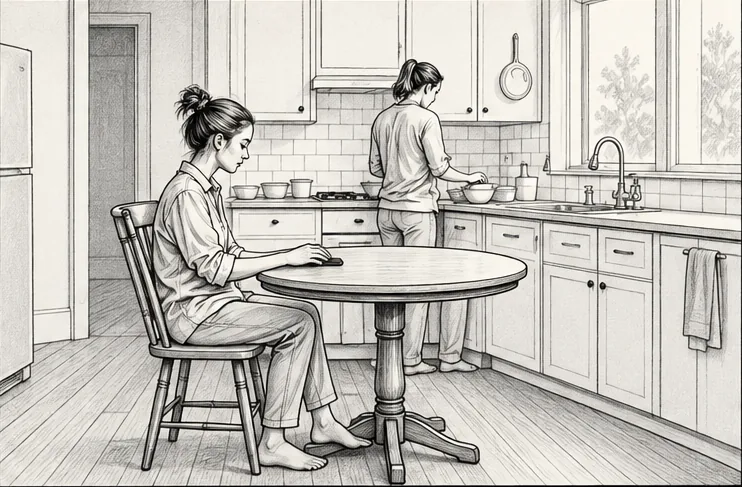
The wide keeps the housemate and room visible, but makes the phone action small within the frame.
Pairing 2 — Close-up → Insert#
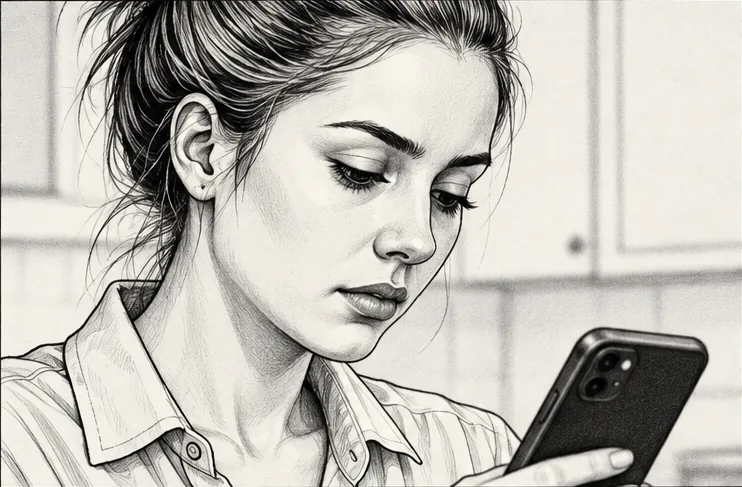
Cut to:
The insert makes the hidden screen and lingering fingers the main information.
AI-generated teaching illustrations for this independent concealment exercise, not footage or a scene from “Before It Stops.” Read each pair from top to bottom; “Cut to” marks a change of shot, not a camera movement.
The first pairing is coverage for this intention: the medium already placed the housemate in the kitchen, so the wide’s cut to the same room tells the audience nothing new about the concealment — it repeats information the medium already gave. The second is an argument: tightening to a close-up removes the housemate from view the instant the concealment becomes active, and the insert of the phone held face-down under lingering fingers is the visible shape of “hiding something,” not just “put the phone down.” Same beat, same two shots’ worth of screen time; only the second pairing’s cut is doing work toward this specific intention.
This verdict is scoped to this beat’s intention, not a rule about wide shots. A wide isn’t inherently meaningless — shot 1 of this week’s own demonstration is a wide, chosen specifically to argue isolation. What fails here is that this wide, for this beat’s concealment intention, adds nothing the medium hasn’t already shown; a wide built to argue something the prior shot hadn’t yet (scale, isolation, who else is in the room) could easily be the argument instinct instead of the coverage one.
Synthesis#
A shot list isn’t a coverage plan — it’s a sequence of arguments, each one made by what gets cut next to what, filtered through what the character wants and whether the audience sees them get it. Wide, medium, close-up and insert each earn their place for a specific reason, and a purpose stated once per shot, never repeated, is how you check that every shot on the list is still doing that work. This week’s task turns last week’s scene into exactly that kind of list, plus a rough thumbnail per shot — the first-draft storyboard that week 6 later expands into the full sequence. A blank, printable shot list and storyboard template is available for the workshop.
Teaching team
- Idris Fenn — tutor