Week 10: Route Positioning & Three Shots Ahead
Route Positioning — reading the cue ball's whole travel path, planning a three-shot sequence rather than treating each shot in isolation.
26 April 2027
Learning objectives
- Read the cue ball's whole travel path, not just its finishing point.
- Recognise how a chosen route affects the shot two positions ahead.
- Combine point, zone and route thinking on the same layout.
- Plan a shot as part of a three-shot sequence, not in isolation.
- Understand the course theme "three shots ahead" in concrete terms.
- Learn
Route Positioning is the third and most demanding layer, after Point (Week 8) and Zone (Week 9). It looks at the cue ball's entire travel path across the table, not only where it stops — because the path itself can open or block a route to the shot after next. This is where the course's own theme, planning a three-shot sequence rather than treating each shot in isolation, becomes a concrete table skill rather than a slogan.
- See
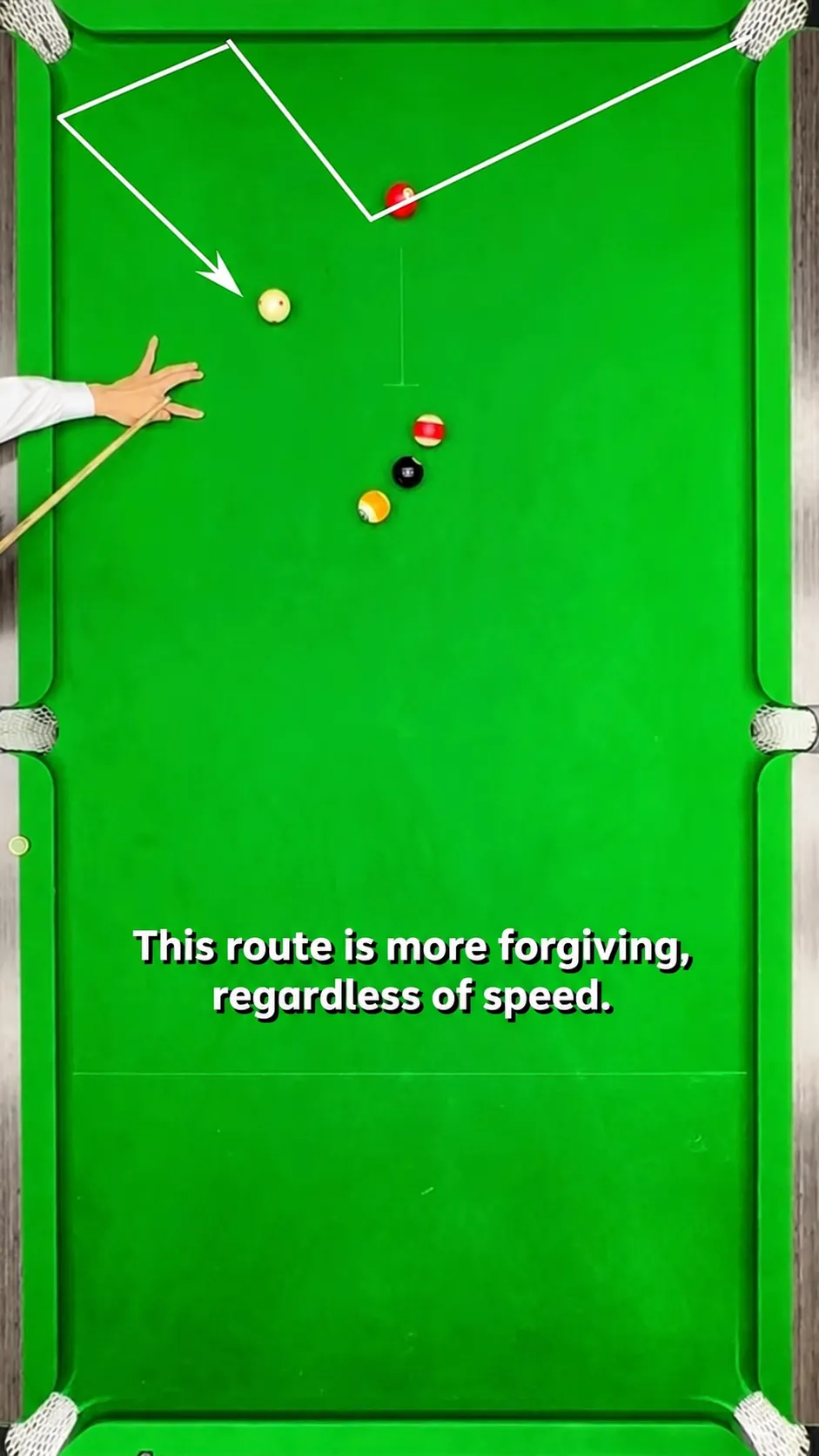
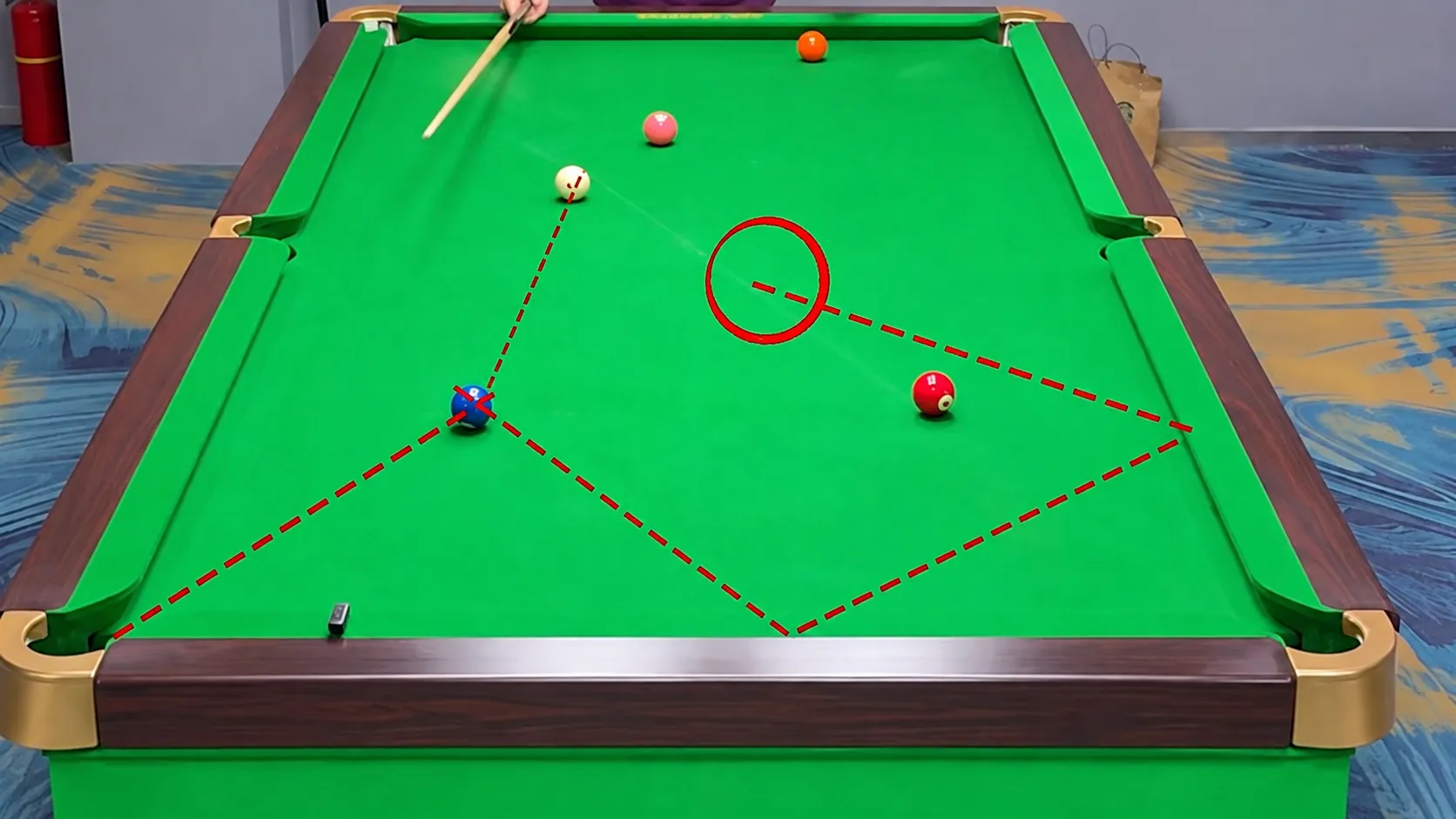
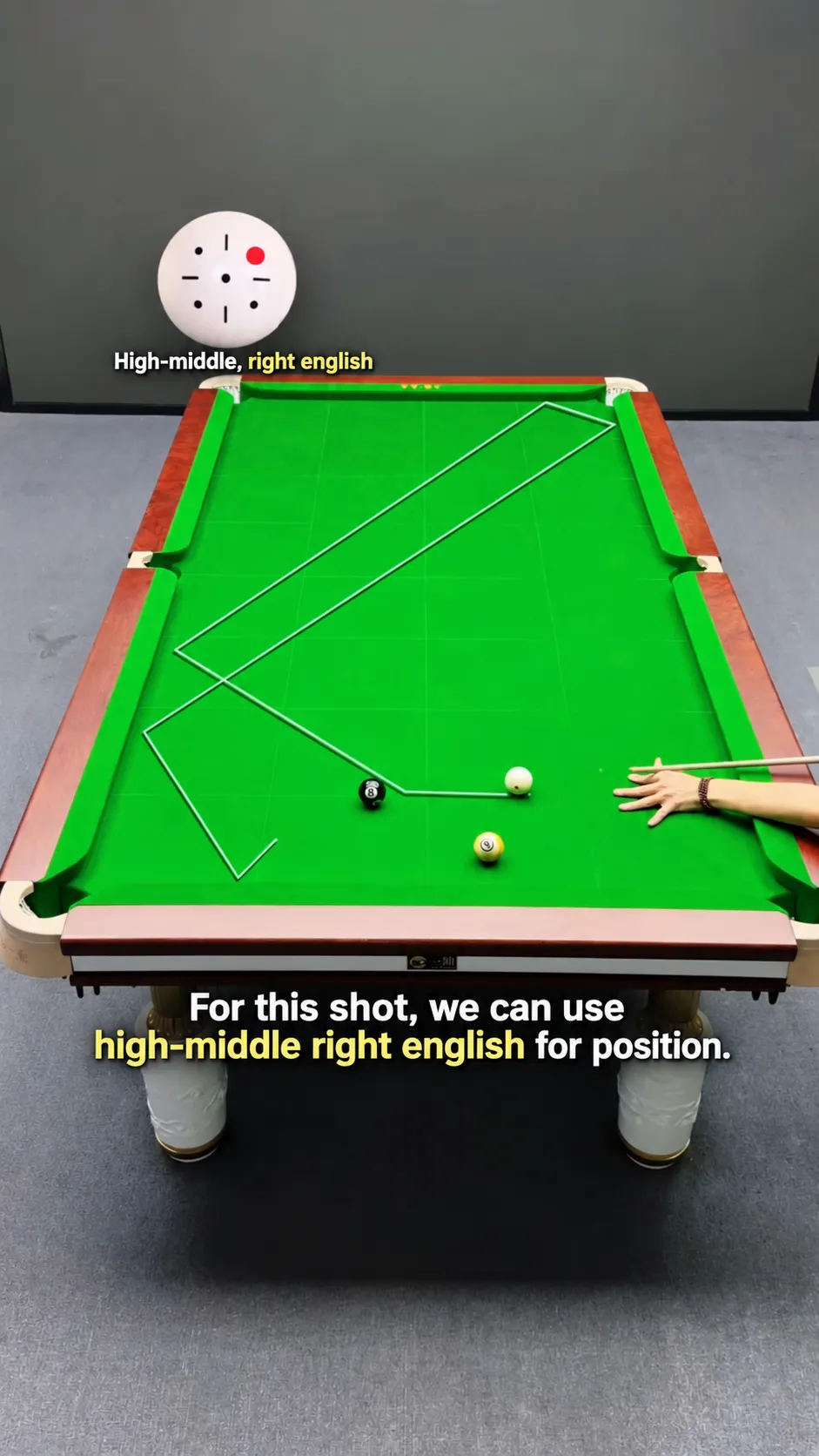
A diagram shows a three-ball layout with a chosen cue-ball route connecting the current shot to a workable position two shots ahead, followed by two worked route examples on a real table.
- Think
Given three balls, which route keeps the third ball workable, not just the second?
- Play
Simple three-ball layouts, planning and executing a route that keeps the next two shots open rather than just the next one.
- Table check
Complete a three-ball sequence, explaining beforehand which route the cue ball will take and why.
Point, zone, route#
Point Positioning asks where the cue ball stops. Zone Positioning asks which area is acceptable. Route Positioning asks something broader: what path does the cue ball take to get there, and does that path itself create or block opportunities?
Point gives precision. Zone gives margin. Route gives options.
A three-shot sequence, not one shot at a time#
A finishing point can look correct for the very next shot and still be a poor choice once you consider the shot after that. Route positioning asks you to plan a three-shot sequence rather than treating each shot in isolation:
Shot 1 → position for Shot 2 → position for Shot 3
Using the whole path#
Don’t force the cue ball to stop at the right place. Build a route that naturally passes through the right place. In suitable situations, a one-rail, two-rail or multi-rail route can offer a larger useful margin than trying to control one exact direct stopping distance — though a longer route is not automatically easier or safer than a direct one; it’s one more option to weigh, not a rule to always prefer.
Combining the three layers#
On a real layout, point, zone and route thinking work together. A route might pass near several possible finishing points; picking a route with a workable zone at the far end, rather than the nearest point, is often the better choice once the next-but-one shot is considered.
This is the concrete version of the course’s own theme: three shots ahead means the cue ball’s path is chosen with the shot after next already in mind, not just the shot on the table right now.
Weekly quiz
Complete this week's graded quiz.