Week 8: Point Positioning
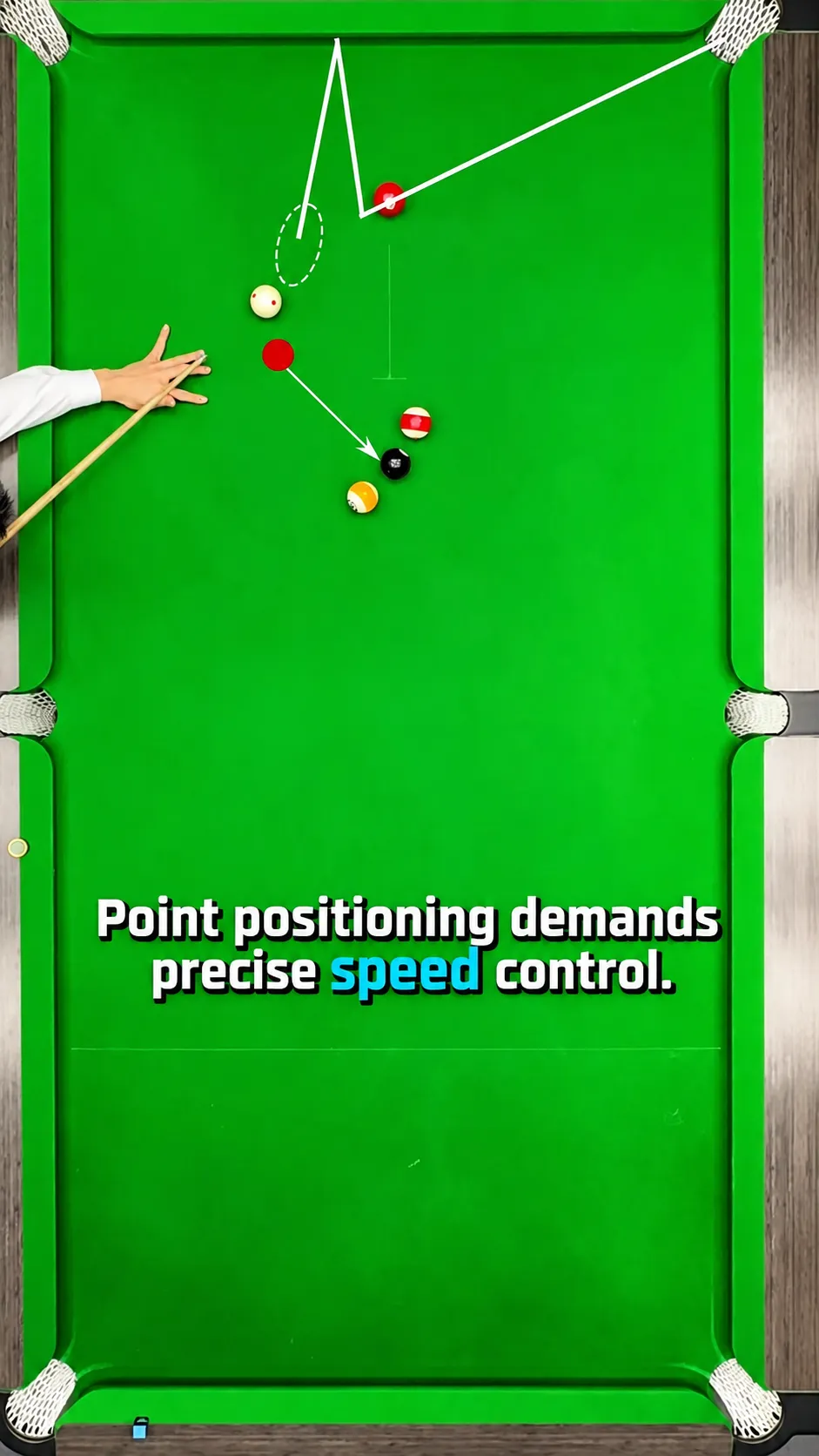
The first formal positioning method, Point Positioning: can I make the cue ball finish at a specific location?
12 April 2027
Learning objectives
- Select a specific cue-ball finishing point.
- Combine speed with simple stop/follow/draw control.
- Understand when precise point positioning is useful.
- Recognise that high precision creates a smaller margin for error.
- Use point positioning mainly for simple or short-range position play.
- Learn
Point Positioning asks a precise question: can I make the cue ball finish at a specific location? It combines speed with the stop, follow and draw control from Week 6 to aim at one target point. It works best for simple, short-range position, because it demands accurate cueing and speed control — a small error can send the cue ball too far, too short, or onto the wrong angle for the next shot.
- See
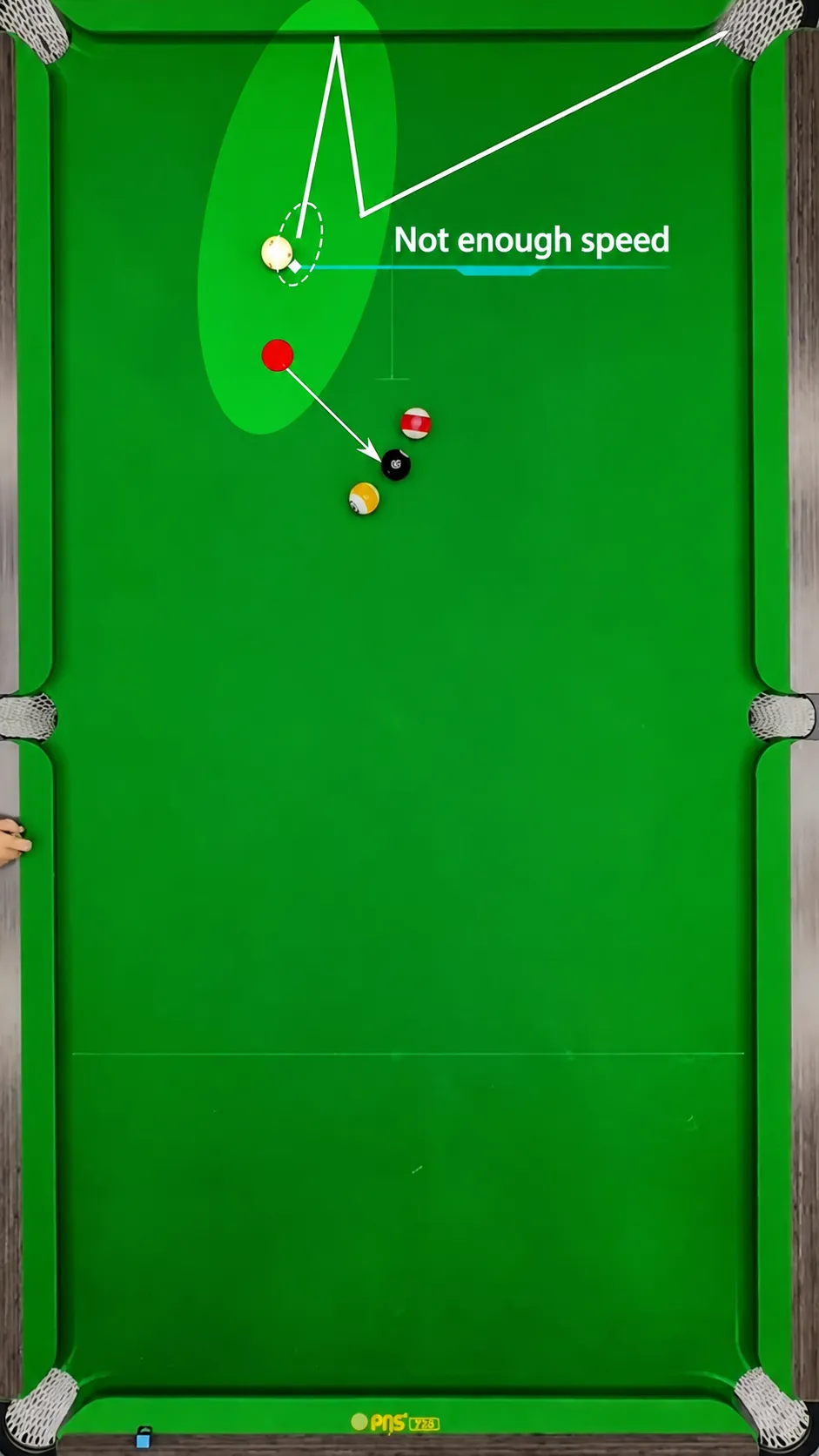
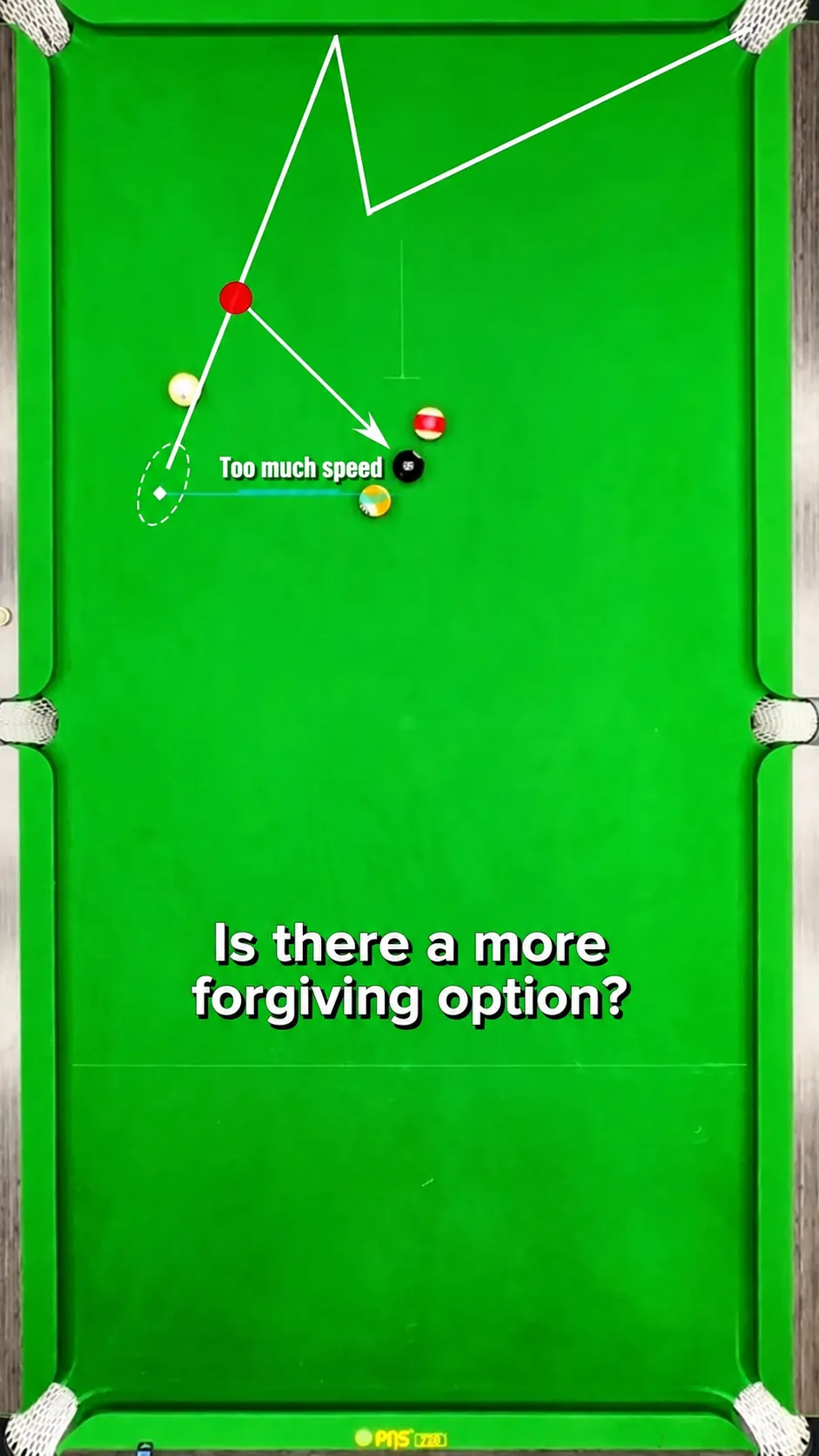
Diagrams show one exact target point, a small error short, and a small error long.
- Think
Is point positioning appropriate for this simple position problem, or is the target too demanding?
- Play
Short-range position drills, aiming for a visible target marker.
- Table check
Pot the object ball and finish the cue ball inside or close to a small target area.
A note on these labels#
Point Positioning, Zone Positioning (Week 9) and Route Positioning (Week 10) are the labels this course uses to organise cue-ball position play, from most precise to most strategic. They’re a teaching framework for this course — not universal or official terminology used by every billiards coaching system.
Choosing the target#
Point positioning starts with a specific desired cue-ball finishing location, then uses speed, vertical spin and a simple natural cue-ball path to try to reach it.
Where it works#
It works best when the shot is relatively simple, the cue ball’s travel is short, and the next ball needs fairly precise position.
Its limit#
Point positioning demands accurate cueing and speed control. The smaller and more exact the target, the smaller the margin for error — a small error can mean travelling too far, stopping short, or losing the correct angle for the next shot.
You can now control where the cue ball stops. But in a real run, precision alone is not enough.
The next question is not: “Can I stop here?”
It is: “Which side of the next ball should I be on?”
Weekly quiz
Complete this week's graded quiz.