Week 7: Side Spin & Cushion Reactions
Left and right side spin, and how they can change the cue ball's reaction off a cushion. "Spin is a tool, not a shortcut."
5 April 2027
Learning objectives
- Identify left and right side spin.
- Understand that side spin changes cue-ball behaviour at cushions.
- Compare no-spin and side-spin cushion reactions.
- Use side spin only when it has a clear positional purpose.
- Recognise that adding spin increases difficulty.
- Learn
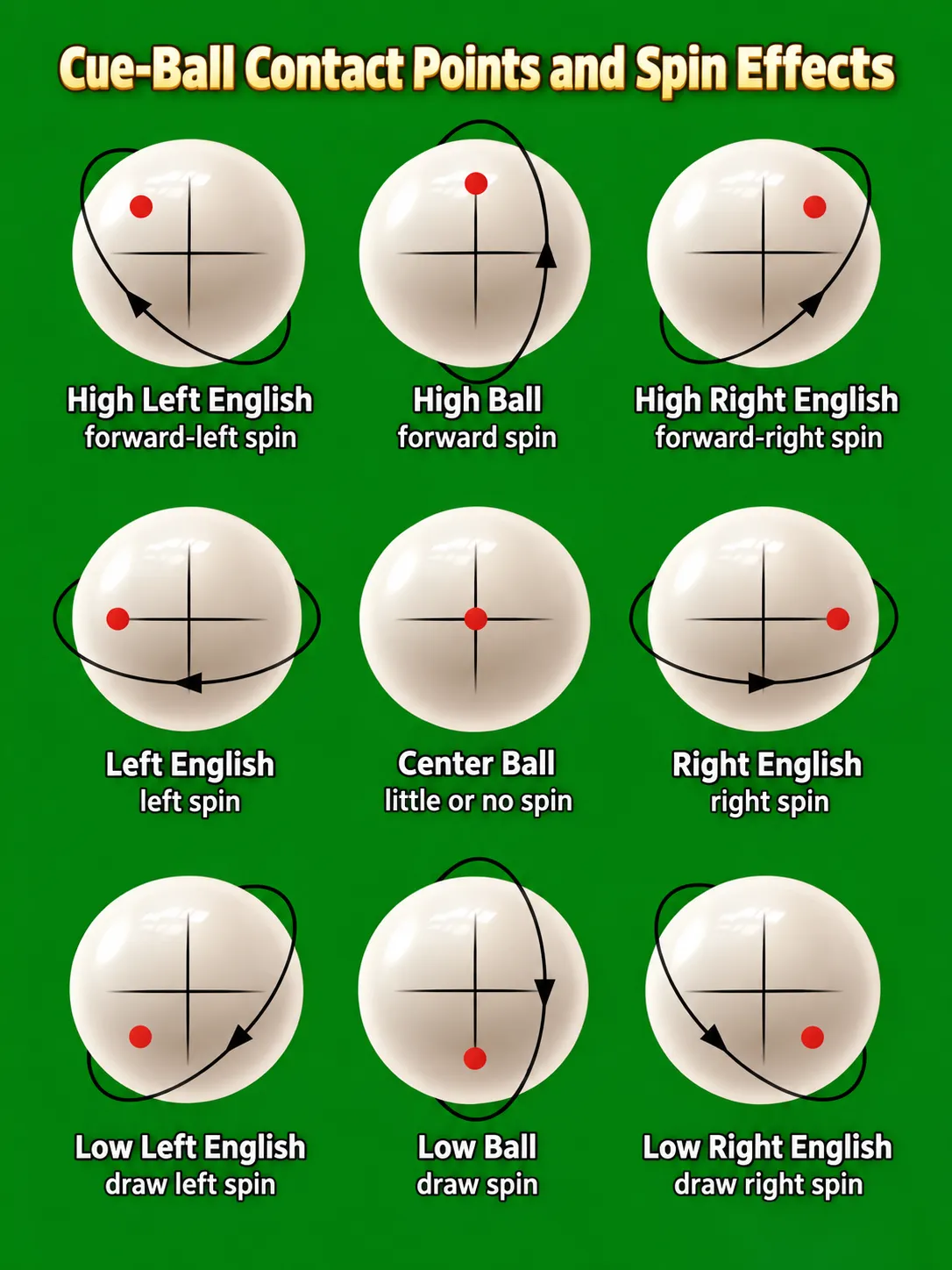
Contact to the left or right of centre — side spin, sometimes called English — can change how the cue ball leaves a cushion. This week keeps the idea at a conceptual level: a simple no-spin reference, then how left and right spin can alter the exit angle. Side spin also makes aiming and delivery harder, so it's a deliberate choice, not a default.
- See
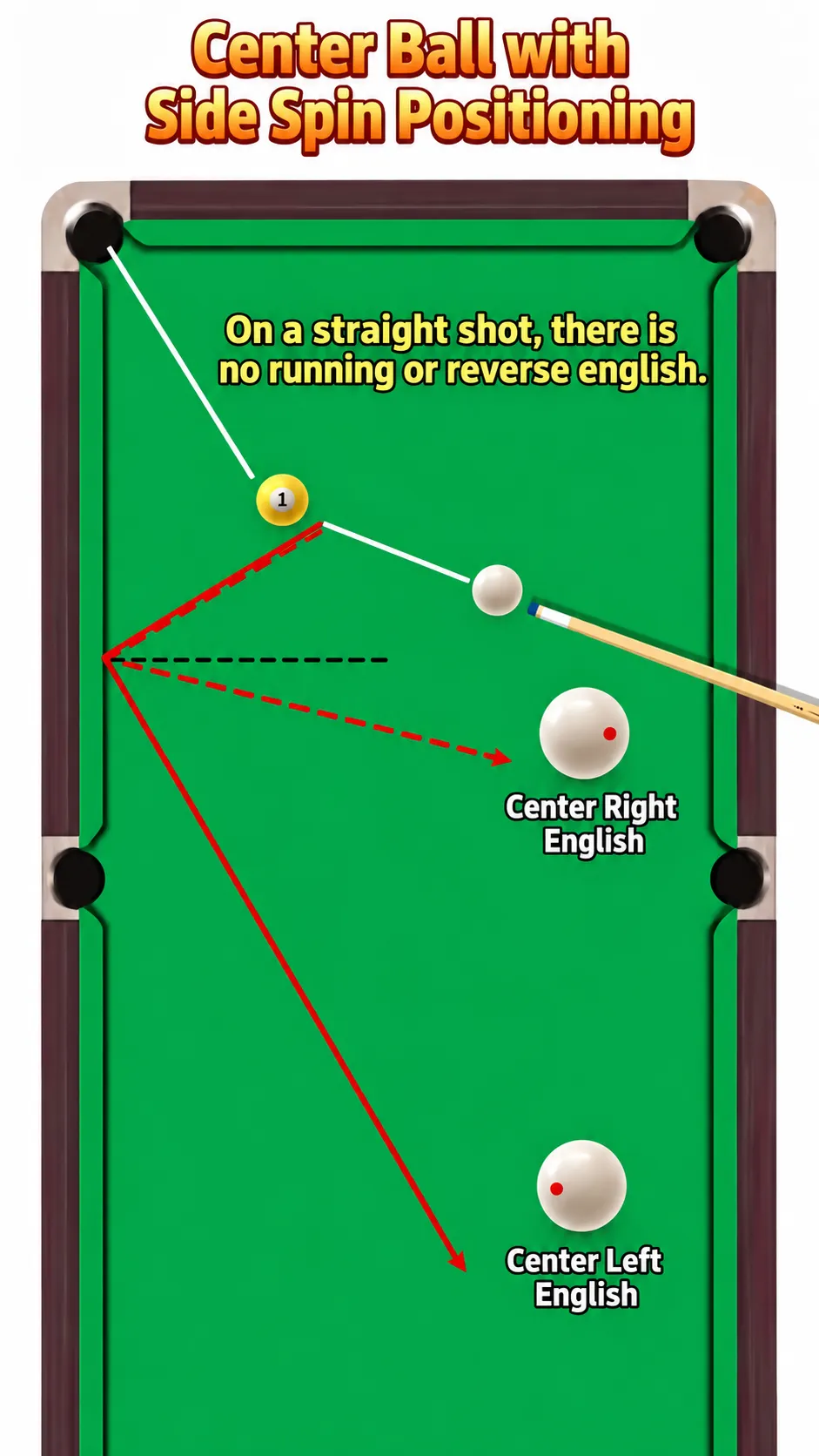
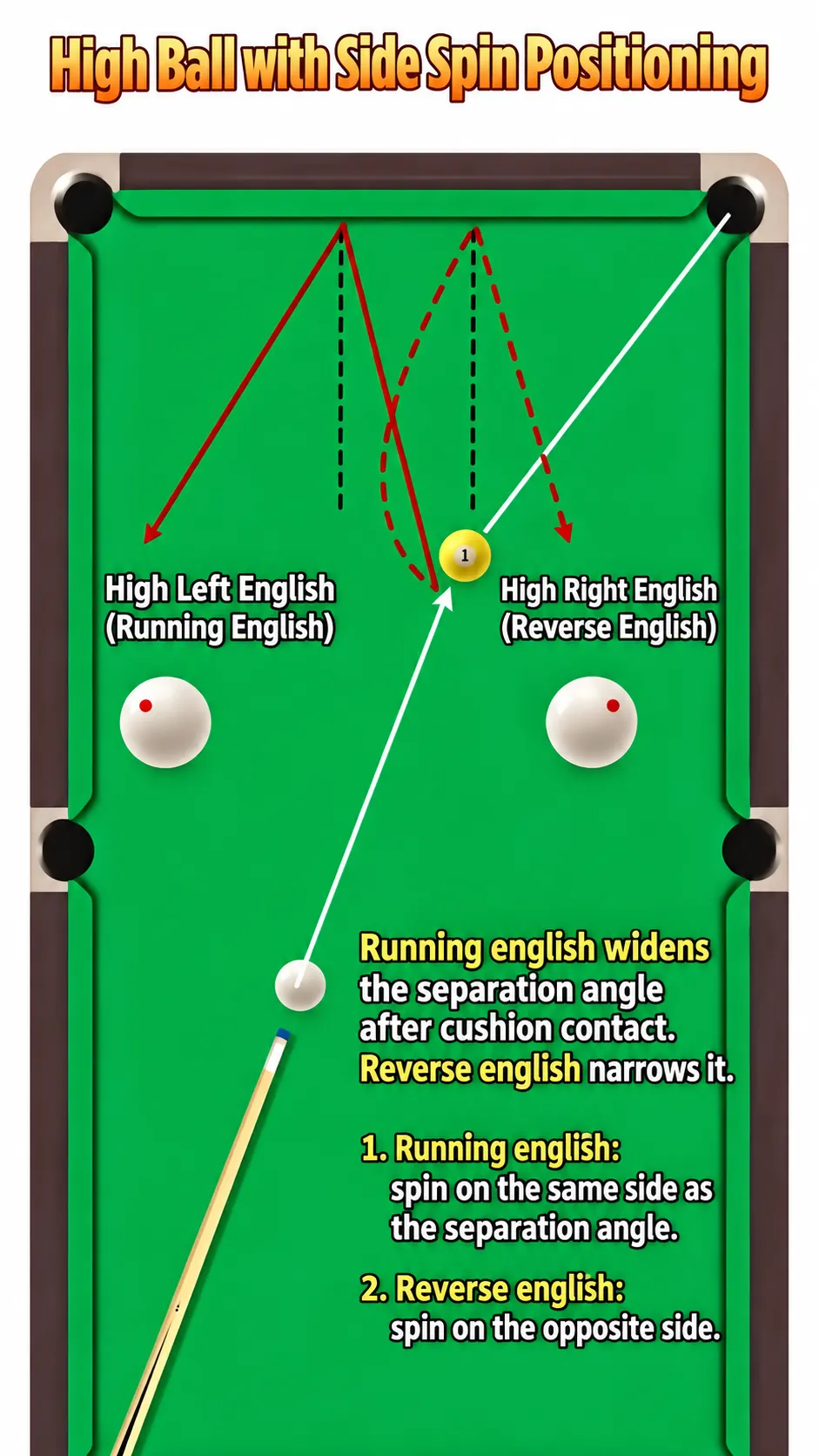
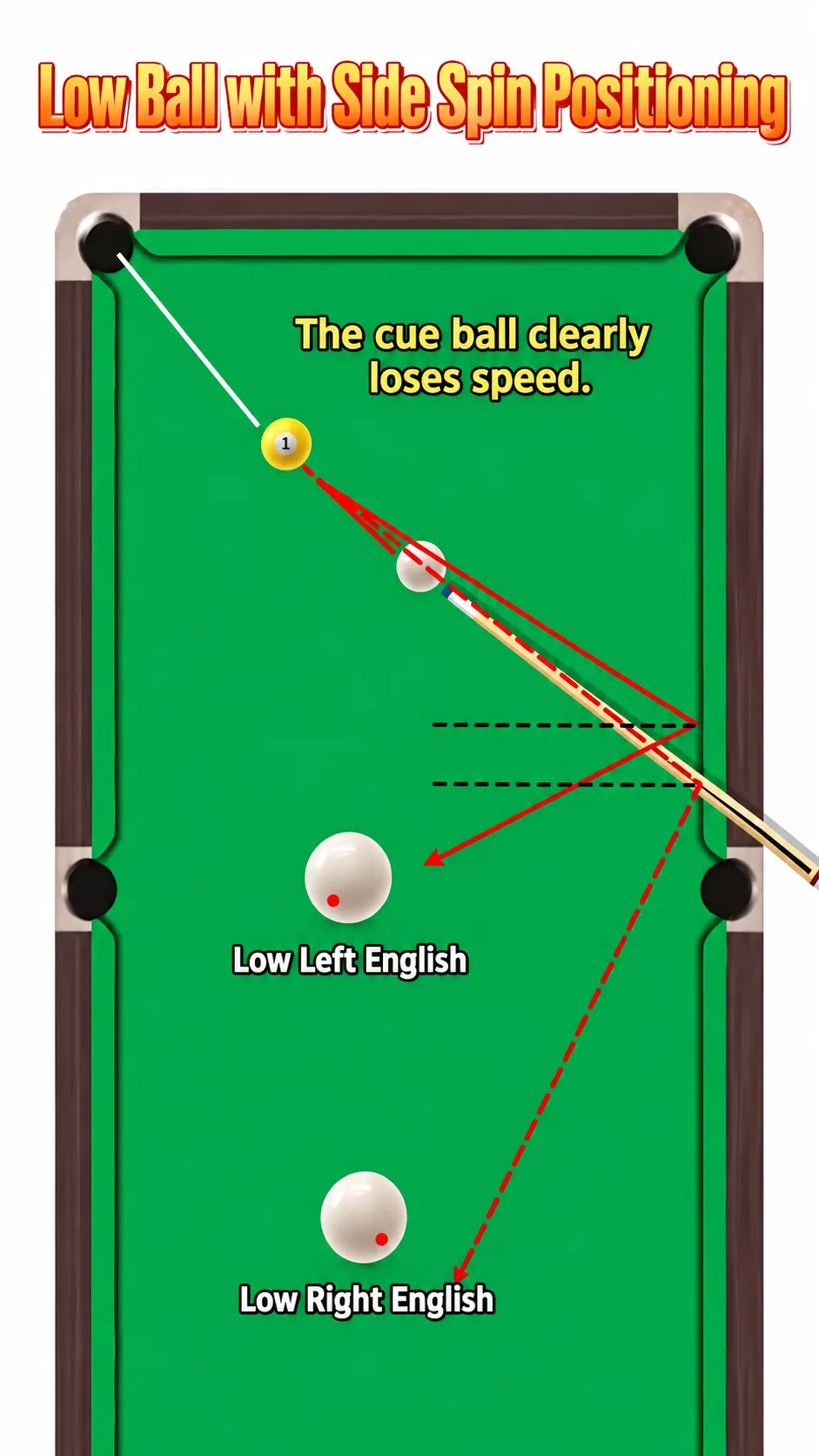
A cue-ball contact map and three cushion-reaction diagrams (centre, high and low ball with side spin) are shown.
- Think
Given a cue-ball path after hitting a rail, which spin was most likely used?
- Play
A fixed cushion experiment: same starting position, same rail, tried with centre, left and right contact — observe the exit differences.
- Table check
Predict, then test, one side-spin cushion reaction.
Left and right spin#
Contact to the left or right of centre is meant to influence cue-ball behaviour after contact — particularly at cushions — not to make a shot look more impressive.
A natural reference, and how spin changes it#
Start from a simple no-side-spin reference for how the cue ball leaves a cushion. Real cushion reactions are not a perfect geometric reflection, so treat this as a starting point. Left and right spin can then change the cue ball’s exit angle after it contacts a rail.
Running spin and check (reverse) spin exist as related ideas but stay at a basic conceptual level this week — this isn’t the week to go deep on either.
Cue-ball contact map#
Risk#
Side spin makes aiming and delivery more difficult. The cue ball can behave differently from a straightforward centre-ball shot, so it needs extra care to deliver accurately. A beginner shouldn’t add it just because it looks advanced — only reach for it when it serves a clear positional purpose.
Weekly quiz
Complete this week's graded quiz.