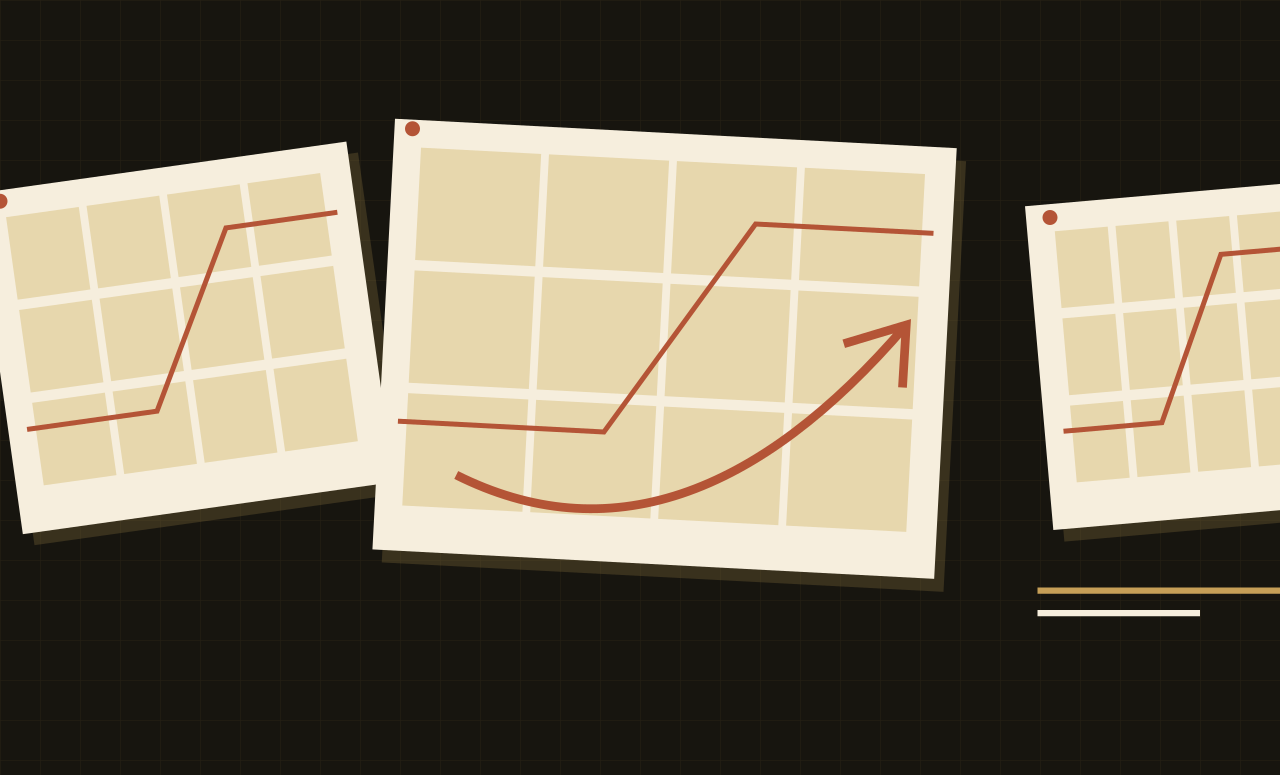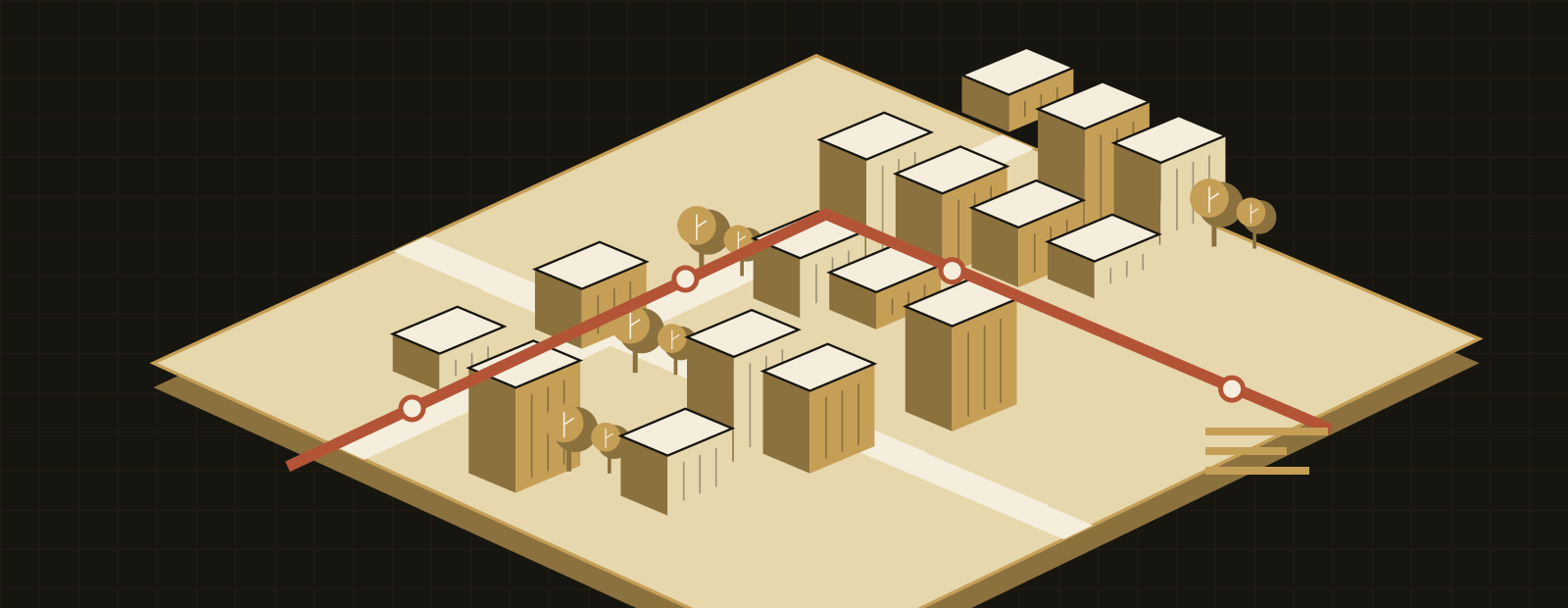
A second-year design studio that treats Cities: Skylines II as a legitimate planning tool. Build a district across the semester, defend every zoning, transit and budget choice at crit, and learn why no design decision is free of tradeoffs.
One save file. Twelve weeks. No decision without a tradeoff.
You will build something that works. Then a jury who was not in the room when you decided will ask what stopped working because of it.
What you will do
You will settle on a site and start your own save file in week one, and you will keep that file for the whole semester. Each week takes one planning problem — zoning, transit, infrastructure, budget, the public realm — and you will make the call in Cities: Skylines II, then defend it at crit against three named metrics: fiscal performance, mobility performance and livability. An improvement still needs an account of its costs. Learning to say what you traded, and why, is the actual syllabus.
In Week 6 you will widen a bottleneck at Wickstead from two lanes to four. In the worked hypothetical, the reference route takes 11.2 minutes at the morning peak beforehand, and 8.9 the moment the wider road opens. Six in-game weeks later, the same route takes 10.7 minutes, likely because drivers who had been avoiding the old jam start taking the new road too. The widening genuinely helps — it just helps less than the first number says, and the studio makes you report both numbers instead of stopping at the one that flatters the decision. You will leave with a comprehensive plan for a district you can walk a critic through, screenshot by screenshot.
Why simulate it
"You can draw a transit spine with a ruler in an afternoon," Marisol Quaye, who convenes the studio, says. "What you cannot draw is anybody choosing to ride it. The model will not let you skip that, and I have never found a crit that could." That is the argument for building inside a simulation rather than on paper: it refuses to certify a plan just because it looks right. Week 1 sets a standing rule that holds for the rest of semester — a plan claiming all three metrics improved has not been read carefully — and every jury afterward spends its afternoon checking whether you read your own numbers as carefully as you are asking it to.
Who it is for
Second-year students who want their first studio — the crit format, the weekly deliverable, the discipline of defending a design decision out loud. Come in expecting that a good plan is one where every number goes up, and you will spend twelve weeks finding out otherwise; that belief is what this studio is built to take apart. No prior experience with the software is assumed; the studio teaches the tool alongside the theory. If you want a semester of debate about whether cities should exist at all, this isn't that course — every week here ends with something built.
The semester at a glance
Twelve teaching weeks, one lecture and one studio session each, a two-week break after Week 6. Nine of those sessions run as a desk crit; three are assessed, at the pin-up in Week 4, the jury in Week 9 and the final jury in Week 12.
Enrolment: census ; last day to drop . What these dates mean.
- Assignments
- Studios
- Lectures
- Enrolment dates