Week 3: Text to Image
The first generator — prompt grammar for a single keyframe on anime-trained checkpoints, from one line to a full colour script.
8 March 2027
- Monday lecture: Text to Image
- Wednesday Dailies: The Line-up
- Friday due: A3 (3%)
Text to image is the first of four generators this course teaches, and it produces the smallest possible unit of work: one still frame, called a keyframe once it’s good enough to build something else on top of it. Everything from here through Phase 2 either generates a keyframe or does something to one, so a prompt that reliably produces a usable keyframe is this week’s entire craft question.
Why anime, first#
This phase works in anime grammar on purpose, and it’s a technical decision, not an aesthetic one. A generator’s small mistakes — a slightly wrong proportion, an edge that drifts — read differently depending on the style they land in: flat colour and clean linework compress detail into shape and outline, so a minor error gets absorbed as “that’s the line style.” The same magnitude of error on a photorealistic face lands squarely in the range human perception is most sensitive to and reads as wrong rather than stylised. Anime checkpoints buy room to make mistakes while the rest of the rig is still being learned; photoreal work waits until Phase 3, once the reference discipline exists to hold a face steady without that cover.
Four things a keyframe prompt should say#
Ladder rung t3four-part grammar
A usable prompt for a still collapses into four decisions, each earning roughly one clause: who or what the subject is, how the shot is framed — size and angle — what the light is doing, and a style anchor naming the checkpoint’s own aesthetic register rather than leaving it to chance. Write those four in order and the prompt is usable before any further polish gets added.
The checkpoint’s own vocabulary#
Ladder rung t4+ tag vocabulary + negative prompt
Anime-trained checkpoints are largely trained on tag-style captions, not prose, so they respond more precisely to a checkpoint’s own tag vocabulary than to a naturally written sentence saying the same thing. Pairing that vocabulary with a negative prompt — naming what to suppress, not just what to include — removes far more bad rolls than adding qualifiers to the positive prompt ever does.
The ladder#
The ladder for a text-to-image keyframe runs five tiers. The lowest tier is one line naming the subject alone. The next tier adds a line of setting and mood. The middle tier writes the full four-part grammar — subject, framing, light, and a style anchor. The next tier keeps that grammar and adds the checkpoint’s own tag vocabulary plus a negative prompt. The top tier keeps everything below it and adds a specific shot size, camera angle, and a colour script naming the palette across the sequence the keyframe belongs to.
Screening
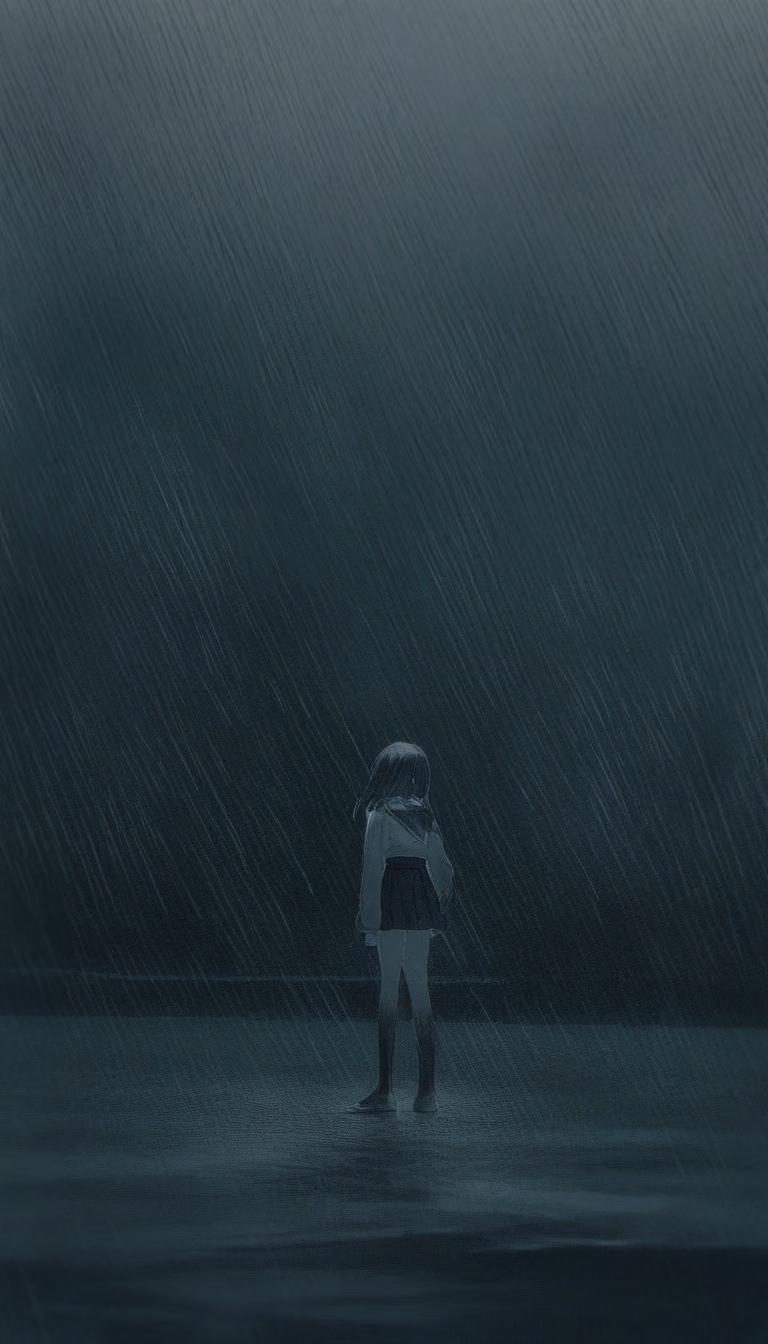
Rung 1one line
a young woman standing in the rain at night
One line names the subject and nothing else: the model picks its own wide, distant framing.
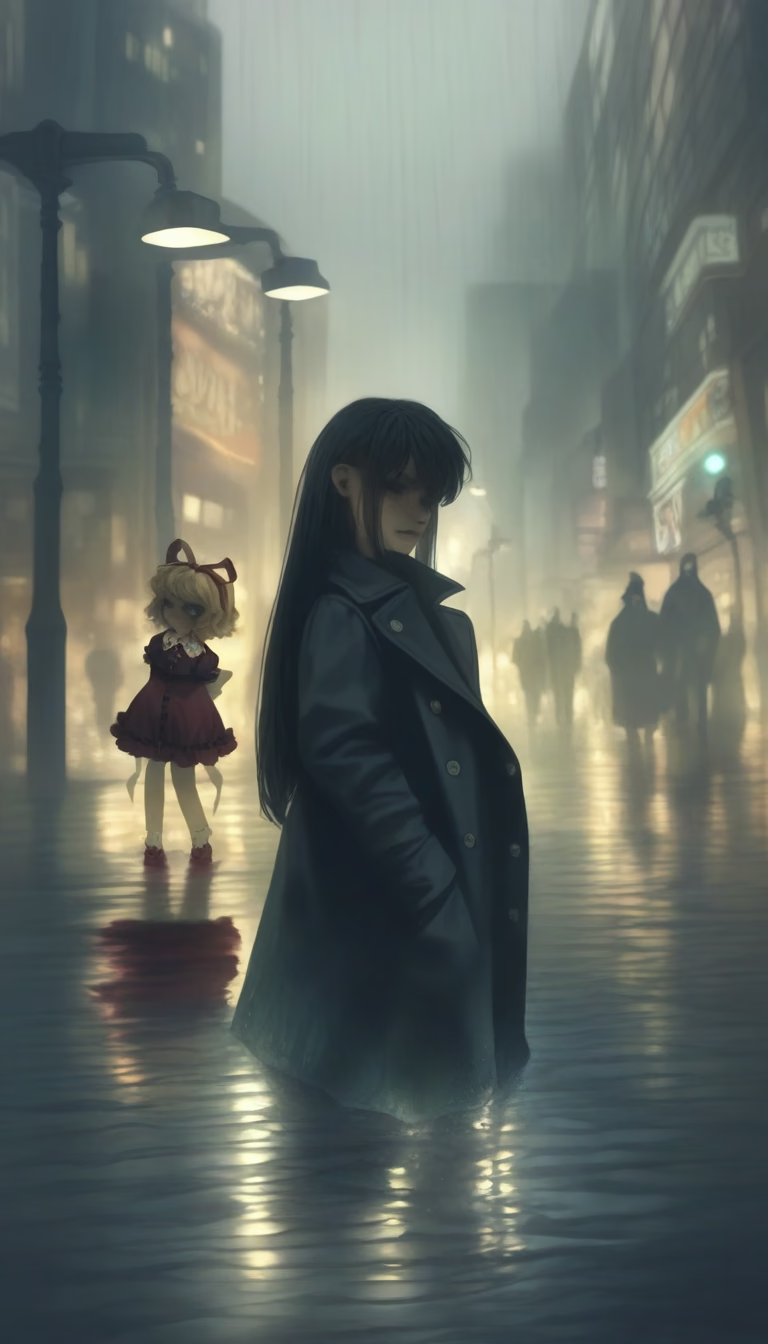
Rung 2setting and mood
a young woman with long black hair in a dark buttoned coat, standing on a wet city street at night in heavy rain under warm street lamps, calm and melancholy, looking back over her shoulder
Setting and mood fill the street with neon and a stray figure the prompt never asked for.
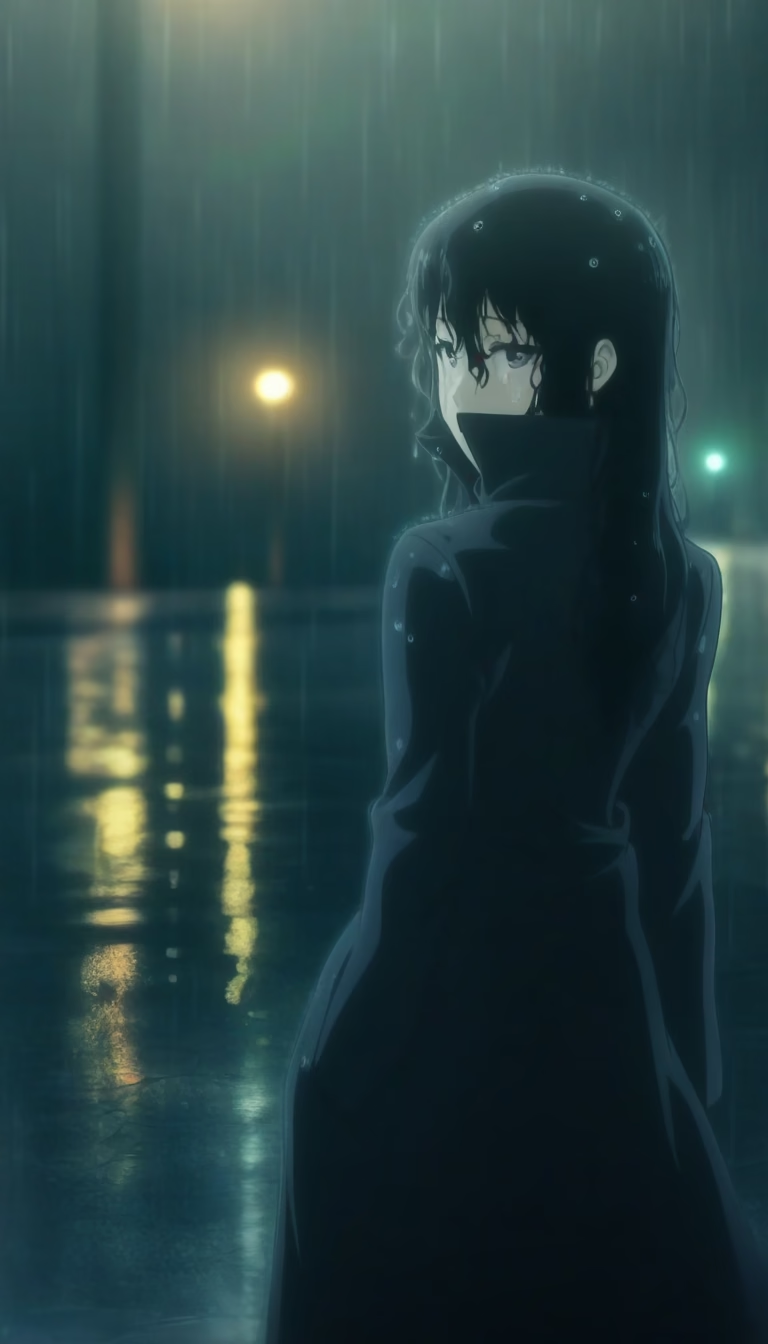
Rung 3four-part grammar
subject: 1girl, solo, young woman, long black hair, wet hair, dark long coat, closed coat, high collar, calm expression, melancholy
composition: cowboy shot, upper body, looking back, looking at viewer, over the shoulder, turning head
light: night, heavy rain, rain streaks, wet street, reflective ground, warm street lamp glow, amber light, warm backlight, rim light
style: anime screencap, movie still, cinematic lighting, depth of field, blurry background
Subject, framing, light and style anchor land the over-the-shoulder shot in one cool blue pass.
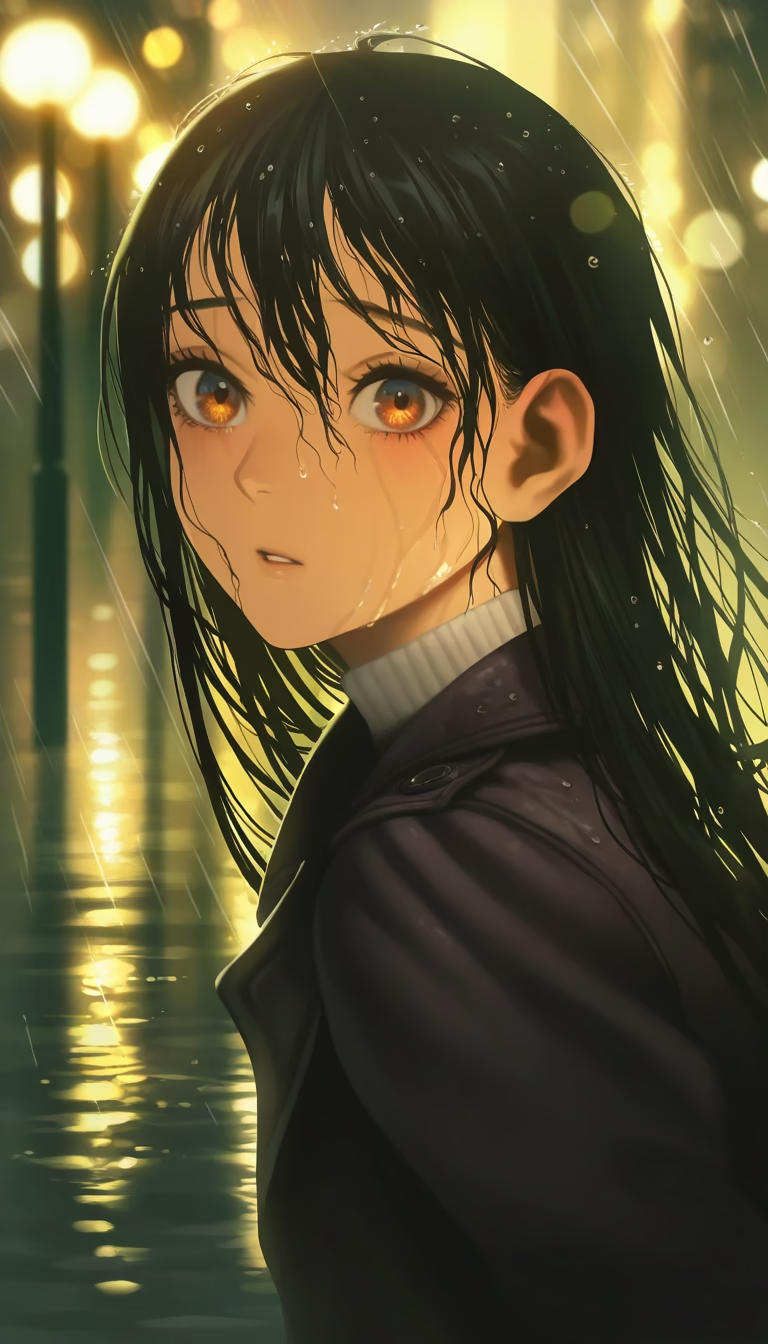
Rung 4+ tag vocabulary + negative prompt
masterpiece, best quality, amazing quality, very aesthetic, absurdres, newest, official art, anime screencap, movie still,
1girl, solo, young woman, cowboy shot, upper body, looking back, looking at viewer, over the shoulder, turning head,
long black hair, wet hair, hair between eyes, floating hair, strands of hair on face, fair skin, delicate features, natural makeup,
calm expression, restrained emotion, slightly parted lips, quiet gaze, melancholy,
dark long coat, closed coat, buttoned coat, high collar, turtleneck, long sleeves, covered shoulders, fully clothed, damp clothes, wet collar,
night, rain, heavy rain, rain streaks, falling raindrops, wet street, wet asphalt, puddle, reflective ground, reflection, city street at night,
warm street lamp glow, amber light, warm backlight, rim light, warm light on skin,
depth of field, shallow focus, blurry background, bokeh,
cinematic lighting, cinematic composition, dramatic lighting, film grain
The first negative prompt bans cold colour outright, and the whole frame turns warm and golden.
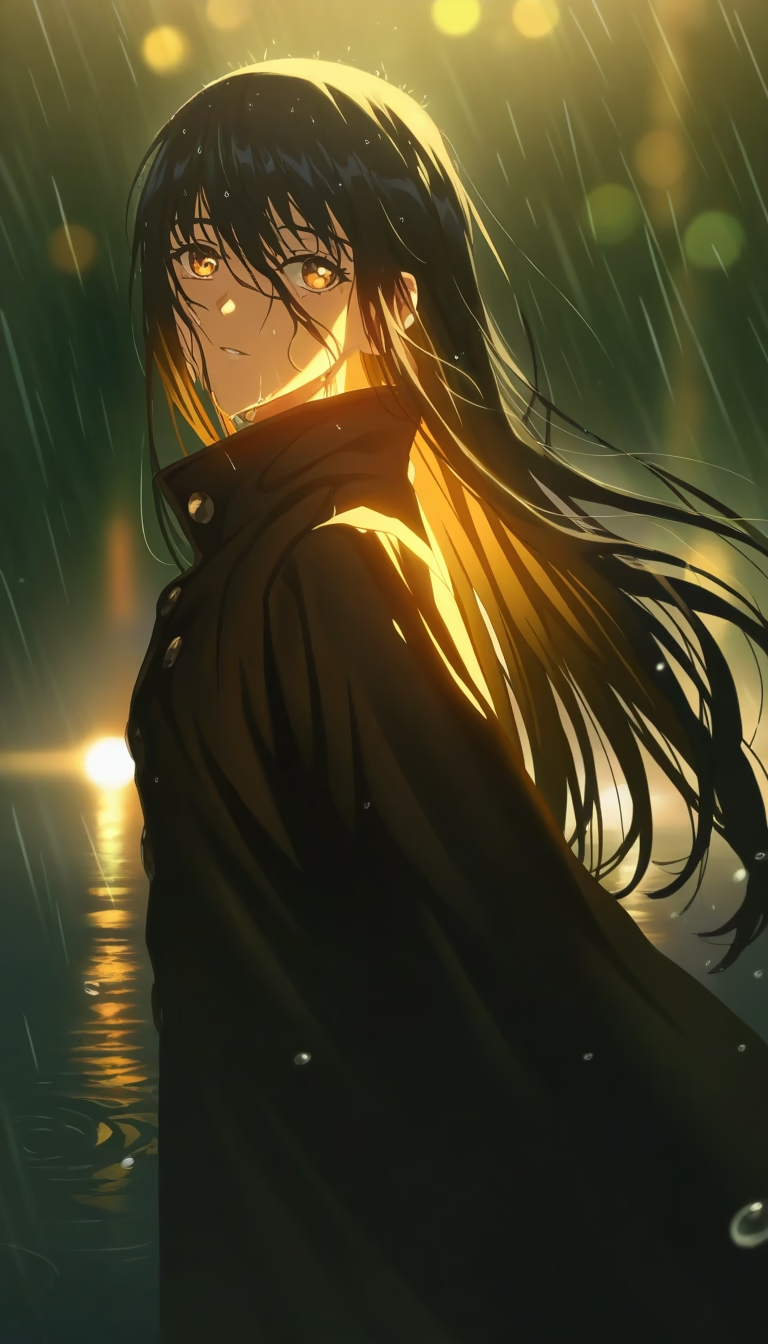
Rung 5+ shot size, camera angle, colour script
masterpiece, best quality, amazing quality, very aesthetic, absurdres, newest, official art, anime screencap, movie still,
1girl, solo, young woman, cowboy shot, upper body, looking back, looking at viewer, over the shoulder, turning head,
long black hair, wet hair, hair between eyes, floating hair, strands of hair on face, fair skin, delicate features, natural makeup,
calm expression, restrained emotion, slightly parted lips, quiet gaze, melancholy,
dark long coat, closed coat, buttoned coat, high collar, turtleneck, long sleeves, covered shoulders, fully clothed, damp clothes, wet collar,
night, rain, heavy rain, rain streaks, falling raindrops, wet street, wet asphalt, puddle, reflective ground, reflection, city street at night,
warm street lamp glow, amber light, golden light, orange light, bronze tone, warm backlight, rim light, warm light on skin,
abstract glowing light bands, blurred colored light spots, colorful bokeh, glowing haze, streaks of light on wet pavement,
depth of field, shallow focus, blurry background, bokeh,
cinematic lighting, cinematic composition, dramatic lighting, chiaroscuro, high contrast, dark theme, film grain,
rule of thirds, head in upper third, empty space above head, headroom
Rule-of-thirds headroom and a named colour script finish the keyframe this course reuses from here on.
Before class#
Pick one anime-trained checkpoint and read through its own documentation or model card for the tag vocabulary it expects.
This week’s exercise#
Produce one keyframe at each of the five ladder tiers above, on the same subject, keeping a seed and parameter log for all five. Bring all five keyframes, in ladder order, to Wednesday’s Dailies.
Reading#
Illustrious: an Open Advanced Illustration Model
Park et al.2024
person count ||| character names ||| rating ||| general tags ||| artist ||| score range based rating ||| year modifier
SDXL: Improving Latent Diffusion Models for High-Resolution Image Synthesis
Podell et al.2023
three times larger UNet backbone
Laxhar2024
We prohibit any form of commercialization
Danbooru (community wiki)
Spaces in tag names become underscores
Teaching team
- Vera Lin — Convener