Week 4: One line or many
The banks changed to a single serpentine line and the supermarkets never did. Both were right.
15 March 2027
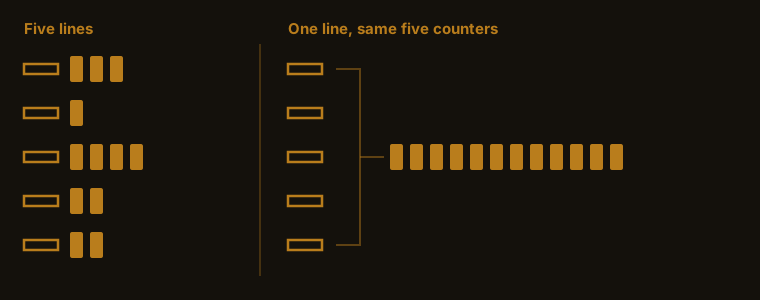
This is the first genuinely structural decision anybody makes about a queue, and most places make it without noticing. You can have five counters with five separate lines in front of them, or you can have five counters with one line feeding all of them, and those two arrangements behave very differently.
Pooling wins on the arithmetic and it wins by a lot. One line into five servers is dramatically better than five separate lines, not because the servers go faster but because nobody is ever idle while somebody else is waiting. The unlucky customer stuck behind a difficult transaction no longer pays for it alone.
So why does a supermarket still have you choosing a till. That is the interesting half of the hour, and the answer is not that supermarkets are badly run.
The arithmetic#
We compare two systems formally, setting several independent single-server queues against one queue that feeds several servers, at the same total capacity.
The pooled system wins on mean wait at every load, and the gap widens as you approach capacity. It also wins on fairness in a way we can define precisely, because the variance of the wait collapses. Nobody has a catastrophic day.
The reasons not to pool#
Five of them, and you need all five for the redesign.
- Space. A serpentine line for twelve tills is a building you do not have.
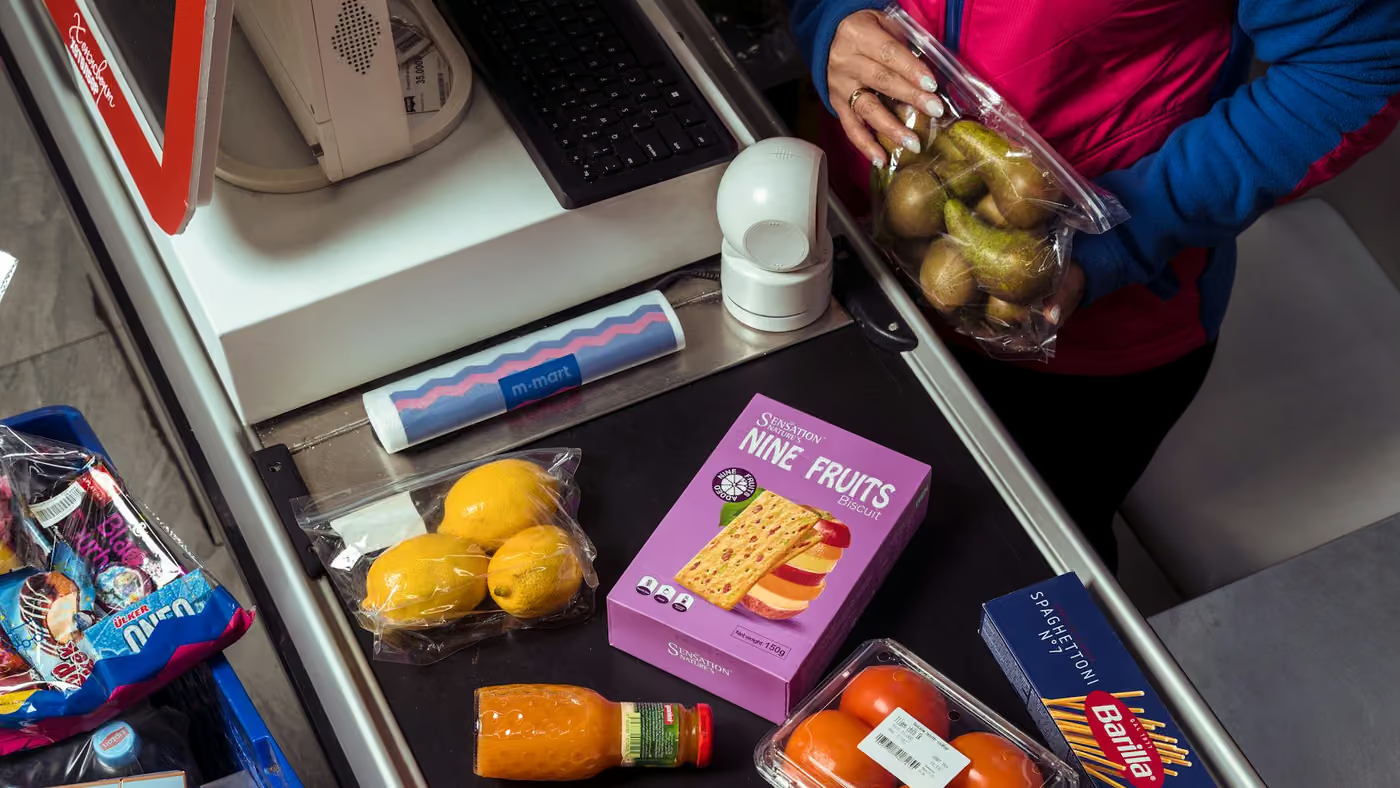
- Impulse purchase. The supermarket is selling you the wait.
- Perceived progress. One long line looks worse than four short ones even when it is faster, and week 8 is about what that costs.
- Specialisation. Pooling assumes any server can serve any customer.
- The balk. A single visible line of thirty people turns customers away in a way four lines of eight do not.
After this lecture#
You can say which of these applies at your own site, and that is the first half of The Redesign.
Teaching team
- Amos Redfern, Lecturer