The Main Path · 8 stops
Walk the path
Start at the Visitor Centre and climb. This is the walk in the order you would actually meet it — out of the arid beds, up through the gully, onto the open lawns under the gums. Read it before you come, or on the bench at stop four.
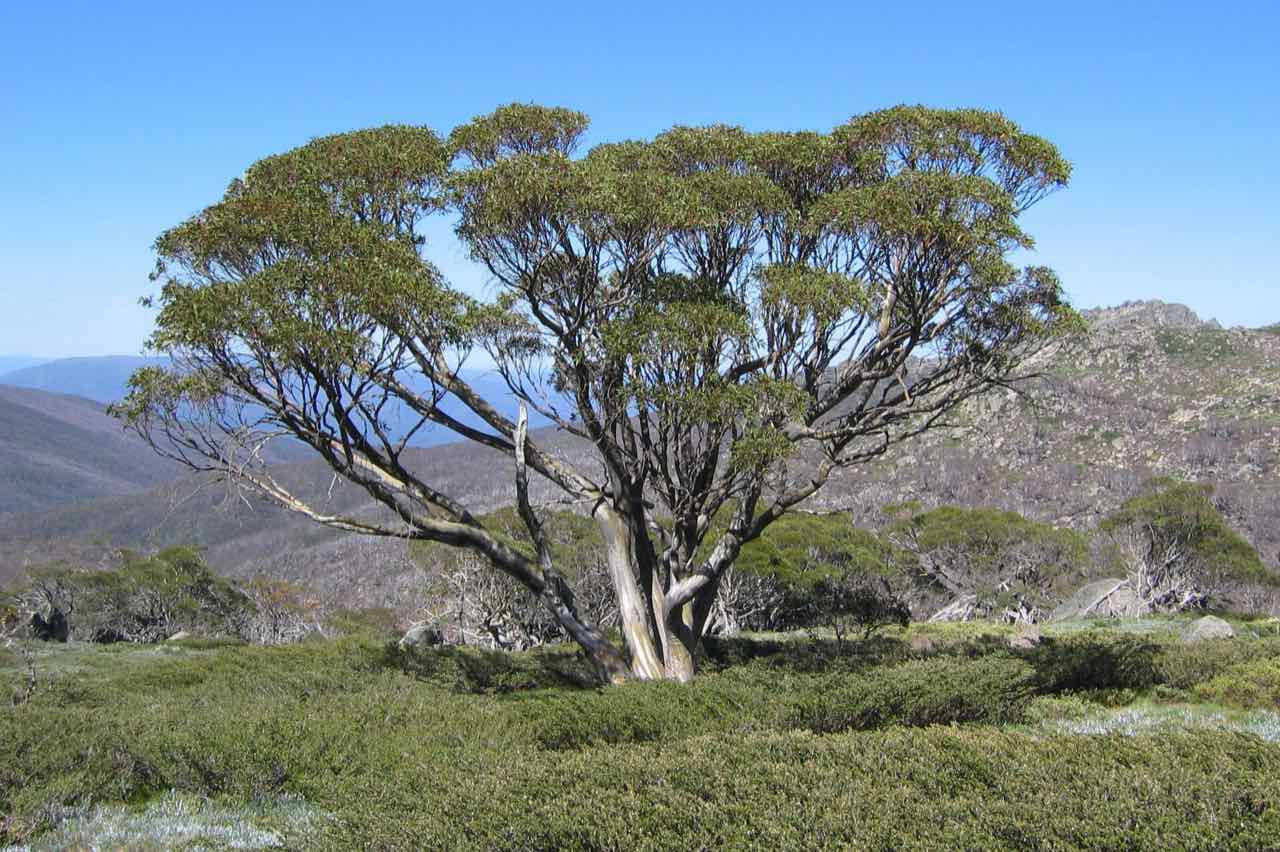

Eucalypt Lawn
Snow Gum
Eucalyptus pauciflora
- Its bark peels away in long ribbons each summer, leaving streaks of cream, olive and grey. The tree is repainting itself, not dying.
- Snow Gums are the last trees standing as you climb into the Australian Alps. Above them, nothing else that counts as a tree will grow.
- The leaves hang vertically rather than flat. Edge-on to the midday sun, they lose far less water than a leaf held out like a palm.
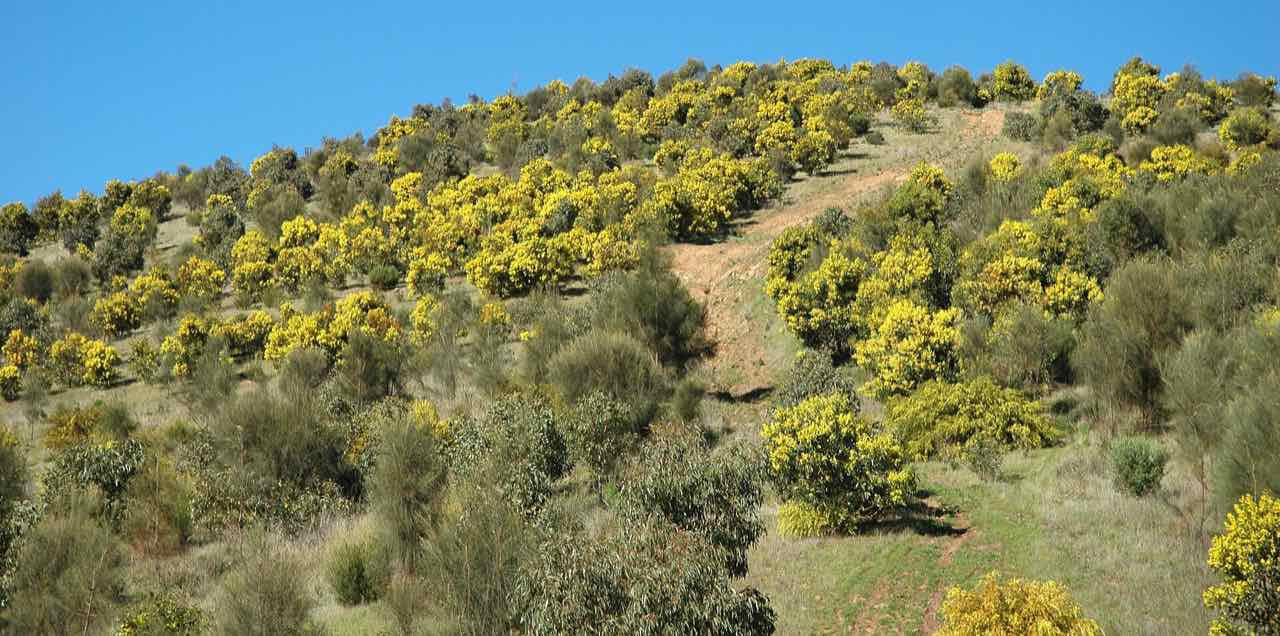

Main Path, near the Rock Garden
Golden Wattle
Acacia pycnantha
- Australia’s national floral emblem, formally proclaimed in 1988. Wattle Day falls on 1 September, roughly when this one is at its loudest.
- Look closely and no petals are doing the work. The gold is stamens — dozens of tiny flowers packed into every puff.
- What look like leaves are phyllodes: flattened leaf stalks doing a leaf’s job. Wattle seedlings start with true feathery leaves and give them up as they grow.
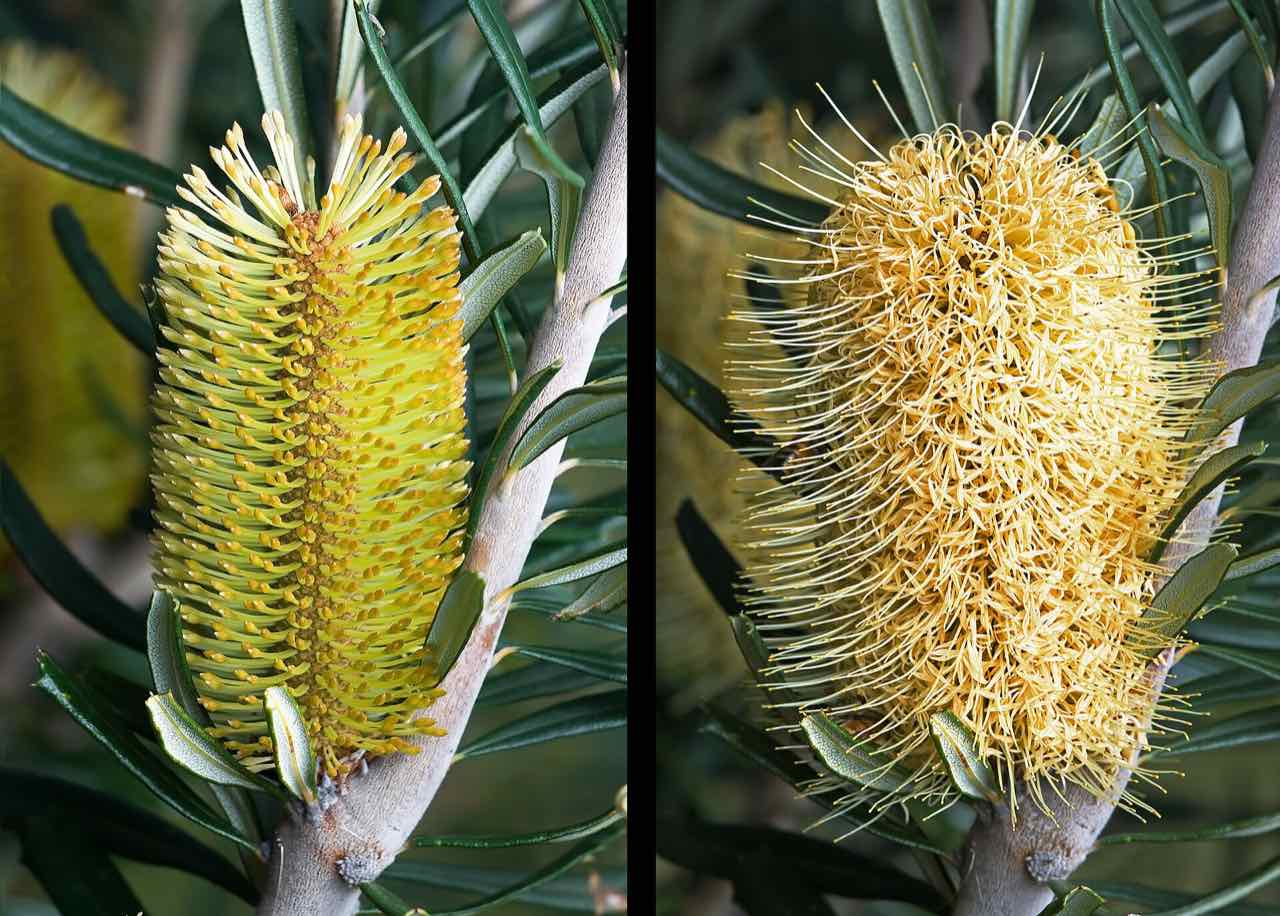

Banksia Garden
Silver Banksia
Banksia marginata
- The ‘cone’ is not a cone. It is hundreds of spent flowers fused into one woody head, each holding a follicle with seed inside.
- In many banksias those follicles stay shut for years and only crack open after fire. The seed drops into ash, which is exactly the plan.
- The genus carries Joseph Banks’ name, from the plants he and Daniel Solander collected on the Endeavour voyage of 1770.
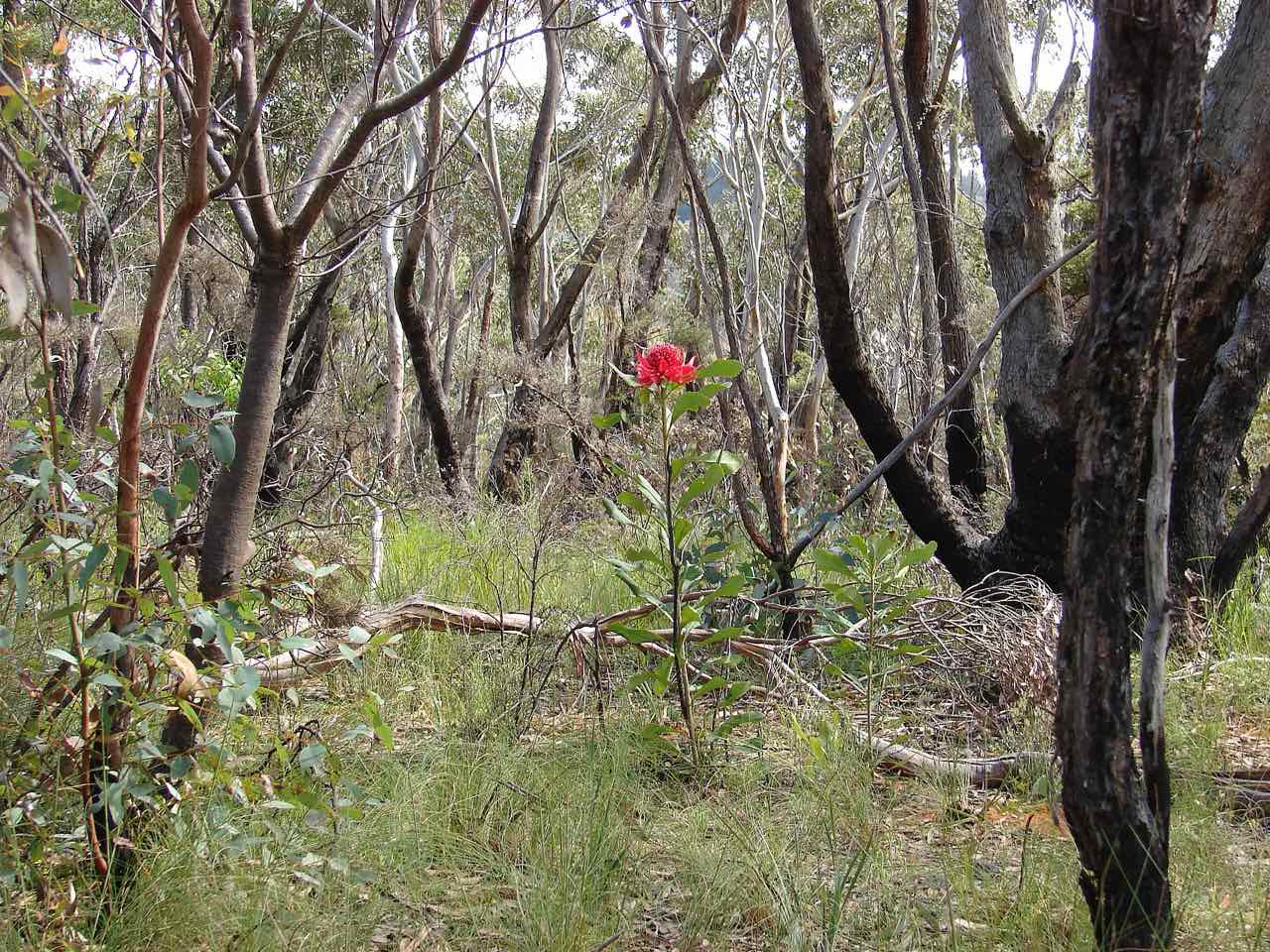

Proteaceae displays
Waratah
Telopea speciosissima
- Telopea comes from the Greek for ‘seen from afar’ — an unusually honest botanical name. A flowering waratah is visible across a gully.
- One head is up to 250 individual flowers, ringed by red bracts that are leaves pretending to be petals.
- It is the floral emblem of New South Wales, and it depends on honeyeaters rather than insects to move its pollen.

Rainforest Gully
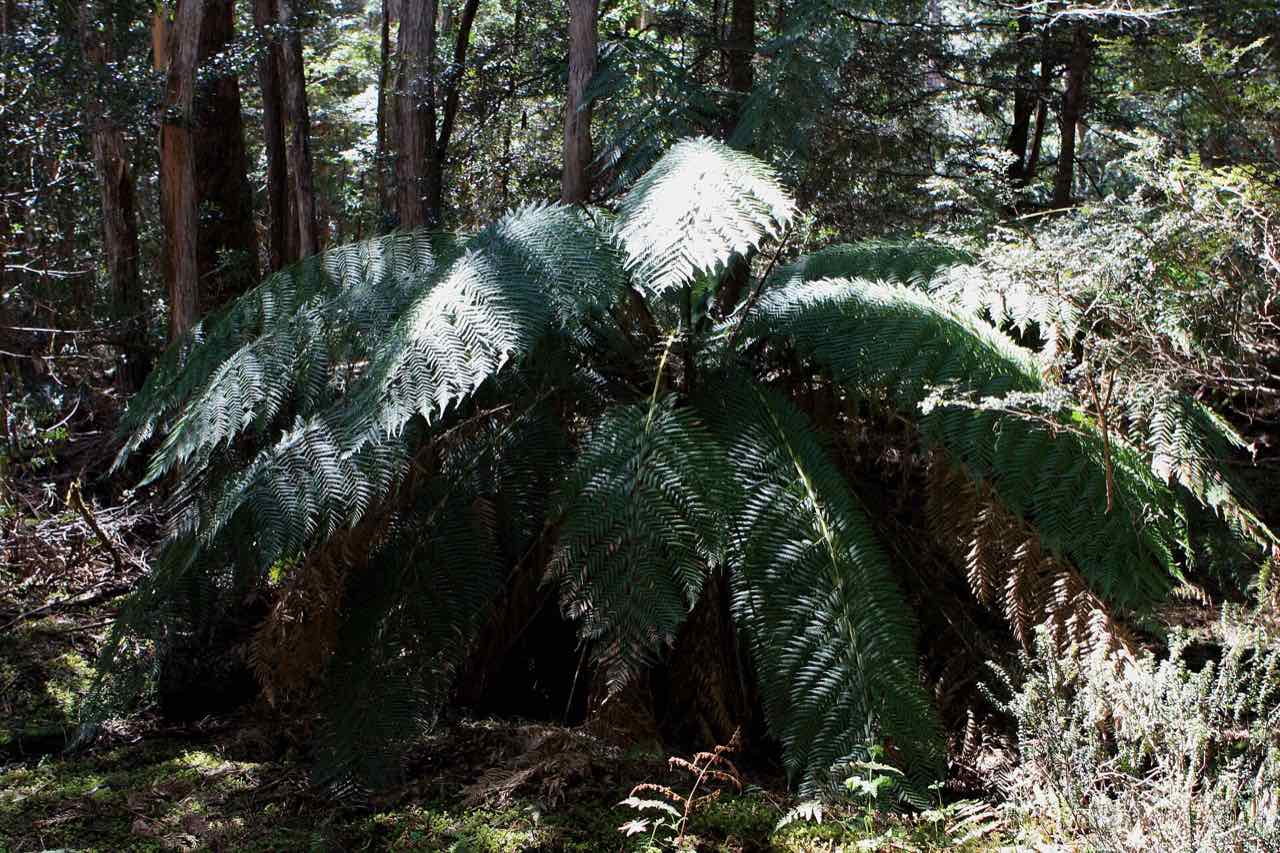
Soft Tree Fern
Dicksonia antarctica
- The trunk is not wood. It is a dense column of the fern’s own roots, grown around the stem year after year, which is why it feels fibrous rather than hard.
- Growth is measured in centimetres a year, so a tree fern at head height has been standing here longer than most of the people walking past it.
- This gully is engineered. A misting system installed in a dry fold of Black Mountain in 1970 turned it into rainforest, and it is still noticeably cooler than the car park.

Red Centre Garden
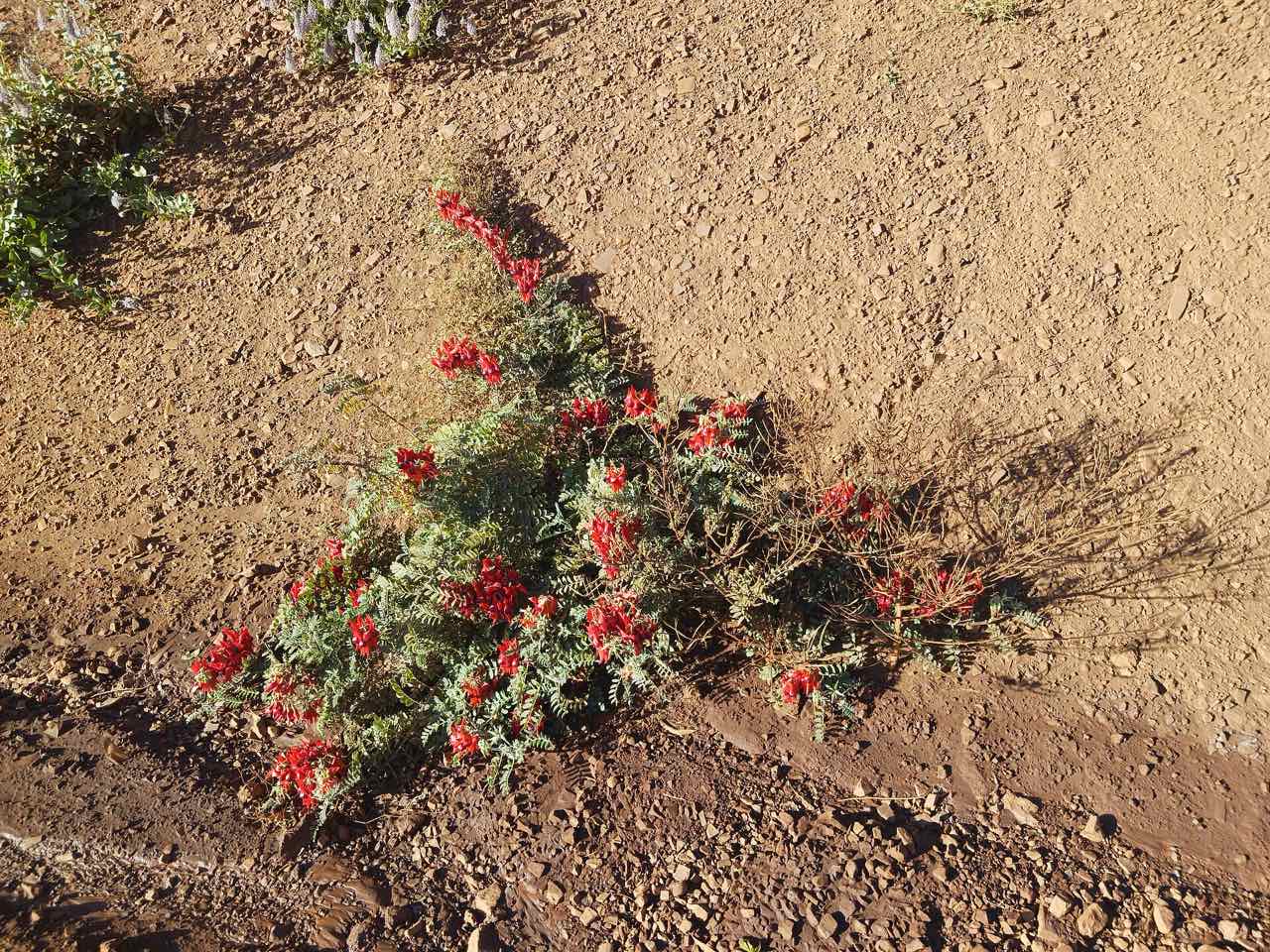
Sturt’s Desert Pea
Swainsona formosa
- Each flower carries a black boss at its centre, and the whole thing sits against red sand — one of the sharpest colour contrasts in Australian flora.
- It is South Australia’s floral emblem, and it germinates after desert rain rather than on any calendar.
- This bed was built on Black Mountain with sand and rock brought in, so an arid-zone plant could be seen growing in a cool-climate city.

Aboriginal Plant Use Trail
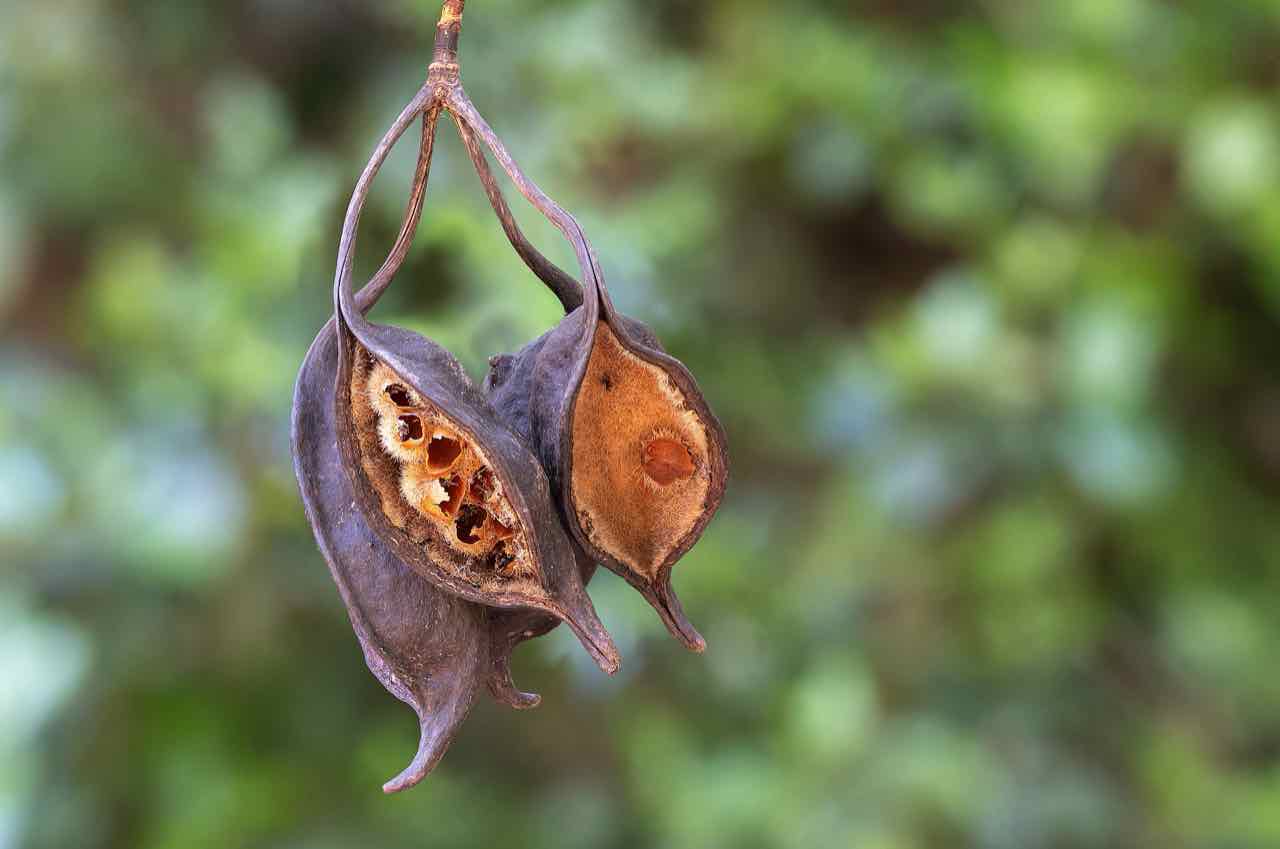
Kurrajong
Brachychiton populneus
- Ngunnawal people know this tree as Gurradjong, and the Gardens’ own trail records it as a source of food, fibre and water.
- The bark yields a strong fibre that was worked into string and rope for nets, fishing lines and dilly bags.
- Its seeds sit inside a boat-shaped pod, packed in fine hairs that irritate skin. The hairs have to be cleaned off before the seed is any use.

Paperbark Treehouse & Garden
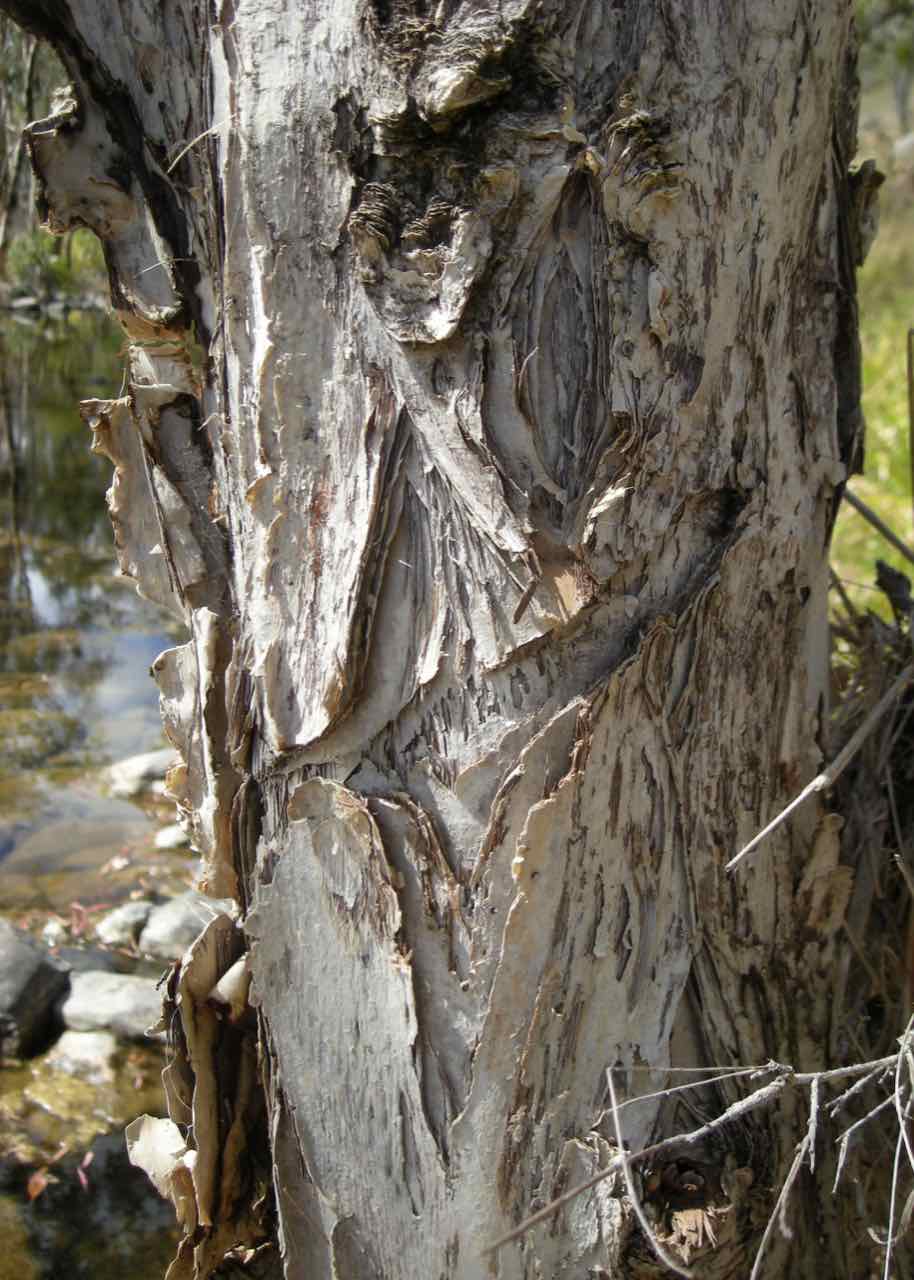
Snow-in-summer
Melaleuca linariifolia
- Ngunnawal people know this paperbark as Mudda. It is one of the plants recorded on the Gardens’ Aboriginal Plant Use Trail.
- The bark comes away in soft papery sheets, layer on layer — a tree that produces sheet material as a by-product of growing.
- In flower it goes so thoroughly white that the common name stops being poetic and becomes a plain description.
End of the walk
That was eight of four thousand three hundred
The collection holds more than 4,300 species, and this walk touched eight of them. The rest are waiting on the actual path, which is the point.