Week 11: Treaties broken
Garlic mustard's disruption of native mycorrhizal mutualisms, and a second, less settled example — hub-tree loss after heavy logging.
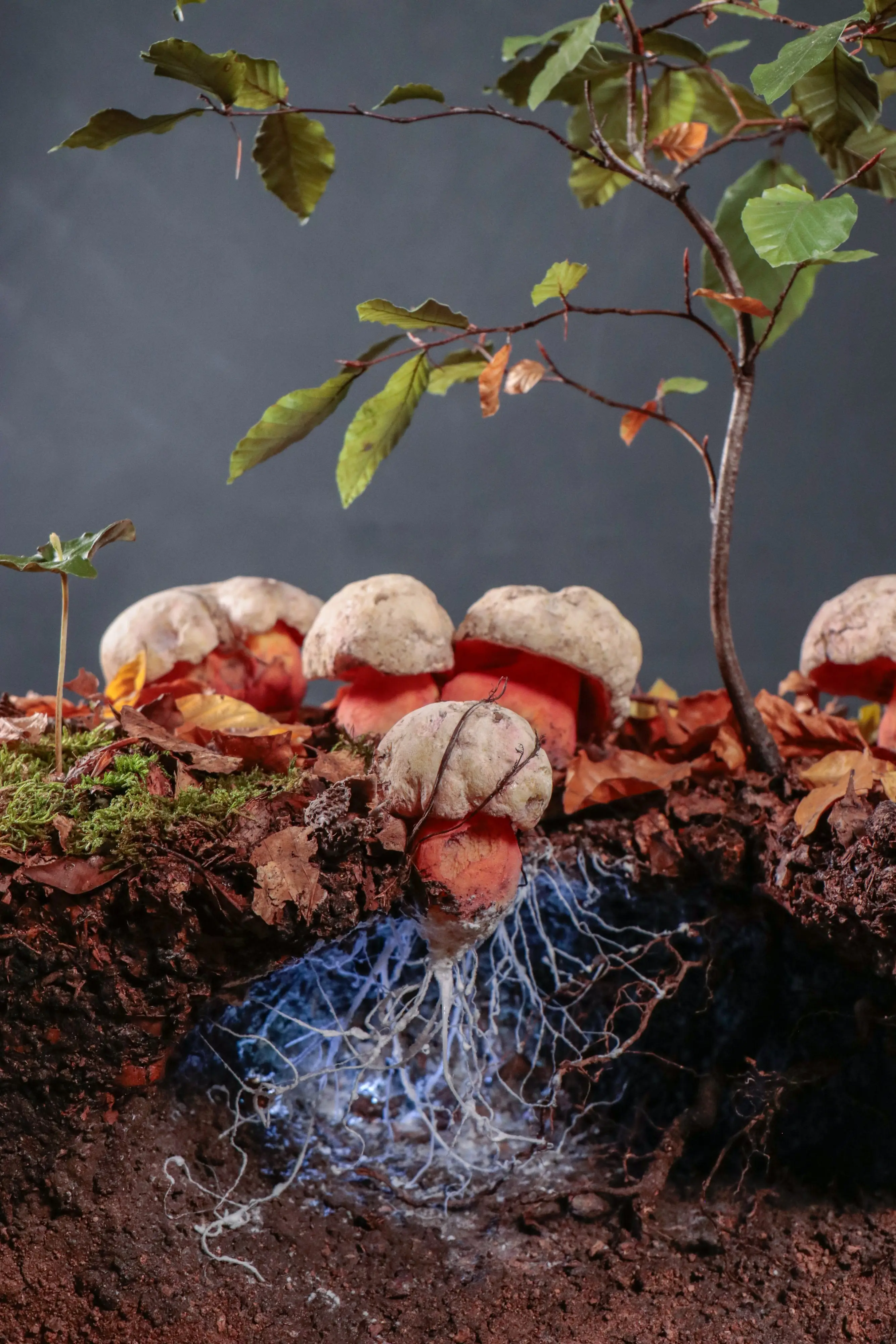
TB0815 · diorama S. Brandt, NHM Basel · CC BY 4.0
Dispatch 11
Dispatch 11- Date
- 3 May 2027
- Metaphor
- Treaties broken — an established arrangement destroyed by an outside actor
- Phenomenon
- Invasive plants disrupting native mycorrhizal mutualisms via allelochemicals — the case of garlic mustard (Alliaria petiolata) and native arbuscular mycorrhizal fungi
Outline#
- garlic mustard, invasive across much of North America, produces glucosinolate-derived compounds implicated in suppressing native arbuscular mycorrhizal fungi in the soil it invades
- native plants that depend on those AM partnerships for nutrient uptake are put at a disadvantage exactly where the invader is establishing, which helps the invader further and disadvantages the natives it displaces
- this is the clearest one-directional “broken treaty” of the semester: an outside party degrading an existing mutualism as a side effect of its own establishment strategy, not a negotiated failure between the original two parties
- second, smaller case: heavy logging that removes large, well-connected trees can leave a common mycorrhizal network without its best-connected node — how much this destabilises the wider network is less settled than the garlic mustard case, and the lecture says so rather than rounding up
Teaching team
- Dr. Marguerite Osei — convenor