Week 1: Opening lecture
What a mycorrhiza actually is, the two associations that cover most of it, and why this course is suspicious of its own central metaphor from week one.
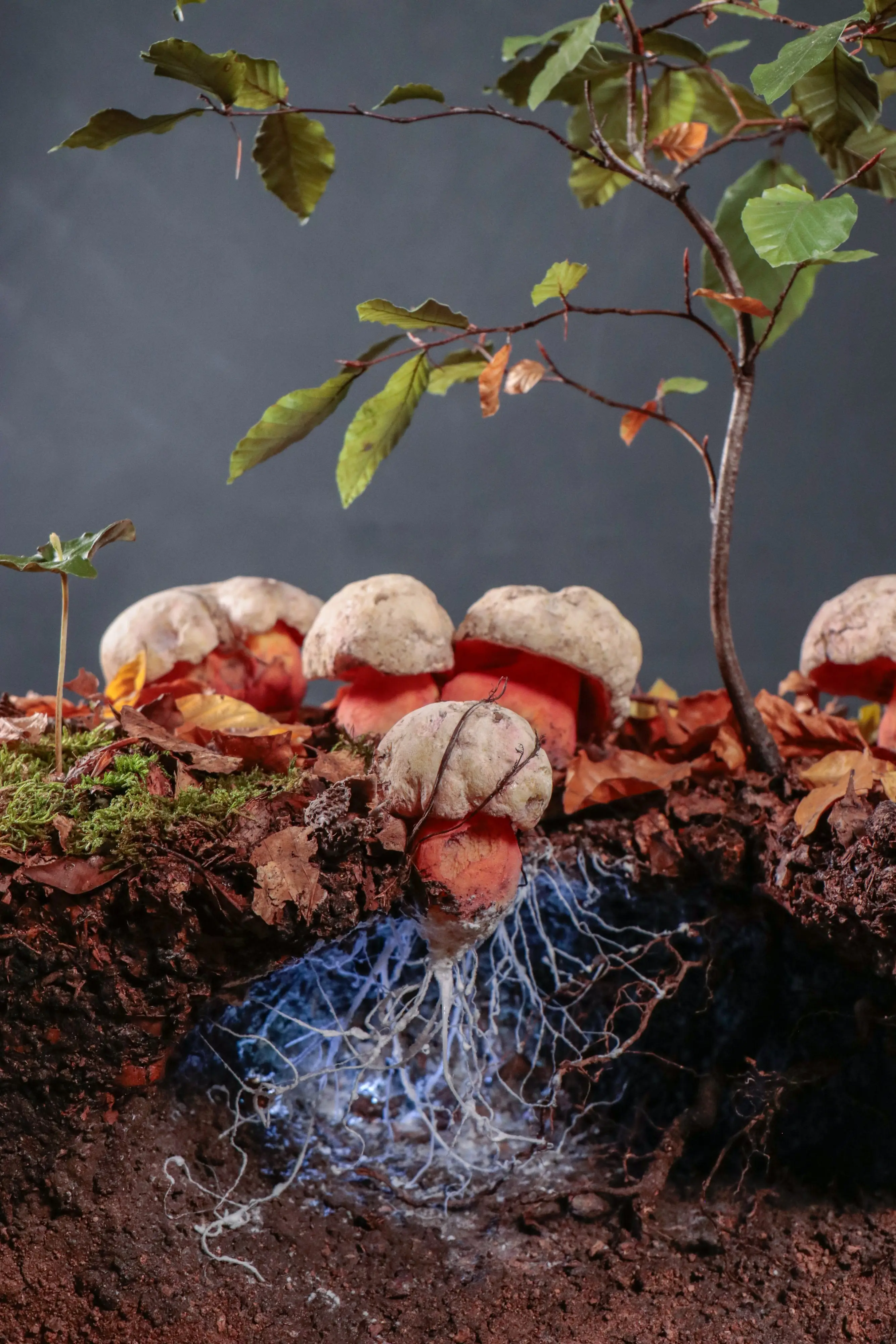
TB0815 · diorama S. Brandt, NHM Basel · CC BY 4.0
Dispatch 01
Dispatch 01- Date
- 22 February 2027
- Metaphor
- Credentials — what it takes to be recognised as a network at all
- Phenomenon
- Mycorrhizal symbiosis basics: hyphae, the arbuscular/ectomycorrhizal split, and what counts as evidence of connection rather than mere proximity
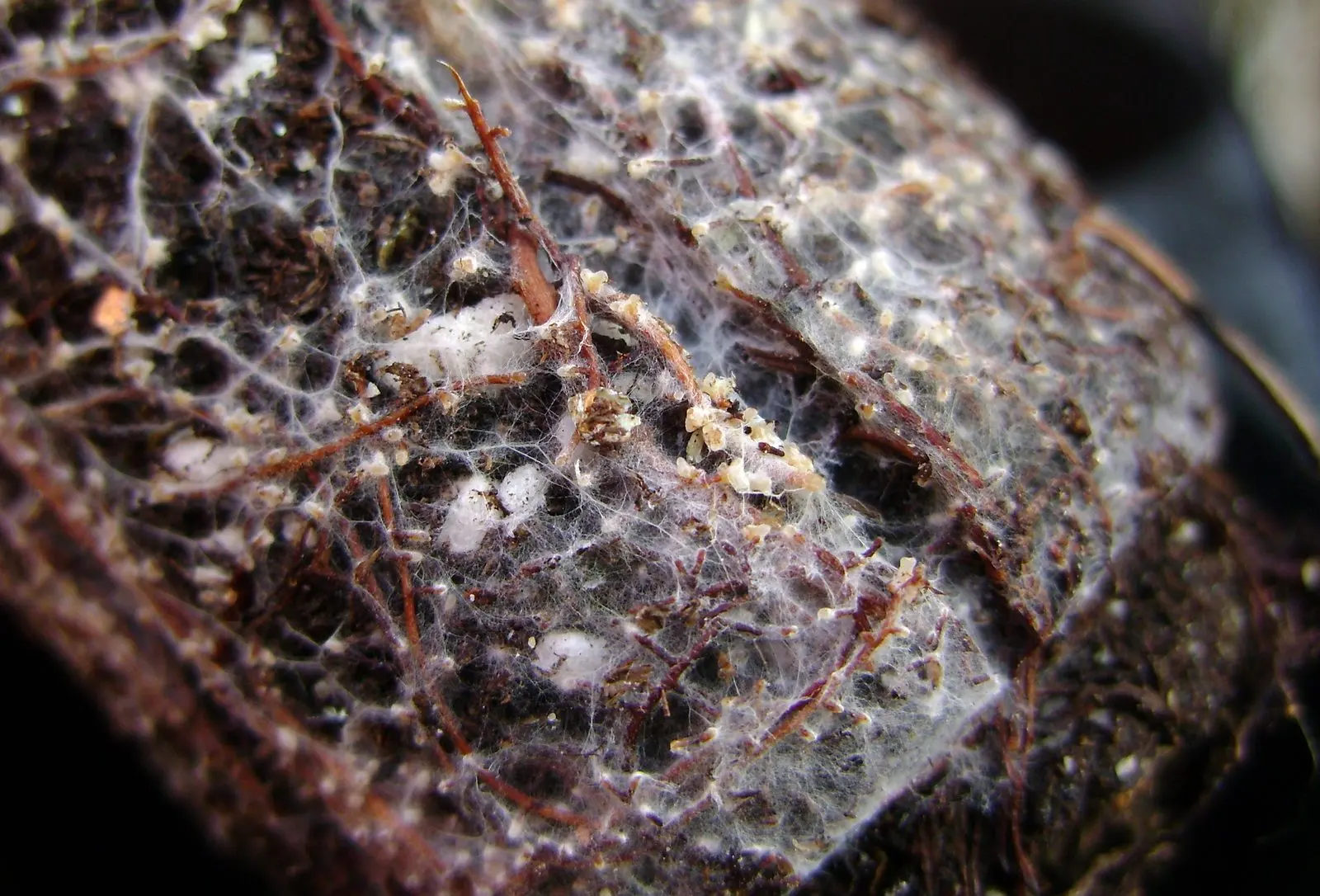
A hypha is a single fungal filament. A mycorrhiza is what you get when hyphae meet a root and the two build a structure neither makes alone.
Outline#
- arbuscular mycorrhizas (AMF): the fungus enters the root’s cortical cells and branches into a tree-like arbuscule inside the cell wall; the majority of land plant species carry one
- ectomycorrhizas (ECM): the fungus stays outside the cell wall, forming a Hartig net between cells and a sheath around the root surface; dominant in temperate and boreal forest trees
- what “connection” has to mean before the word network is licensed: shared carbon or nutrient flow between hosts through a common fungal individual, not co-occurrence of species in the same soil
- why this course is going to keep asking, every week, what a diplomatic label is adding to a claim like that, and what it might be smuggling in
The credentials test built in this week’s Briefing is the standing check for everything that follows. Hold every later phenomenon against it, including the phenomena the convenor is fondest of.
Teaching team
- Dr. Marguerite Osei — convenor