Week 3 Lab: Fashion Fundamentals
A Lab assembling three outfits for three named occasions, the same shape Assignment 1 marks
- Week
- 3
- Date
- 11 March 2027
- Lecture
- Fashion Fundamentals
- Reflection due
- 16 March 2027
Before the Lab#
Bring your current wardrobe inventory, or take one during the Lab if you have not already.
In the Lab#
| Time | Block |
|---|---|
| 0:00–0:05 | Introduction — this week’s topic, tied back to last Lab |
| 0:05–0:25 | Activity 1 (groups of 4): Ranking exercise |
| 0:25–0:35 | Presentation / class discussion of Activity 1 |
| 0:35–0:50 | Activity 2: Assemble three outfits |
| 0:50–0:55 | Discussion / debrief (pairs) |
| 0:55–1:00 | Wrap-up, reflection prompt reminder |
Introduction. Last week’s schedule handled maintenance — the routine stuff that just needs a frequency and a fallback. This week is about the one decision a schedule can’t make for you: what you actually put on, and whether it fits the room you’re about to walk into.
Activity 1 (groups of 4): Ranking exercise. Each group works from the same five outfits:
-
Off-duty casual
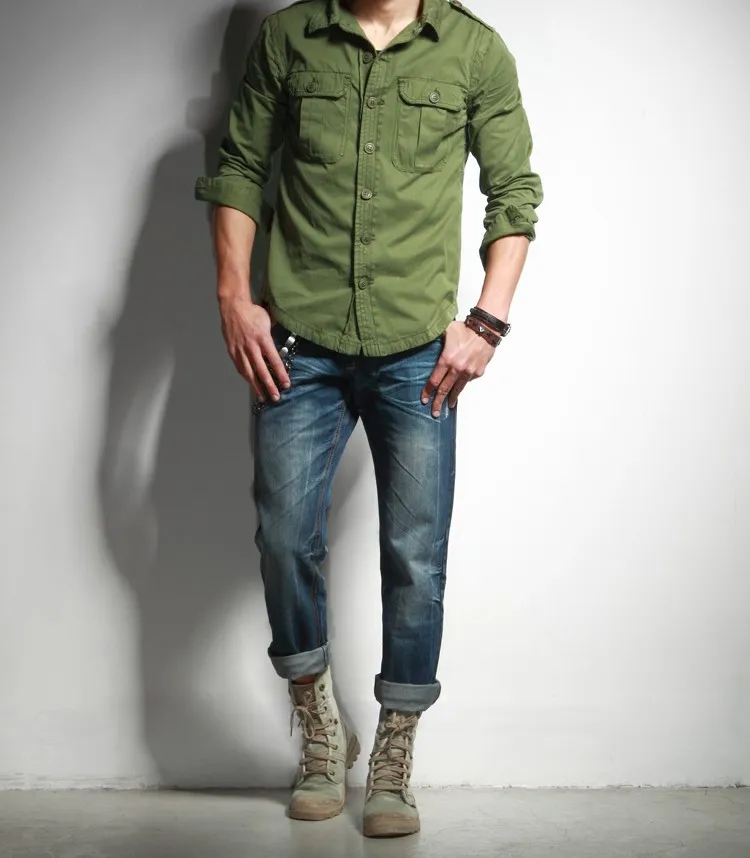
A collared shirt-jacket, cuffed jeans, and boots that have never seen polish — dressed for a look, not a room.
Photo: May Lee (Flickr), CC BY-SA 2.0, via Wikimedia Commons.
-
Head-to-toe loungewear

A long-sleeve top, pyjama trousers, and bare feet — no attempt made at shoes.
Photo: Alexander Moore / Rydale Clothing, CC BY 2.0, via Wikimedia Commons.
-
Overdressed

A full suit and a tie loud enough to be seen from the back row, worn somewhere that did not call for either.
Photo: AndLikeThings, CC BY-SA 2.0, via Wikimedia Commons.
-
Gym kit

Tank top, leggings, trainers — straight off the gym floor, no time taken to change.
Photo: metromela (Flickr), CC BY-SA 2.0.
-
The typical CS student

The unofficial CS-student uniform — hoodie, jeans, and a bag slung across the body, giving away nothing about which side of an all-nighter this particular CS student is on.
Photo: SEAMENSHIE Gusahoixa, CC BY-SA 4.0, via Wikimedia Commons.
Each group is assigned one occasion from the list below and ranks the five outfits best-fit to worst-fit for it:
- Your thesis defence, rescheduled twice already, now happening at 8 a.m. on a public holiday.
- Meeting your in-laws for the first time, over a lunch you cannot leave until dessert.
- Your younger cousin’s birthday party, where an aunt has already announced you as “the fun one” for the afternoon.
- The interview for the internship you have already told everyone you got.
- Jury duty, in the exact week you also have three assignments due.
- A group project meeting called for 7 p.m. on a Friday, by the one member who never replies to messages otherwise.
Then the occasion rotates to a different group’s assignment and the same five outfits are ranked again from scratch — the point is that the ranking changes with the occasion, not that any outfit is objectively good or bad.
Presentation: Each group presents the one ranking they disagreed on most — the outfit whose placement genuinely split the group — for the class to weigh in on.
Activity 2: Assemble three outfits. Individually, from your own wardrobe, assemble three outfits — one for a lecture, one for a friend’s birthday party, one for the gym — and justify each in one sentence against its occasion. This is a rehearsal for Assignment 1, not the submission.
Discussion / debrief (pairs): Show your three outfits to one other student; they offer one suggestion per outfit — a swap, an addition, or an objection.
Wrap-up: Keep these three outfits and their justifications — Assignment 1 asks for the same shape, with photographic evidence attached.
Afterwards#
Keep the three outfits and their justifications; Assignment 1 asks for the same shape with photographic evidence attached.
The spec
This Lab's objectives: what you're expected to bring away from the session, written so a reader can tell whether each one has been met without asking you.
- three outfits are assembled, one per named occasion
- each outfit is justified in one sentence against its occasion
Teaching team
- Thaddeus Vrell — tutor