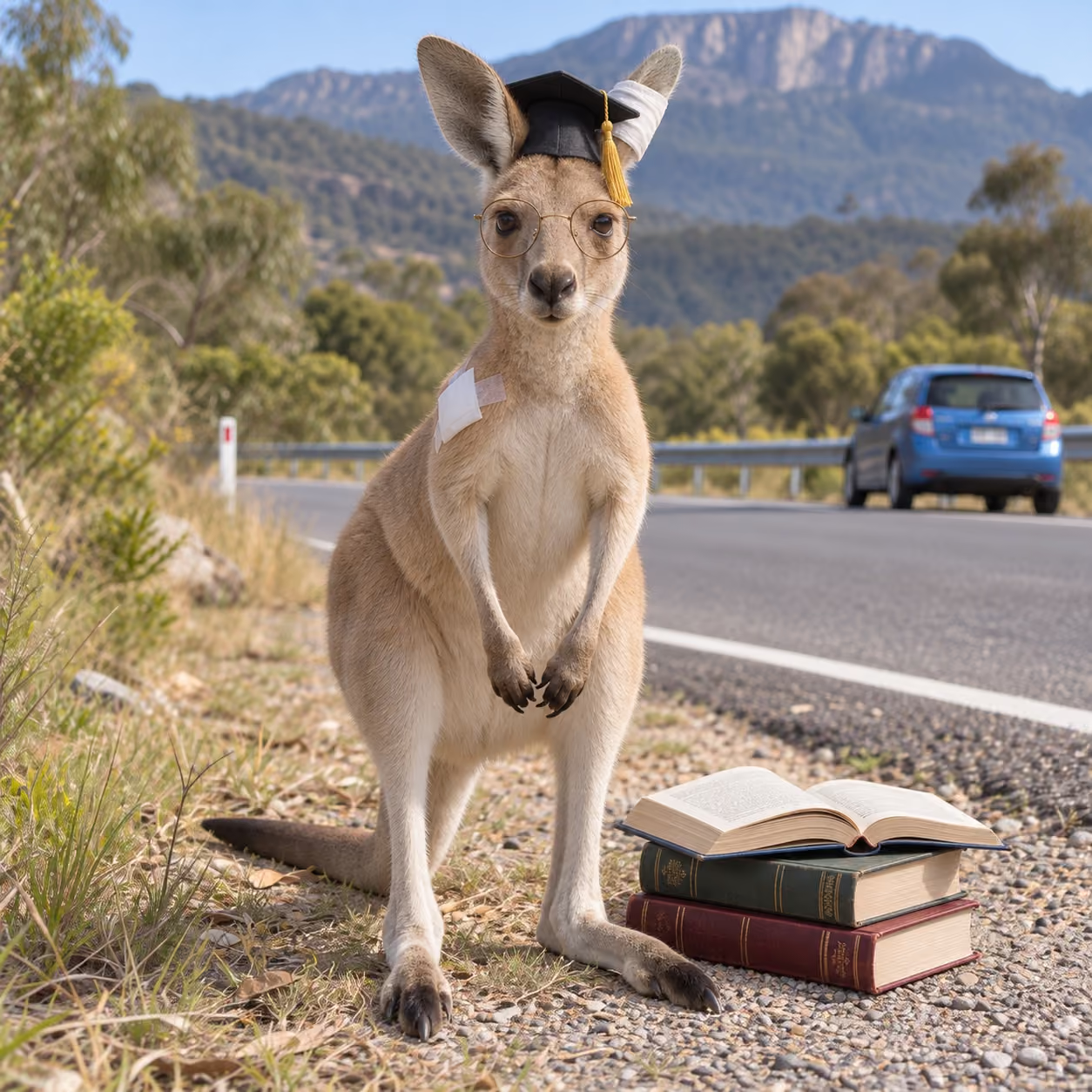
A research-led graduate unit on wildlife-vehicle collisions in Australia, moving from macropod ecology and impact biomechanics through road engineering and policy to an original safety-intervention proposal.
What you will do
You'll work through the research literature on kangaroo–vehicle collisions week by week — ecology and circadian activity, the national collision dataset, hotspot mapping, impact biomechanics, human factors, in-vehicle detection technology, and road engineering — before turning to law, cost, and post-collision response. Two pieces of work anchor the semester: a literature review and hotspot analysis in week 6, and an original safety-intervention proposal in week 12. Both ask you to build an argument a reader who wasn't in the room can follow and check against the evidence.
Who it is for
This is a postgraduate research-methods unit for students comfortable reading primary literature across ecology, engineering, and policy, and willing to argue from a dataset rather than a hunch. No prior wildlife biology or road engineering background is assumed — what matters is being ready to read widely and defend a claim in front of the group.