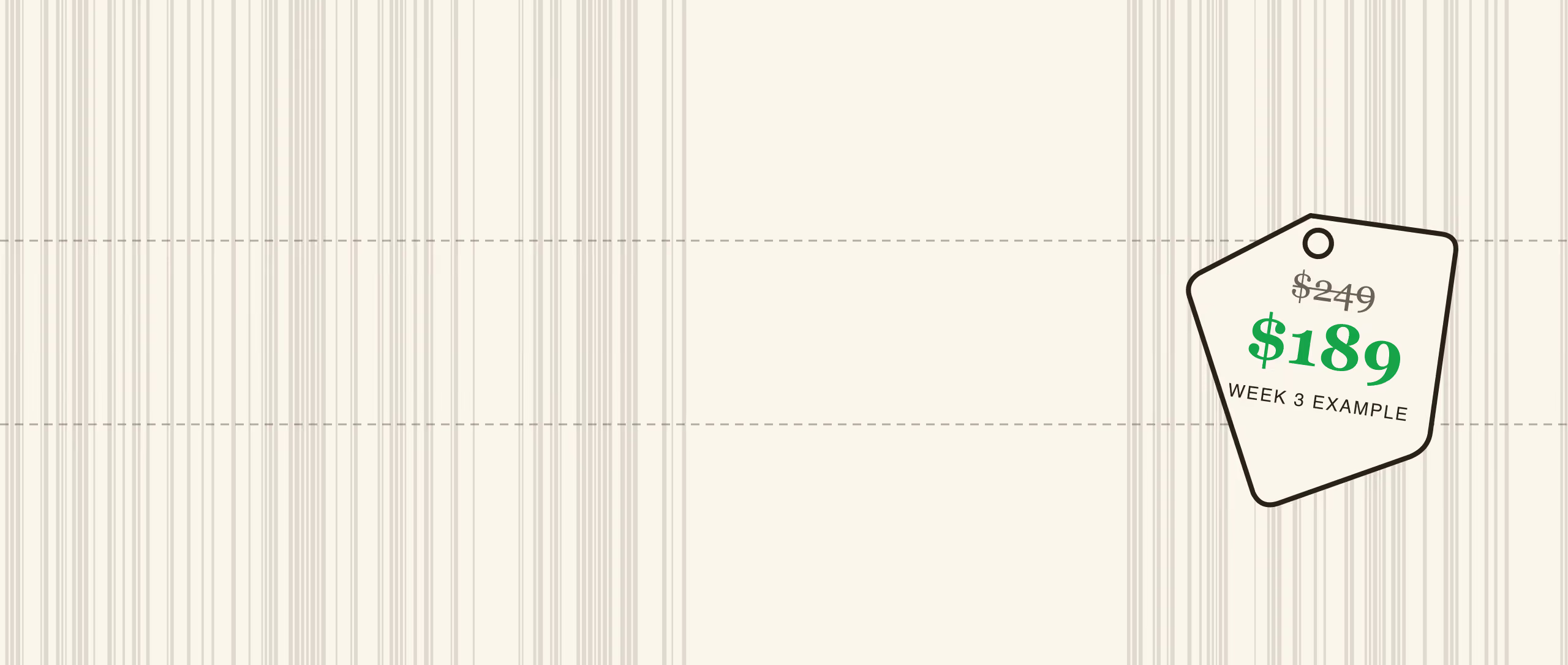
A semester about looking past the sticker price. Twelve weeks follow one purchase — $249 headphones — through discounts, unit prices, coupons, price history, changing prices and subscriptions, ending with one rule: the lowest number is not always the best choice.
You calculate the price. The price calculates you.
Which is the better price?
What you will do
Twelve weeks, one recurring purchase — a pair of $249 headphones — and one running argument: the sticker price is a starting point, not an answer. Each week adds one thing a careful buyer should check: quantity, discounts, coupon rules, price history, prices that change by situation, subscriptions, loyalty points, second-hand options, whether waiting is worth it, and the value of your own time. Three assessments ask students to use those ideas on a real promotion, a tricky shopping cart, and finally a buying tool that explains its advice.
Who it is for
Anyone who has stared at a "50% OFF" badge and wondered what number it's actually 50% of. No finance background is assumed: the maths stays at percentages, averages and simple probability. What you do need is a habit of asking where a price came from, and enough patience to show your reasoning.