Trips & Weekly Events
What the club runs, across the year.
What we do
Despite the name, the ANU Mountaineering Club is involved in a broad range of outdoor activities including bushwalking, snowshoeing, canyoning, climbing, mountain biking, kayaking, rogaining, cross country skiing and mountaineering. The club runs weekend trips as well as regular weekly events catering for a wide range of fitness and experience levels. The activities pages provide more details about the different activities. Trips can be viewed or submitted through the trip calendar page.
Bushwalking
Bushwalking involves exploring the great outdoors including bush, beaches, mountains, snow, grasslands, gorges, sand dunes, and more.
It’s one of the most popular and accessible activities organized by club members and is one of the best ways for visitors to Australia to see the country. Sometimes bushwalking is about meeting the challenges of the outdoors, such as being cold, tired, wet, or hungry, but it is almost always enjoyable (or at least memorable!). Bushwalking can be tailored for all fitness levels, navigation ability and experience.
Club members often run trips ranging from part-day, full-day and multi-day trips. Walking distances may be long or short and involve a variety of terrain ranging from well maintained walking tracks to thick scrub.
Canberra has over thirty national parks and nature reserves within a few hours drive. Regular walks in include Namadgi, Kosciusko, Budawangs, Morton, Deua and Blue Mountains National Parks. Members also venture further afield to places like the Warrumbungles, Nadgee-Croajingalong, the Flinders Ranges, Tasmania and New Zealand. In summer, bushwalks are often in places where swimming is an option, or in the high country where it’s not so hot. In winter, they may be above the snow line with the aid of snowshoes, or they can take advantage of the cooler weather to explore hot, dry regions that are more pleasant in summer.
More information on participating in a trip
Climbing
Rock climbing is about climbing cliffs.
It takes many forms, from "bouldering", where you are climbing without a rope, but are close enough to the ground that if you fall, you'll be okay, to multi-day expeditions where you sleep part way up a large cliff. None of these styles are necessarily harder or easier than the others, but they differ in what makes them challenging. Climbing is above all else about challenging yourself while remaining safe.
The club runs a range of climbing trips, including many that are suitable for beginners. We often run day trips to many of Canberra's local crags such as Booroomba and Mt Coree. After work climbing is practical during longer summer daylight hours at Kambah rocks. Nowra or the Blue Mountains are popular destinations for the weekend. Some of Australia's best climbing sites such as Arapiles are about a day's drive away. We often have two or three 1-2 week trips to these sorts of places each year.
Climbing is usually done in pairs, with one person climbing on the end of a rope, while the other person "belays" by paying out and taking in rope. The nature of the sport makes it a very social activity. The hub of climbing in the club is our indoor climbing wall. The climbing wall is a great place to get to know people in the club and to discuss ideas for trips as well as to practice your climbing technique. Many people start out climbing at the indoor wall before progressing to outdoor beginner's trips and finally onto longer, more adventurous trips.
This section contains reference material for the equipment and techniques the club uses on climbing trips and at the climbing wall. Note that it is not enough to have just read these pages, you will also need to have practised the skills outdoors. Petzl Grigri belay devices are installed at the indoor climbing wall. These are anchored to the floor for extra safety. You will be instructed in their use during the belay course, but for extra advice see the Petzl page. Pay attention to the "bad technique" section. For outdoor trips there are more skills you must learn. On beginner trips your leader will instruct you in the necessary skills, but for other trips you will be expected to have mastered these skills already. If you are unsure about the skill requirement for the trip, you should ask your trip leader.
More information on participating in a trip
Kayaking
Kayaking is a great way to experience the Australian outdoors, whether by sedate exploration of lakes and estuaries, longer expeditions between coastal beaches, islands and inlets, or the adrenalin charge of white-water and surf kayaking.
The ANUMC has a range of kayaks to suit all paddler types and skill levels.
It’s easy to get involved. Whether you're a seasoned paddler or completely new to the water, you must attend a "Come and Try" session on the lake. In these introductory sessions we will show the basics of how to use the boats, gear and how to paddle safely. Upon completion of a Come and Try session your membership card will be stamped, and then you can participate in the weekly kayaking sessions and trips further afar, depending on the experience requirements for the particular trip. Come and Try sessions are put up on the trip calendar, particularly at the start of the semester. They will be run throughout the year according to demand, so if there aren't any trips on the calendar then contact the kayaking officer.
Many members enjoy a relaxing paddle on Lake Burley Griffin at one of the weekly sessions. These, along with the regular social paddles on the lake, are the ideal time to develop skills and confidence before participating in weekend trips further afield. We generally paddle as a group, so come along to the weekly morning or evening session (or both!) to improve your technique and build up paddling fitness.
If you enjoy longer trips, the club's sea kayaks regularly cruise the beautiful NSW coastline and estuaries. For white-water paddlers, the Murrumbidgee River has some exciting rapids and a bit further afield, the Shoalhaven, Snowy, Deua, Goobarragandra and Kangaroo Rivers provide ample variety for all levels of paddling.
When the rivers are low, surfing some waves down the coast is great fun in a kayak, and the Penrith Olympic white water facility is a great venue for improving your white-water skills. The club also organizes informal training sessions for beginners, including eskimo rolling, sailing, and safety skills.
All paddling activities are posted on the club’s kayaking email list – so don’t just rely on the Trip Calendar because trips are often organised at short notice after rain.
Depending on the members of the club at any given time, canoepolo may be played on the lake within the club, or in connection with one of the local canoepolo clubs. Canoepolo is a great way to improve your all round kayaking skills and practice your techniques in a safe, fun environment, and all are welcome! It’s very informal and teams are arranged on the night.
Club members sometimes enter endurance events such as the Hawkesbury Classic or Murray Marathon, or multisport events such as the Upper Murray Challenge, which includes paddling, running and mountain biking legs. For club teams in these events, see competition funding on the funding page for more information on the subsidies that are available.
More information on participating in a trip
Canyoning
Canyoning is a highly popular activity which draws together the skills of bushwalking, rock climbing, mountaineering and even caving.
Canyoners descend creeks, waterfalls, over boulders and swim or float past spectacular scenery.
Canyoning at any level can be challenging. They can be part day, full day or multi-day activities which may involve scrambling over wet and slimy boulders, abseiling down waterfalls and swimming in very cold water. What goes down must come up again ... eventually. Walking out of a canyon is part of the experience and often the most strenuous part of the trip.
Club members often run trips to canyons close to Canberra including Tuross, Bungonia and Macquarie Pass. Further afield, trips will often take in canyons in Blue Mountains, Kanangra and Wollemi.
The club typically runs canyon trips when daylight savings time is in place. Outside of this period, trips are limited by colder temperatures and shorter days. That said, there are a handful of dry canyons which are suitable to do in the winter.
More information on participating in a trip
Mountaineering
The ANUMC has a distinguished history in the sport, and today offers many opportunities to learn about and participate in it.
Mountaineering means, well, climbing mountains. Really it means climbing BIG mountains, and that means mountains with snow on them most of the year. In common with mountaineers in many parts of the world, Australian mountaineers don't have mountains like this on their doorstep, but what we do have is an abundance of opportunities (especially in the ANUMC) to participate in many of the activities that are part of mountaineering and build skills and experience.
Tough bushwalking, navigation, rock climbing, canyoning, ice climbing and ski touring all are in category. The extra, specialized skills needed for mountaineering are those involving crossing glaciers, moving and belaying on steep snow and ice, and anticipating and avoiding avalanches and rockfall. Climbing vertical ice isn't an essential part of most mountaineering, although the kind of extreme climbing that gets the headlines might make you think so!
The most accessible big mountains for us are just across the Tasman, and we are fortunate in having such fantastic mountains so close. Each year, groups of ANUMC mountaineers travel to climb in the Southern Alps. Participating in guided courses in NZ is the best way to learn those extra mountaineering skills and get a head start in mountaineering by spending a week in the company of a real expert. After that, the sky is the limit. Beyond NZ, ANUMC mountaineers have visited many of the greater ranges, and where you go and what you do there is limited only by your ambition and your wallet. The ANUMC has an Expedition Fund which may be able to provide start-up funds for that dream expedition to Antarctica, Greenland, or points between.
More information on participating in a trip
Skiing
In XC skiing the boot is connected to the skis at the toe which allows you to ski up hills as well as down.
The freedom to ski away from chairlifts reduces costs and opens up vast areas to explore.
Advantages of XC skiing are:
- first timers who have never been to the snow are attracted by the fact that XC skiing the cheapest way to try skiing
- downhill skiers are attracted by the adrenalin of backcountry downhill which gets you away from the crowds at resorts and out to the fresh snow in the backcountry
- the amazing beauty and remoteness of Australia's alpine areas attracts “bushwalkers on skis” who want to go for a relaxing tour but have that downhill thrill you can't get with snow shoes
- resort telemarkers want the challenge of telemark skiing without leaving the convenience of the lifts (and luxuries like pubs) at the ski resorts
- the fitness and challenge of racing attracts competitive people to XC ski racing.
During the season the ANUMC runs trips covering all types of XC skiing trips: from challenging overnight trips to downhill night skiing under lights (or enjoying a beer by the fire while others night ski).
More information on participating in a trip
Mountain Biking
Most of us have a mountain bike of some form, possibly hiding away in the shed.
One day, you finally get up the courage to join in on an ANUMC beginner’s mountain biking trip. And you’ll most probably be hooked… in a big way.
It’s easy to get addicted to this sport, especially when Canberra is THE place for mountain biking. Mountain bikers around the country and overseas are often excited when they hear you are from Canberra! They want to talk to you about all the sweet trails that we are lucky enough to have in our backyard. ANUMC trips go to a variety of places – in both Canberra and NSW. Most trips are a day or a weekend, however mountain bike touring is a popular option.
- Kowen Forest and Sparrow hill (past Queanbeyan) is a beginner’s mountain bike paradise – sweet smooth singletrack, and not too many hills
- Mount Stromlo offers a few more challenges, some world class facilities, and fun for all levels!
- Bruce Ridge means you can jump logs, rocks, and race down 'Pub Run' before class, after class, and during your lunch break – only 10 minutes by bike from ANU!
- There are more and more trails being built around NSW.
- Bermagui and Tathra both have some fun trails and the club runs bike/beach combo weekend trips
- Jindabyne offers a range of flowy and technical trails, with views of the lake and snow-capped mountains – decent mountain bikes for hire at Bungurra Alpine Centre too
- Thredbo – for all you speed demons, Thredbo offers some of the best downhill runs around, as well as the hire of dual-suspension downhill bikes and all the protective gear you need to fly down the hill.
Weekly events
Weekly climbing
Weekly climbing is conducted on the indoor climbing walls at ANU Sport in the Sport and Recreation Centre. Climbers must be ANUMC members and have a current belay pass to use the climbing wall. The weekly climbing times for 2026 generally are:
| Day | Old Wall | New Wall |
|---|---|---|
| Monday | 16:00–18:00 | 07:30–09:00, 16:00–20:00 |
| Wednesday | 16:00–19:00 | 07:30–09:00, 16:00–19:00 |
| Thursday | — | 16:00–19:30 |
| Friday | 16:00–20:00 | 07:30–09:00, 16:00–20:00 |
Weekly kayaking
Regular social paddles depart from the ANU boatshed on Sullivan’s Creek. These sessions are ideal for developing skills and confidence before participating in weekend trips. Beginner paddlers will be supervised and must be able to swim in order to participate. Beginner sessions are open to all members, and generally held once a week during semester.
Climbing Wall
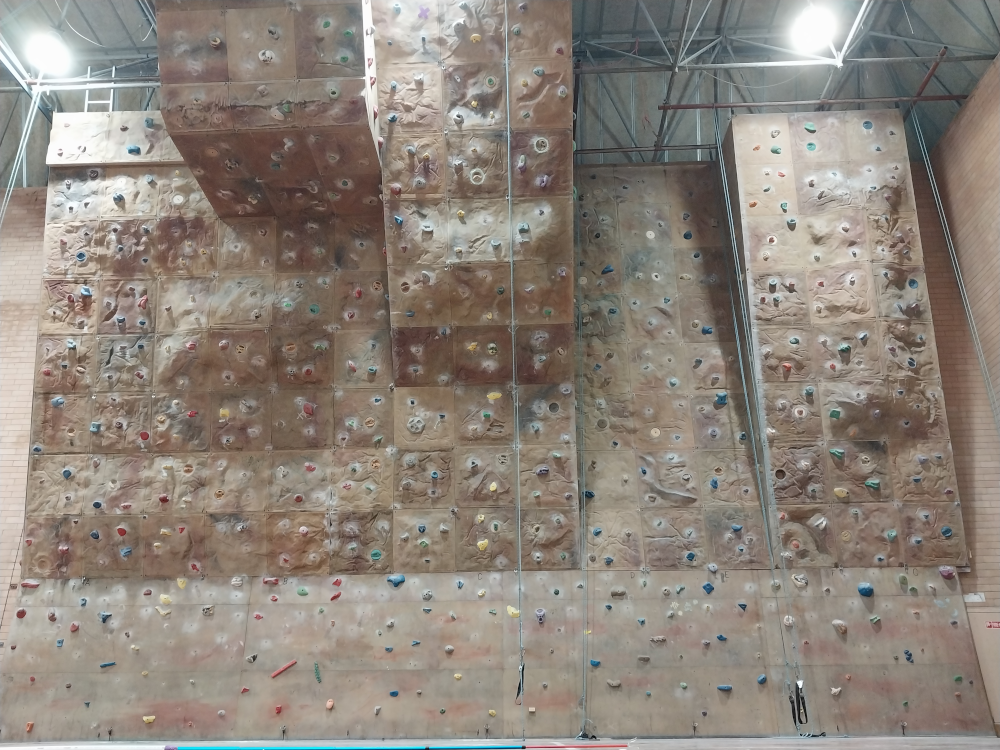
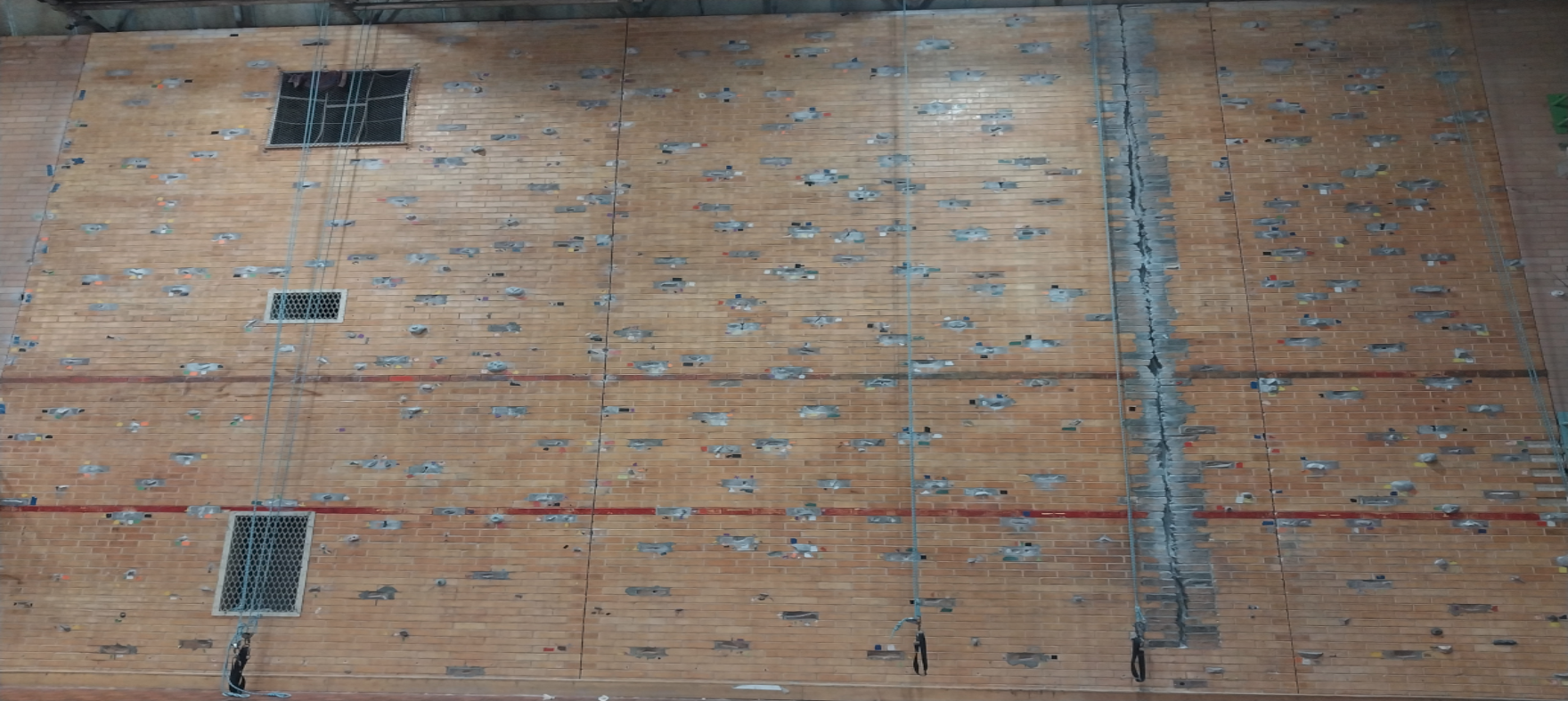
A belay pass is required for all members wanting to use the climbing wall. To get one, you need:
- A valid ANUMC membership
- To have paid the annual wall fee of $25
- A belay course form, filled out with as much as you can (uni ID, expiry, etc.)
- $10 to pay ANU Sport’s admin fee at the end of the course, payable by card
Experienced belayers can be checked off quickly rather than having to attend a whole belay course. Bring your climbing gear if you have any, otherwise wear comfortable clothes and shoes you can climb in — please make sure you are on time, as latecomers will not be able to participate.
Belay Course Calendar
What is a belay course?
A belay pass is required for all members wanting to use the climbing wall. Experienced belayers can be checked off quickly rather than having to attend a whole belay course This course will go over belay techniques for new climbers. If you already know how to belay you still need to get a belay pass from us to be able to climb at the ANU gym.
Requirements to climb at the wall
Valid ANUMC membership which can be purchased with the link https://anu-sport.com.au/Clubs/Mountaineering-Club. You need to have paid the annual wall fee of $25. This can be done via this link Belay course form (filled out with as much as you can, with uni ID, expiry, ect). Available at the ANU Sport front desk. $10 to pay ANU Sport's admin fee at the end of the course, can be paid by card. You must also read the following explanation on how to use a Gri-Gri: https://www.petzl.com/INT/en/Sport/Belaying-with-the-GRIGRI Bring your climbing gear if you have any, otherwise wear comfortable clothes and shoes that you can climb in. Please make sure you are on time as latecomers will not be able to participate. See you at the gym!
Belay Course with Laurie
Belay Course · Aug 10
3/4
A belay pass is required for all members wanting to use the climbing wall — this course goes over belay techniques for new climbers.
Belay Course with Brigitte
Belay Course · Aug 12
FULL
A belay pass is required for all members wanting to use the climbing wall — this course goes over belay techniques for new climbers.
Belay Course with Qing
Belay Course · Aug 14
0/2
A belay pass is required for all members wanting to use the climbing wall — this course goes over belay techniques for new climbers.
Participating in a Trip
To join a trip, you must register on the trip calendar. Only members are able to sign up! The registration form is hidden for non-members. Please do not just turn up and expect to be on a trip or you will be turned away.
Before attending a trip all members are expected to have familiarised themselves with the relevant sections of our club safety policies and procedures.
Expectations from Participants
- Read the trip description carefully. Make sure you have the right skills, experience and fitness.
- Signing up doesn't guarantee you a spot on the trip. Trip Leaders should confirm with participants via email. For beginner trips it's first come first served, but trip leaders will be selective based on people's experience for more advanced trips.
- If you can no longer attend, cancel your registration as soon as possible to provide someone else an opportunity to sign up. If in doubt, contact the Trip Leader directly.
- Trip Leaders are volunteers who run trips in their spare time. They are not guides. Please respect their authority to make decisions on behalf of the group
Pre-trip meetings
Pre-trips meetings are held prior to the trip as detailed in the trip description. They usually cover:
- Transport: including choosing drivers and working out meeting places
- Gear: If you need anything (e.g. tents, stoves, climbing gear etc.) it can be hired from the gear store after the pre-trip.
- Specifics of the trip, exactly you're doing and anything special you need to be aware of.
It is very important to attend pre-trips. If you don't attend a pre-trip and don't notify the leader, then you probably won't be going.
Costs
Costs vary considerably from trip to trip. They can include, fuel, camping fees, gear hire, food and national park entry.
The trip leader should arrange for driver reimbursement, but if they forget please offer fuel money to your driver, or don't hesitate to ask your passengers for some money if you drive.
Non-member participation
Non-members may participate on club trips if space is available and only as a guest of the trip leader, but may not use any club gear. Club members have priority on club trips.
Non-members cannot hire gear from the club.
Leading a Trip
Every member is encouraged to be a Trip Leader. As well as supporting the club, it is a great way to develop leadership, interpersonal and risk management skills. Trips do not need to be complex. The simple ones are often the best.
To run a trip, firstly identify an activity or location that is within your ability. If in doubt, contact the relevant activity officer for options and discuss potential plans before posting a trip.
ANUMC Safety Policies and Procedures
In 2015 the ANUMC developed a set of principles detailing safety processes for club activities. These Safety Principles were consolidated in 2020 into the ANUMC Safety Policies and Procedures which includes duty of care, minimum equipment, supervision ratios, activity best practices and emergency procedures. Although they may seem overwhelming at first, the processes are mostly common sense and can be tailored to suit the complexity of the trip.
Trip Leaders need to be familiar with the ANUMC Safety Policies and Procedures before leading a trip.
Risk Assessment
You will need to complete a risk assessment for the trip and submit it to ANU Sport for scrutiny. The Risk Assessment should be submitted at least 5 days in advance of the trip. Please reach out to the relevant activity officer for a template risk assessment and any questions that you may have about this process.
The Activity Officer will need to fill out ANU Sport's risk assessment form on your behalf.
Posting a Trip
Trips are posted through this website by logging in and selecting Organise a Trip. Social trips are available from the drop down menu beneath this. Any trip can be created by any trip member. Regular trips require approval from the relevant activity officer, where social trips appear on the calendar right away.
Most fields on the trip creation web-form are self-explanatory. If you are unsure contact a web officer or other committee member.
Pre trip meeting: You can include a PTM for larger or more technical trips. This is a chance to meet in the gear store, chat in person and organise equipment.
When the activity status is changed from Draft to Pending, the applicable activity officer is automatically notified. If they are happy with the plan, they will approve it and it will appear on the Trip Calendar.
Managing your Trip
Once your trip is on the calendar, any member can sign up. I'll refer to these people as 'registrants'. It is your responsibility to choose who is on the trip, and email successful applicants. Currently, the website doesn't have a queueing system, but this feature will be included in an update soon.
Steps for selecting your participants:
- Remove registrants who don't match your experience criteria
- Accept people in the order of when people registered up until your trip capacity
- Email everyone, telling each registrant who is 'on' the trip or not. It's your responsibility to ensure that all registrants are communicated to.
- Once you have a set of participants, you can continue emailing communications (best for small trips) or for more complicated trips create a group (create a channel in Club slack page, FB messenger, whatever).
Important! Your word goes. As leader, ultimately you get the final say on how the trip runs. If participants go off on their own, try to mess with the plan, bring random other people along or otherwise make things difficult for you this is not ok. If this becomes a problem, you may remove people from trips as a last resort and can contact the executive (anumountaineeringclub@gmail.com) if you need help.
Driver reimbursement
Drivers are essential for running many club trips, so it’s appropriate that they are compensated the cost of their petrol. It's up to you how this is done - you can either collect money in advance and then reimburse drivers yourself, or remind each carload of people to please pay their drivers after the trip.
Normally it's good practice to pay them an extra 10 or 20% on top of petrol to compensate for maintenance, insurance, and to say thanks (trips don't happen without willing drivers!!).
Trip Archive
Past club trips are kept here for reference once they’ve run.