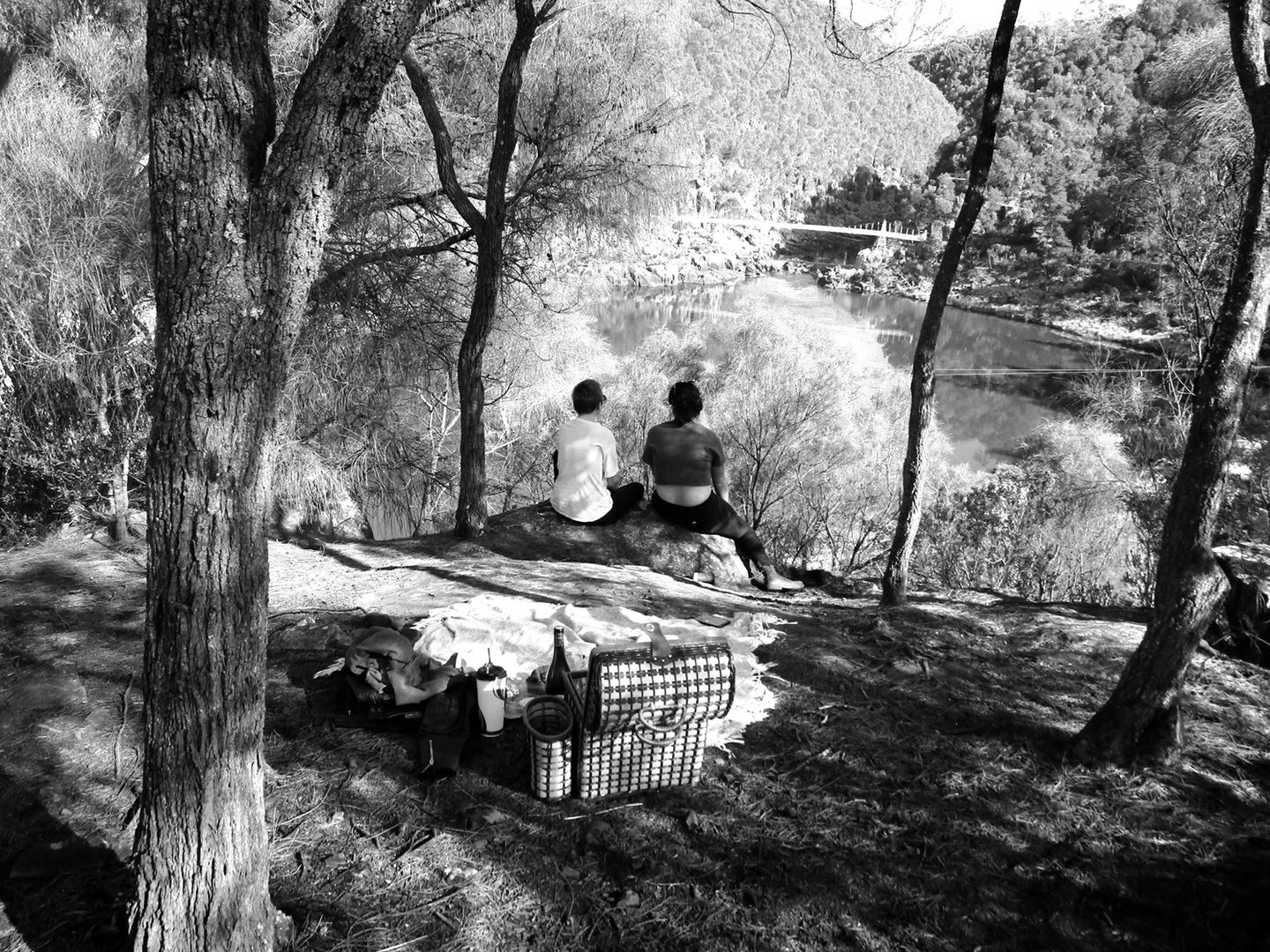
Cataract Gorge & First Basin
A tale to tell
The earliest recorded visit to this area was in 1804 — but the gorge itself is around 180 million years old.
First recorded by William Collins
Early settler William Collins was the first to record his exploration of the port, aboard the ship Lady Nelson. He was particularly struck by the South Esk and its cataract, writing:
"Upon approaching the entrance I observed a large fall of water over rocks, nearly a quarter of a mile up a straight gully between perpendicular rocks about 150 ft high … the beauty of the scene is probably not surpassed in the world."
Building access to the Gorge
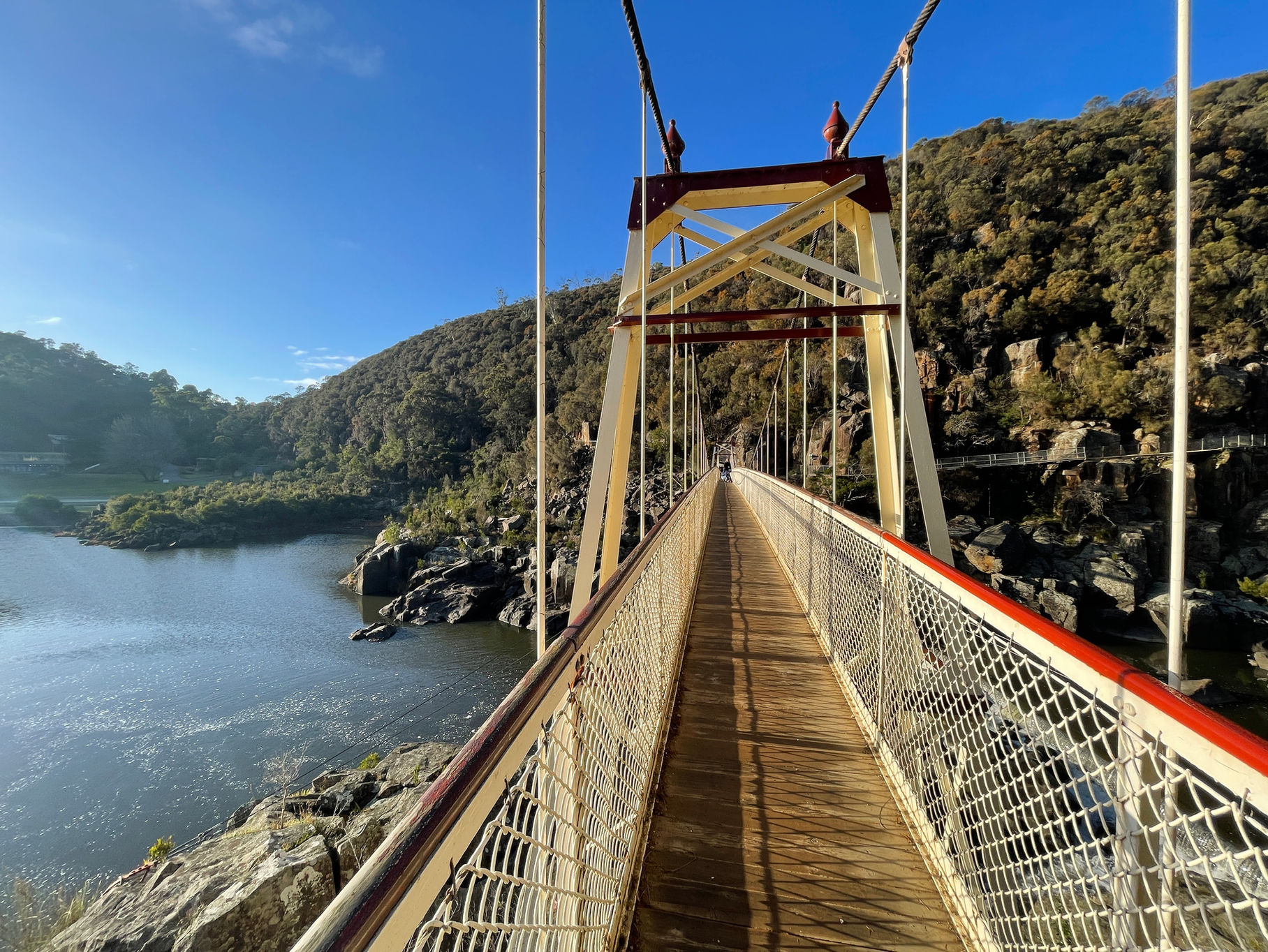
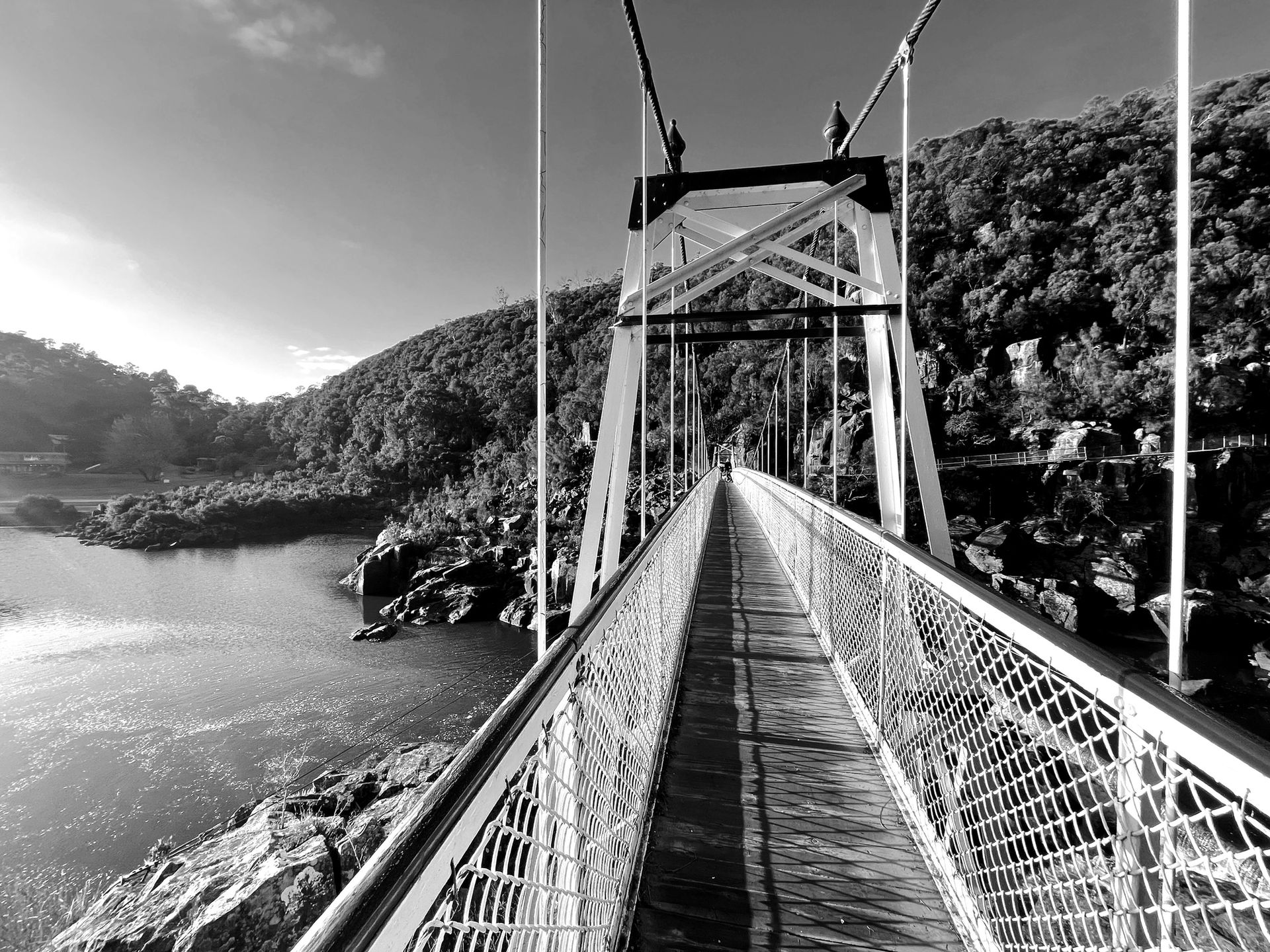
We owe the area's early development to a private organisation, The Launceston City and Suburbs Improvement Association, formed in December 1899. It built the access path along the Cataract Gorge — a project that took eight years to complete. In 1940, a suspension bridge was built across the South Esk at the head of the First Basin, connecting the two sides of the reserve for the first time.
Duck Reach: powering a city
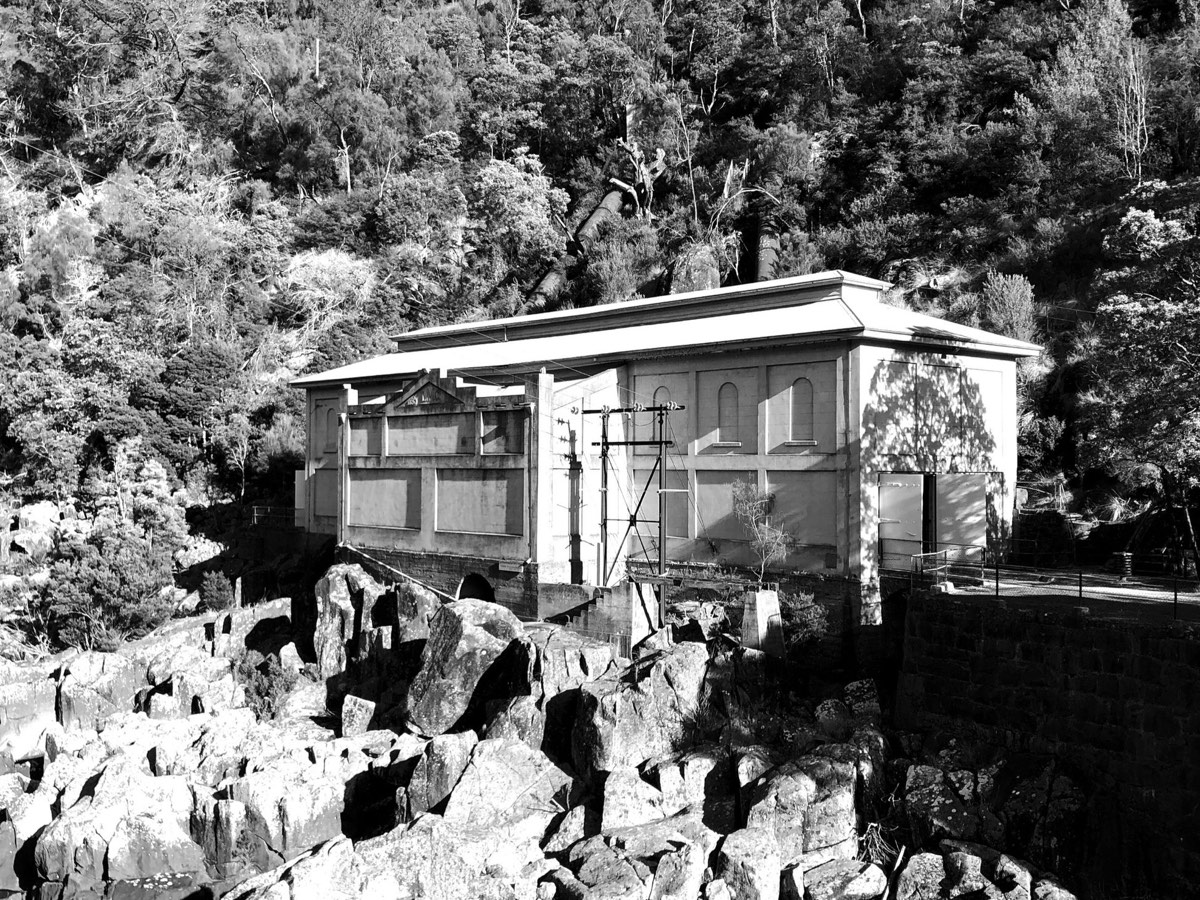
Further up the river at Duck Reach, the Council built a turbine-driven power station. On 10 December 1895, electricity was officially switched on — and Launceston is understood to have been the first city south of the Equator lit by electricity generated by water power.
180 million years in the making
During the Jurassic period, Australia was still part of the supercontinent Gondwana, joined to Antarctica, Africa, South America and India. As continental drift pulled Australia away to become the only island continent on Earth today, huge volumes of dolerite magma were forced up through the crust in Tasmania and parts of Antarctica, Africa and South America.
The earthquake that created Cataract Gorge would have dwarfed anything that occurs on Earth today. The dolerite cliffs you see across the reserve — and ride above on the chairlift — were formed by those ancient magma intrusions.
Respectful development
Alongside the Gorge's natural beauty, the Cliff Grounds have grown into an enjoyable developed area — a cafe, restaurant, BBQ facilities and a swimming pool — while the reserve remains home to a diverse range of native flora and roughly 70 species of birds, nine of them found only in Tasmania.