About Shitao (石涛)
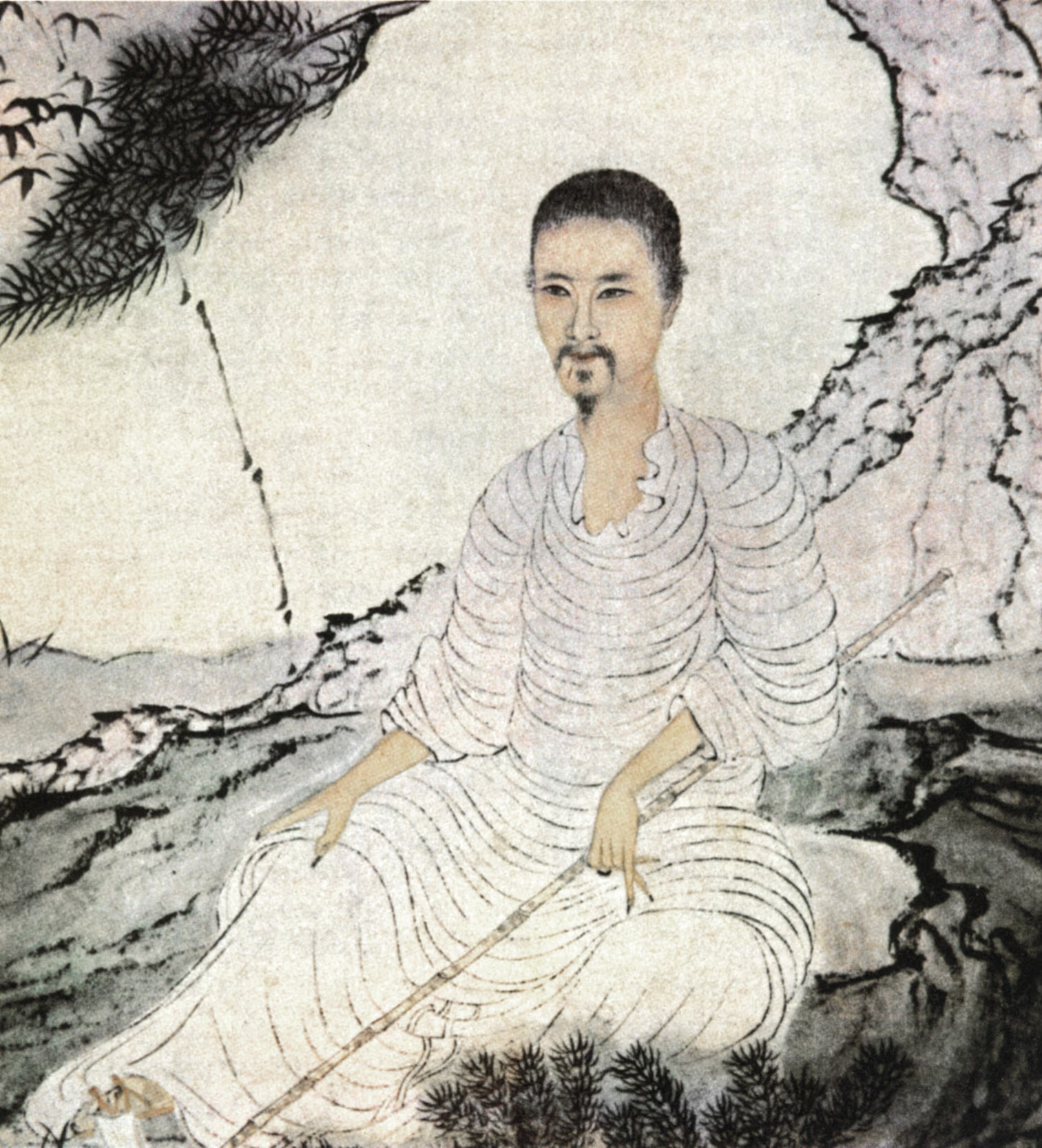

Shitao (石涛, "stone wave") was born Zhu Ruoji around 1642, a distant descendant of the Ming imperial house. When the Ming fell to the Qing, the surviving line of that family was a dangerous thing to be, and as a small child he was smuggled into a Buddhist monastery and given the religious name Yuanji. He spent decades as a wandering monk --- Anhui, the Huang Mountains, Nanjing, Beijing --- before settling in Yangzhou late in life, where he finally built himself a house and a garden and, not long after, shed the robes altogether.
He painted the whole time, and what survives is restless in a way that still reads as modern: landscapes that ignore the schools he was supposed to copy, album leaves that turn a fold of paper into a joke, ink so wet it looks unrepeatable. He wrote it all down in a short treatise, the Huayulu (畫語錄, "Recorded Sayings on Painting"), and it is that book, more than any single painting, that this page is really a shrine to.
The one brushstroke
The Huayulu opens with a chapter called 《一画章》, "On the Single Brushstroke." Its argument, as far as I can restate it honestly: every method a painter is ever taught --- every rule about how to hold ink, how to build a mountain, how to leave the paper bare --- descends from one prior act, the first mark laid down. Method comes after the brushstroke, not before it. Chase the rule and you inherit someone else's hand; return to the single stroke and the rule falls out of what you were actually doing, every time, differently.
无法而法,乃为至法。
"The method of no method --- that is the perfect method." My own rough rendering; better translators than me disagree about the edges of it, which feels appropriate for a line about refusing to settle into one fixed reading.
I think about that line every time I am handed a rule I am supposed to follow without asking why it exists. It's not an argument against rules --- Shitao painted inside plenty of them. It's an argument that the rule is downstream of the stroke, not the other way round, and that the painters worth learning from are the ones who never let the inherited method stand in for their own hand.
See the gallery for six of the paintings that came out of that hand.