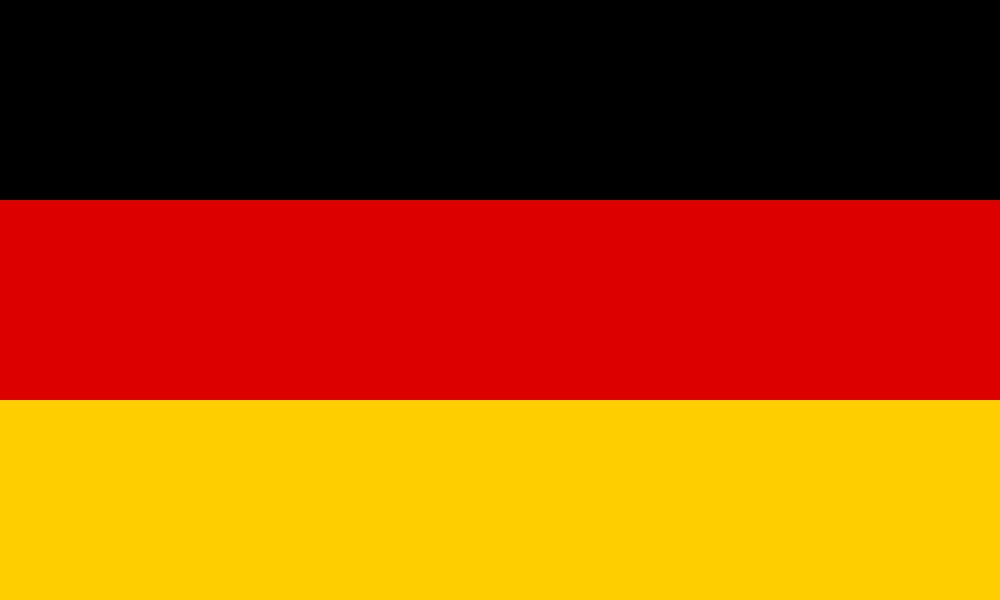
No nation has been more thoroughly reshaped by Einstein's intervention than Germany. Without the regime history once remembered, the nation the timeline produced instead is smaller, more cautious, and caught directly between the two powers now fighting over the continent it sits at the centre of. Germany did not choose this war either time, and both times it has borne the heaviest cost of fighting it.
Position in the war
Geography has made Germany the Allied Nations' forward wall against the Soviet advance, whether the German government wanted the role or not. Much of the campaign's early fighting takes place on German soil, and German industry — rebuilt and repurposed under Allied coordination — now supplies a significant share of the armour and munitions holding that wall together. It is an uneasy arrangement: a nation rebuilding itself while simultaneously serving as the front line for someone else's war.
Contribution
German engineering, unsurprisingly, has found its way into Allied hardware — several refinements to Allied vehicle armour and construction efficiency trace back to German designers working under Allied contract. German soldiers, for their part, have earned a reputation for disciplined, methodical defence rather than the aggressive doctrine either superpower favours; a German-held line rarely breaks quickly, even when it eventually breaks.
History has asked a great deal of Germany twice now. This time, at least, it did not ask the nation to start the fire — only to stand in the middle of it.
You are visitor number007076
Sources & credits