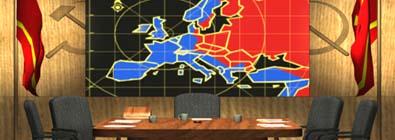
History will call it aggression. The Soviet Union calls it the only rational response to a Europe left leaderless by Allied interference in the natural order. When the man history remembers as Hitler was erased, a vacuum opened, and the Union was simply the first power disciplined enough to fill it. This record tracks the Soviet advance from the opening mobilisation to the campaign's climactic confrontation with Allied command.
The mobilisation
Early operations focus on rapid territorial consolidation — Soviet armour, spearheaded by the Heavy Tank, rolls across Eastern Europe faster than Allied intelligence can track it. These opening missions establish Soviet doctrine in miniature: overwhelming armoured force, supported by Grenadiers clearing entrenched positions, moving at a pace the Allies cannot match without committing forces they can't yet spare.
The Tesla war
As the campaign progresses, Tesla technology moves from experimental curiosity to battlefield staple. Tesla Troopers and Tesla Tanks begin appearing in every major engagement, and Soviet doctrine shifts to exploit their strength against fortified Allied positions. Missions in this stretch of the campaign task commanders with using Tesla-equipped forces to break sieges that pure armour alone could not, trading a slower advance for one that costs far fewer Soviet lives.
The reckoning
The campaign's final missions push into Allied-held Western Europe itself, aiming to end the war before American reinforcements can fully mobilise. Soviet command's closing strategy leans hard into its numerical and industrial advantage: overwhelming production of Heavy Tanks, rapid territorial seizure, and a willingness to absorb losses that Allied doctrine simply cannot match.
Commanders studying this campaign should note that Soviet victories come not from cleverness but from momentum — every mission is won by making sure the next one starts from a position of overwhelming strength.
You are visitor number006327
Sources & credits