Week 8: Nap pods and sleep as a product
Rest returns to the workplace as equipment and subscription — what gets solved when a need becomes a purchase, and what gets avoided
26 April 2027
Having spent a week on who is permitted to rest, we look at the answer industry arrived at: buy something. The nap pod is a genuinely interesting object, because it solves a real problem and, in solving it that way, settles a political question quietly and in the buyer’s favour.
Outline#
- What the pod is for. It makes daytime sleep legible to an organisation. Sleeping at a desk is ambiguous; sleeping in a designated capsule is authorised. Much of the product is that authorisation, and the furniture is its delivery mechanism.
- The business case, honestly stated. Vendors sell alertness, error reduction and retention, and the underlying research is real. It is also mostly small, mostly short-term, and mostly not conducted in the settings being sold to.
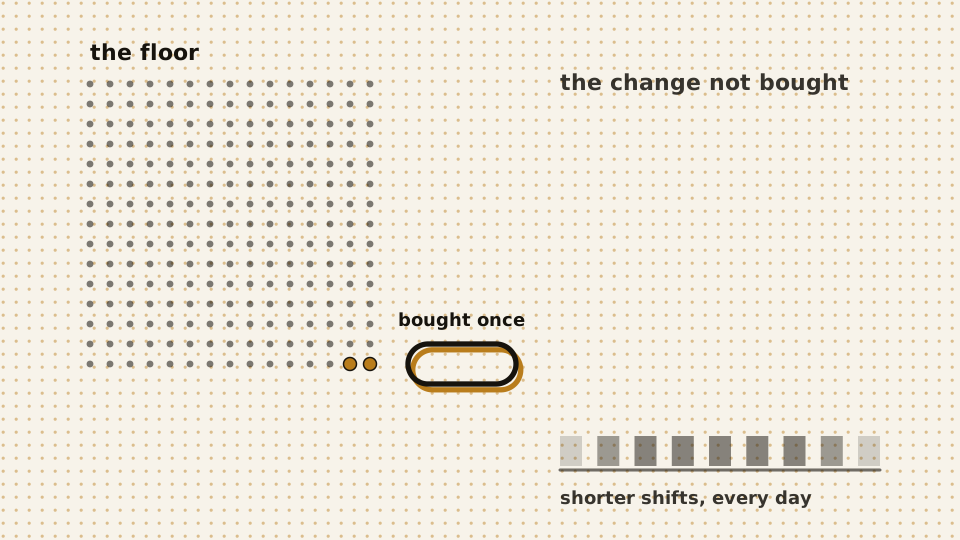
- What a purchase avoids. A pod costs money once. Shorter shifts, later starts and lower monitoring cost money continuously and shift control. Given a choice between an object and a change in schedule, institutions buy the object — and this is the week’s central observation.
- Counting the units. A workplace of four hundred buys two pods. The arithmetic is the policy, whatever the announcement says.
- Rest as a consumer market. Sleep apps, weighted blankets, soundscapes, tracked sleep scores. Note the shift in who is responsible: rest becomes a personal project you may be failing at rather than a condition your employer arranges.
- The exception worth taking seriously. Aviation and some clinical settings have implemented rostered rest that genuinely changed practice. What was different was that a regulator required it. Nobody bought their way there.
The claim to argue with#
The nap pod is not the nap returning. It is the nap being made purchasable, so that the schedule does not have to change.
Before next week#
Your Cultural Case Study is due this week — see the assessment page. Next week we look at the populations with the strongest claim to daytime sleep and the least access to it, which is where the commercial answer runs out entirely.
Teaching team
- Idris Fenn — tutor