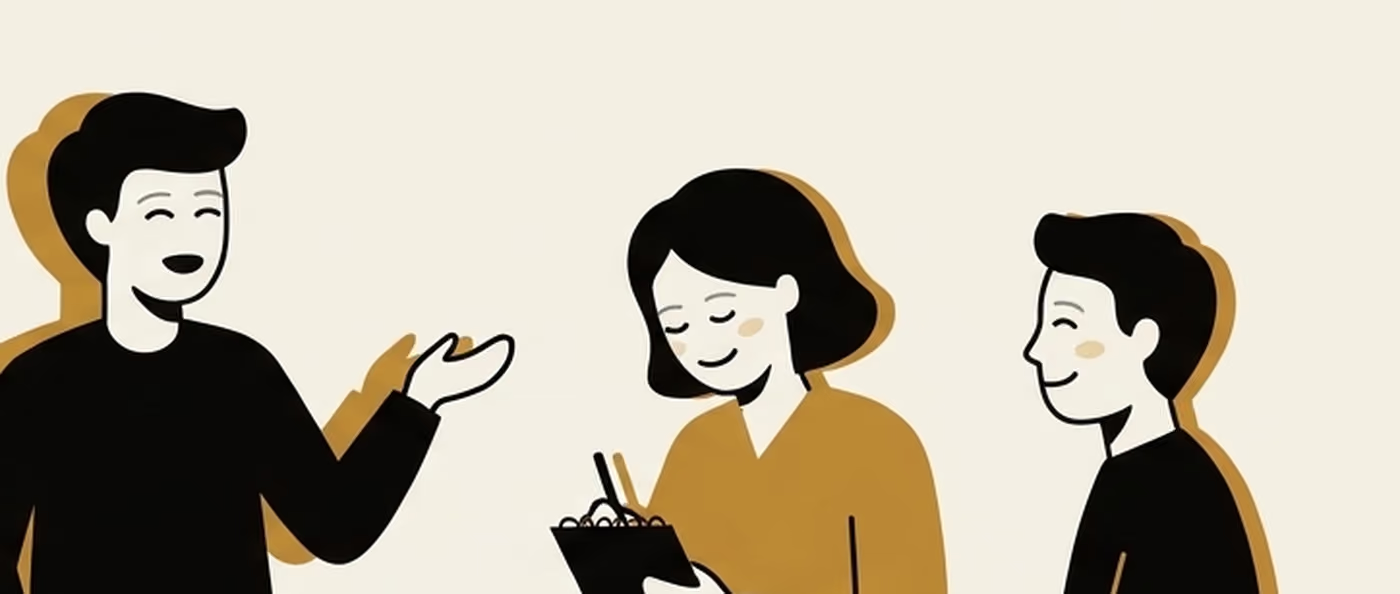
Everyone brings something small they overthought; the room guesses the ending before you tell it.
1 March 2027
Before the session#
Arrive with a small thing you spent way too much energy overthinking. A text, an outfit, a reply-all, whether a look meant something. Make sure you know how it actually turned out.
Small is the operative word. Anything you would not want the room laughing at is the wrong item for today. Picking a light one is not dodging the exercise. The mechanism is the same at every size, and it is much easier to see when nothing is at stake.
In the session#
One at a time, someone describes the situation and the spiral, stopping right before the outcome. The room guesses what happened. Then the reveal. Repeat until everyone who wants a turn has had one, and “who wants a turn” is meant literally. Passing costs nothing and needs no reason.
After a few rounds, pause on the pattern rather than the punchline. What did the guesses tend to get wrong, and in which direction? Watch for the usual shape, without asserting it up front. Guesses skew toward the version that was overthought, not the version that actually happened.
Afterwards#
Nothing to submit, but keep this one in mind for your log. The same gap, between what got built up and what actually happened, is the raw material for that assessment.
The spec
What you bring to the session. Written so a reader can tell whether it has been met without asking you.
- you brought one real thing you overthought, small enough to tell in under a minute, and you know how it actually turned out
- you can say what the room's guesses had in common, and what that says about how the group predicts outcomes
Teaching team
- Idris Fenn, tutor