“Want to come to the thing on Friday?”
A pause. ”…Yeah, maybe.”
The person who asked has already heard “no”. Not because of “maybe”, which came last, but because of the pause, which came first. This week is about that pause: how long the protocol allows, what a longer one means, and what to do when you need more time than the protocol gives.
A system with no referee#
Nobody hands out turns in a conversation. There is no chair, no queue and no published order, and yet everyone keeps time. Sacks, Schegloff and Jefferson described turn-taking as locally managed and party-administered: the people talking run it themselves, turn by turn (Sacks et al., 1974).
A distributed system with no coordinator and no documentation still has to agree on timing. It does, remarkably precisely.
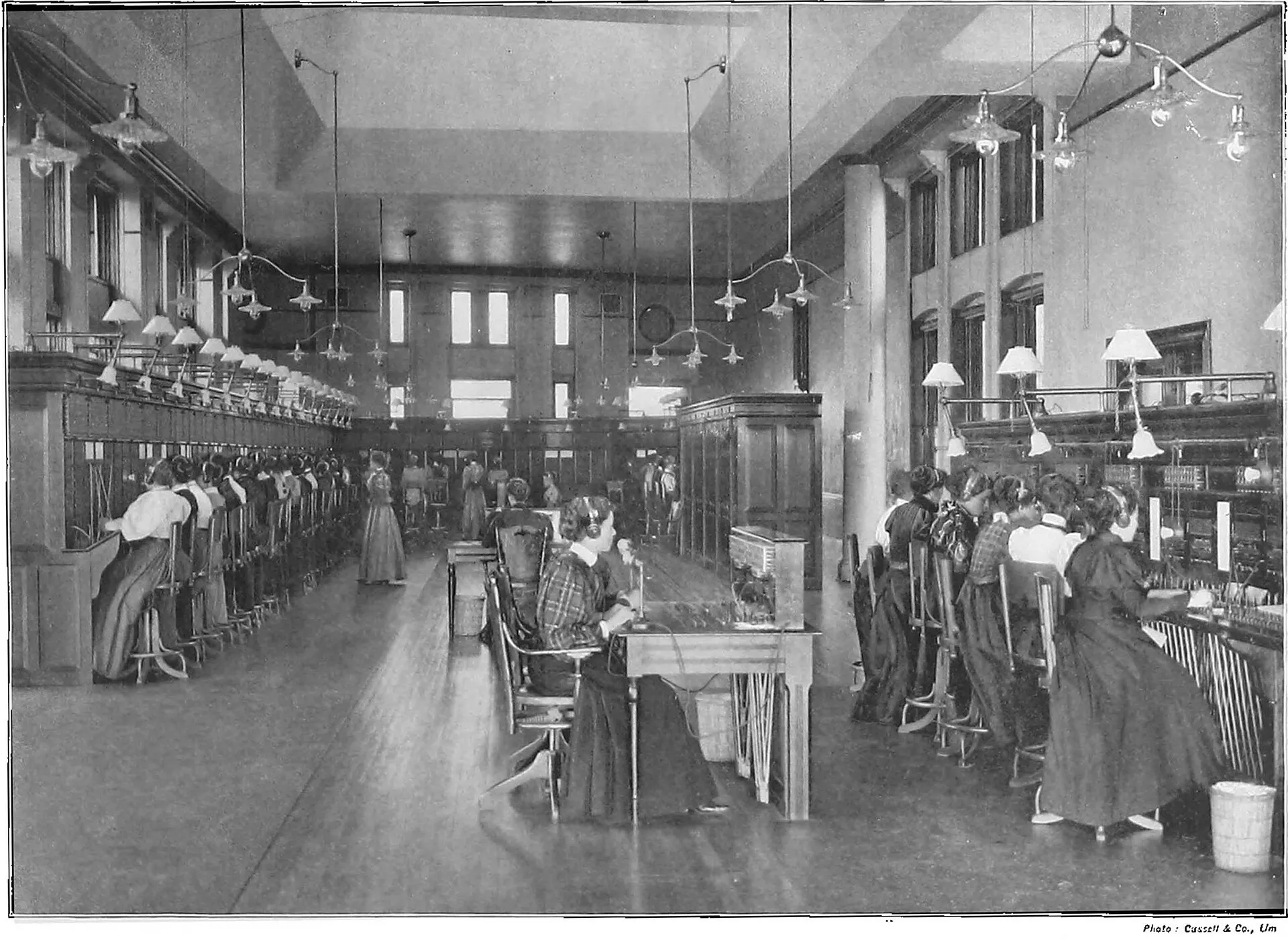
At least the exchange had a supervisor. Your tutorial is expected to route its own traffic.
The clock#
Across ten languages, from major world languages to small indigenous communities, conversations avoid overlapping talk and keep the silence between turns short. Average gaps differed between languages, but every language’s average fell within 250 ms of the cross-language mean (Stivers et al., 2009). The authors suggest that people are sensitive enough to these small tempo differences to experience them as large differences in style.
How short is short? A typical gap between turns is of the order of 200 ms. Planning and producing even a short utterance takes over 600 ms. The two numbers can only both be true if listeners start preparing their reply before the speaker finishes, by predicting where the turn will end (Levinson & Torreira, 2015).
Kendrick puts the ordinary transition at a range of about 100–300 ms, and warns that this estimate of central tendency “hides a wealth of complex variation”: the type of turn being answered can change the timing (Kendrick, 2015). Treat these figures as typical values, not deadlines for a reply. Week 12’s errata returns to this limit.
- 200 ms: ordinary gap, about 200 ms
- 600 ms: planning a reply, over 600 ms
- 700 to 1500 ms: timeout: a no is more likely
So the protocol’s clock assumes you started composing your answer while the question was still being asked. Anyone who waits to hear the whole question before thinking about it is, by that clock, already late.
The undocumented timeout#
Here is why a pause sounds like no. Kendrick and Torreira measured replies in telephone calls. Most acceptances and rejections came at similar speeds. But once a gap reached 700 ms or more, rejections clearly outnumbered acceptances, and even small departures from a normal gap made a plain “yes” less likely (Kendrick & Torreira, 2015).
That pattern gives a listener a reason to hear a long gap as reluctance. It does not tell them what a particular pause means.
The course calls this the timeout: the point at which a listener stops simply waiting and starts inferring meaning from the gap. It isn’t a hard number. The research supports “about 200 ms is ordinary, and by 700 ms a no is more likely than a yes”.
- Asker to Responder: Coming on Friday?
- Responder to Asker: Yes! (~200 ms). heard: yes
- Asker to Responder: Coming on Friday?
- Responder to Asker: …yes. (1.5 s). heard: a reluctant yes
The inference is general. The calibration is local.#
Kendrick and Torreira watched real calls and found that long gaps tend to come before rejections. That is an observation. Roberts, Margutti and Takano did the other experiment: they set the gap and measured what listeners concluded from it (Roberts et al., 2011).
Telephone conversations, modelled on a real call between friends, were manipulated so the reply came after 0 ms, 600 ms or 1200 ms. Each version was crossed with two kinds of turn to respond to — a request and an assessment. Native speakers of American English, Italian and Japanese, each in their own country, rated how willing the replier seemed to comply or to agree.
First: ratings of willingness fell significantly as the silence got longer, in every one of the three language groups. Reading a pause as reluctance is not an English-speaker’s quirk. It appears to be what listeners generally do.
Second: the groups’ means differed significantly from each other — different expectations for agreement. The direction of the effect was shared. The amount was not.
A listener brings their own timing expectations to the conversation. The person answering may have learned a different pace.
Three ways to study a pause#
Keep the designs separate:
| Design | What varies or is observed | What is counted |
|---|---|---|
| Recorded calls: Kendrick and Torreira | Naturally occurring gaps | Acceptances and rejections |
| Prepared calls: Roberts and colleagues | Silences set to 0, 600 or 1200 ms | Listeners’ willingness ratings |
| Thursday’s classroom task | Rough pauses, then a hold token; every reply is yes | The asker’s rating and manually timed gaps |
In the room — which study could answer that? (8 min)#
Three minutes, in pairs: match each claim below to a design, or mark it unsupported. Three minutes: rewrite one unsupported claim at the width the evidence allows. Two minutes, the room: compare a rewrite and one unresolved limitation.
- “In these recorded calls, long gaps contained more rejections.”
- “The longer prepared silences received lower willingness ratings.”
- “My friend’s 1.2-second pause proves that their yes means no.”
- “The class can calculate a rejection rate from replies that must all be yes.”
The first two belong to the first two designs. Neither the third nor the fourth follows. For a particular friend, ask what the reply means. For the class, report perceived willingness rather than an outcome the task forbids.
Who the timeout misfires on#
A long gap might mean reluctance. It might also mean:
- the person is translating from another language;
- they were taught to consider a question before answering it;
- they process spoken language at their own pace and need the whole sentence;
- they’re choosing between two answers that are both yes.
Those pauses can be mistaken for a no. If you’re the fast one in a conversation, before you conclude, ask. “No pressure either way. Is that a yes?” costs one turn.
In the room — guess the gap (9 min)#
One minute: form threes and set up a stopwatch. The timer starts at the end of the question and stops at the first sound of the answer. The asker writes an estimated gap in milliseconds and what the pause read as before the timer reveals the measurement. No recording.
Six minutes: three rounds, rotating every role. Use these fictional questions: “Want to study after this?”, “Can we meet on Thursday?”, and “Would you like the seat by the window?” The responder says yes after a deliberate pause of their choice. Keep the three guesses and measured gaps.
Two minutes: order the group’s trials by guessed duration, then measured duration. Where do the orders or numbers disagree? What meaning did each asker give the pause? Manual timing is rough; this exercise compares estimates, not whether somebody crossed a conversational deadline.
A gap can be given, not only read#
So far the gap is something that happens to you and gets misread. Kendrick’s study of 169 other-initiations of repair — the moves people make to flag that they didn’t catch something — shows the other half.
Those moves are themselves slow. The most frequent came after gaps of about 700 ms, which is to say the turn whose job is flagging trouble does not obey the fast-transition rule. Within them, initiations that pointed at the specific trouble came after shorter gaps than vague ones, and the rare ones that straight-up corrected an error came without delay (Kendrick, 2015).
Kendrick’s analysis of what happens in those gaps suggests the extra time is being used: to catch up on a turn you only half-registered, to produce a facial signal — and to give the other person the chance to fix it themselves.
That is a courtesy with a cost, and it is invisible if you have been taught that all silence is judgement. Some of the pauses in your conversations are someone waiting to see whether you want to take the sentence back before they have to say anything about it. Week 5 is what happens next.
Hold tokens#
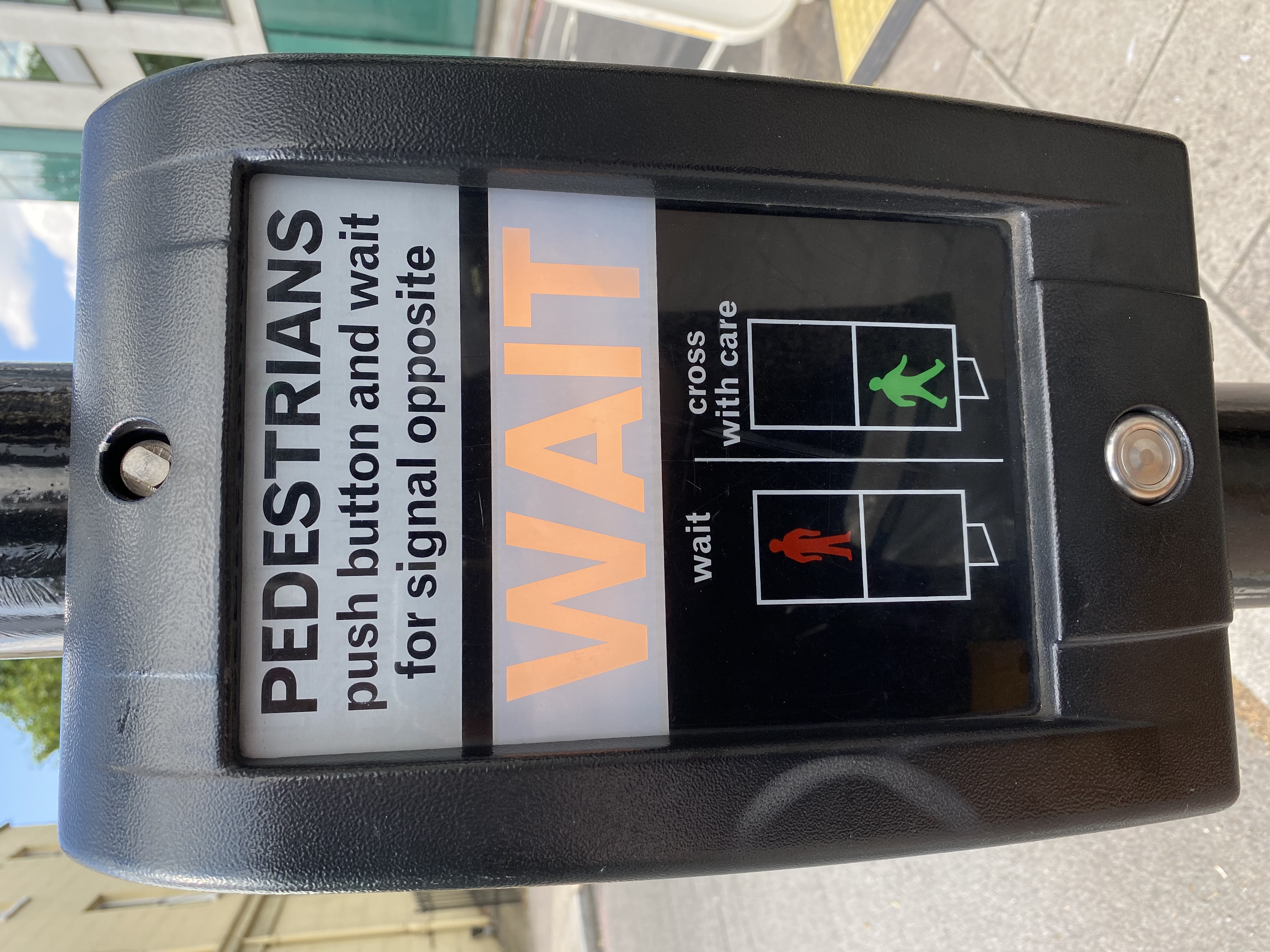
If you need more time than the clock gives, fill the gap with a sound that means I’m still here, and I’m thinking. The gap the listener would have read is no longer empty.
The scripts are the course’s proposals: filling the gap gives the listener something besides silence to interpret. Try them in Thursday’s lab.
| Situation | Hold token |
|---|---|
| A question you want to think about | “Hm, let me think about that.” |
| An invitation you’re keen on but need to check | “Oh, nice. Let me just check my week.” |
| A hard question in a tutorial | “Good question. Give me a second.” |
| Anything, when you know you’ll take a while | “Mm.” |

In the room — say it out loud (8 min)#
These are fictional questions; a yes does not make an appointment:
- “Want to have lunch after class?”
- “Could you bring a printed worksheet tomorrow?”
- “Would you put two meeting times in a list or a table?”
- “Would Thursday or Friday work for a meeting?”
One minute: read the four prompts. Two minutes per partner: ask all four; the responder uses a different hold token before each answer. Three minutes: choose one phrase that fits your own speech and say it once more, then compare which phrases gave useful context. You may rehearse by writing the exchange instead. A phrase does not have to sound like the table to do the same job.
A standing hold token makes the request in advance. Said once, early and without apology, “I sometimes take a second to answer. A pause from me isn’t a no” gives the other person context for your pauses. This is the course’s recommendation, not a tested finding. Week 11 returns to it as part of a shared protocol.
When turns collide#
The protocol avoids overlap, but it happens. When two people start at once, one of them stops, and a quick repair puts the conversation back:
- “Sorry, go ahead.”
- “No, you go.”
- “You first. Mine can wait.”
Use whichever fits your speech, then leave the turn to the other person. Week 5 covers repair.
If time remains#
How could two people with different reply speeds agree what a pause means without asking either person to keep the other’s clock?
Optional discussion. Finish by 15:55.