Week 2: Trade agreements
The basic carbon-for-nutrient exchange, and the biological-market evidence that it behaves like a rate rather than a fixed act of generosity.

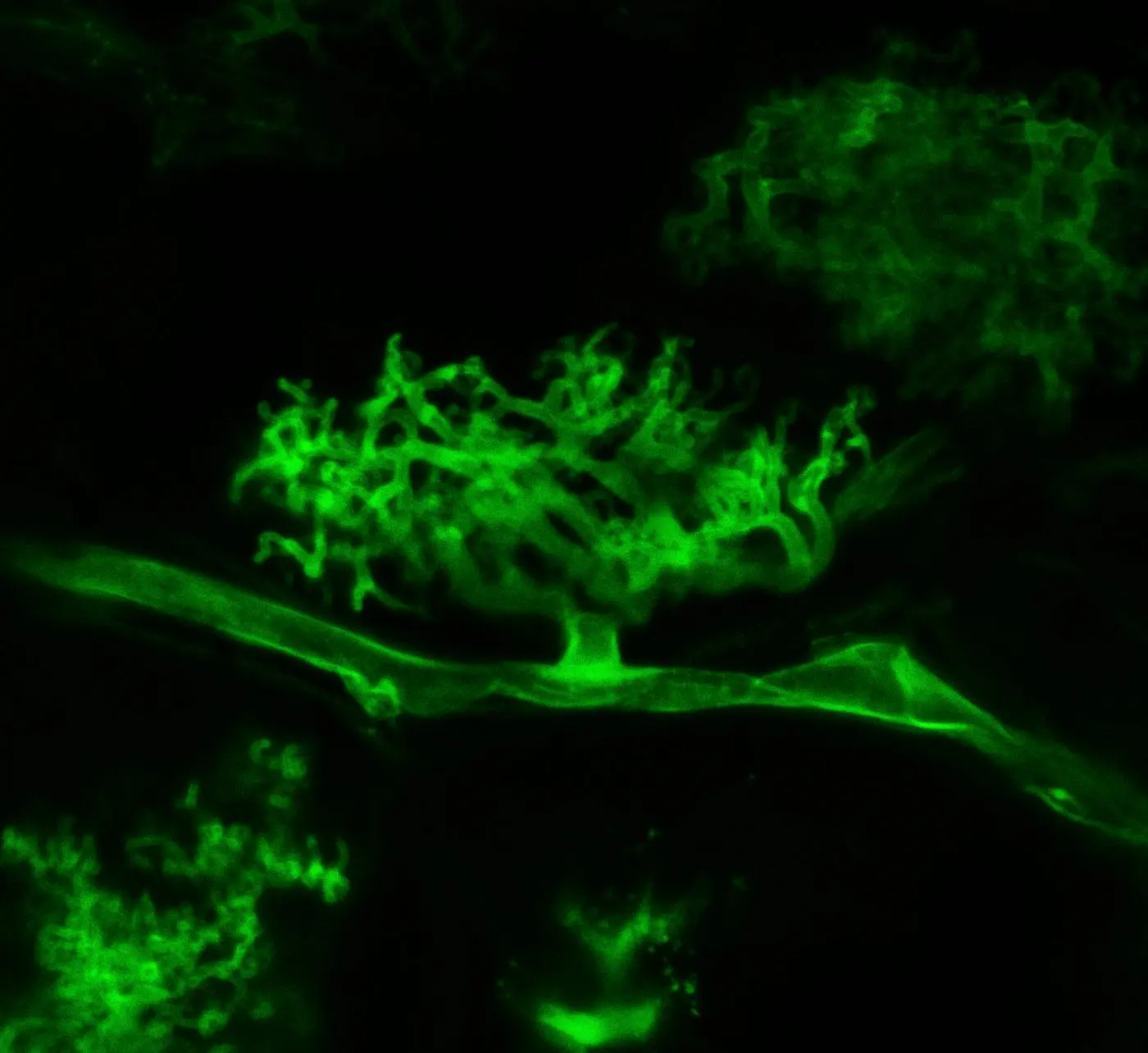
TB0815 · diorama S. Brandt, NHM Basel · CC BY 4.0
Dispatch 02
Dispatch 02- Date
- 1 March 2027
- Metaphor
- Trade agreements — negotiated exchange with terms both sides can enforce
- Phenomenon
- Carbon-for-nutrient exchange in mycorrhizal mutualism, and biological market theory's account of how the exchange rate is set
Outline#
- the basic exchange: plant carbon (photosynthate) for fungal-scavenged phosphorus and nitrogen the root cannot reach on its own
- why the fungus can get nutrients the root can’t: hyphae reach pore spaces roots cannot enter, and can access some bound nutrient pools directly
- biological market theory: partners adjust how much they give based on what they are currently getting, not on fixed generosity
- the labelling experiments: using radioactive and stable-isotope tracers for phosphorus and carbon, researchers showed plants preferentially route carbon toward fungal patches that deliver more phosphorus, and fungi reciprocate toward roots supplying more carbon
- where “trade agreement” holds up — both sides’ contribution responds to the other’s — and where it doesn’t: neither partner is deciding anything: the adjustment is a biochemical response shaped by selection, not a negotiation anyone is having. Call it a market anyway, and feel the strain in the word.
Teaching team
- Dr. Marguerite Osei — convenor
- Tobias Lindqvist — tutor