
Vaporwave
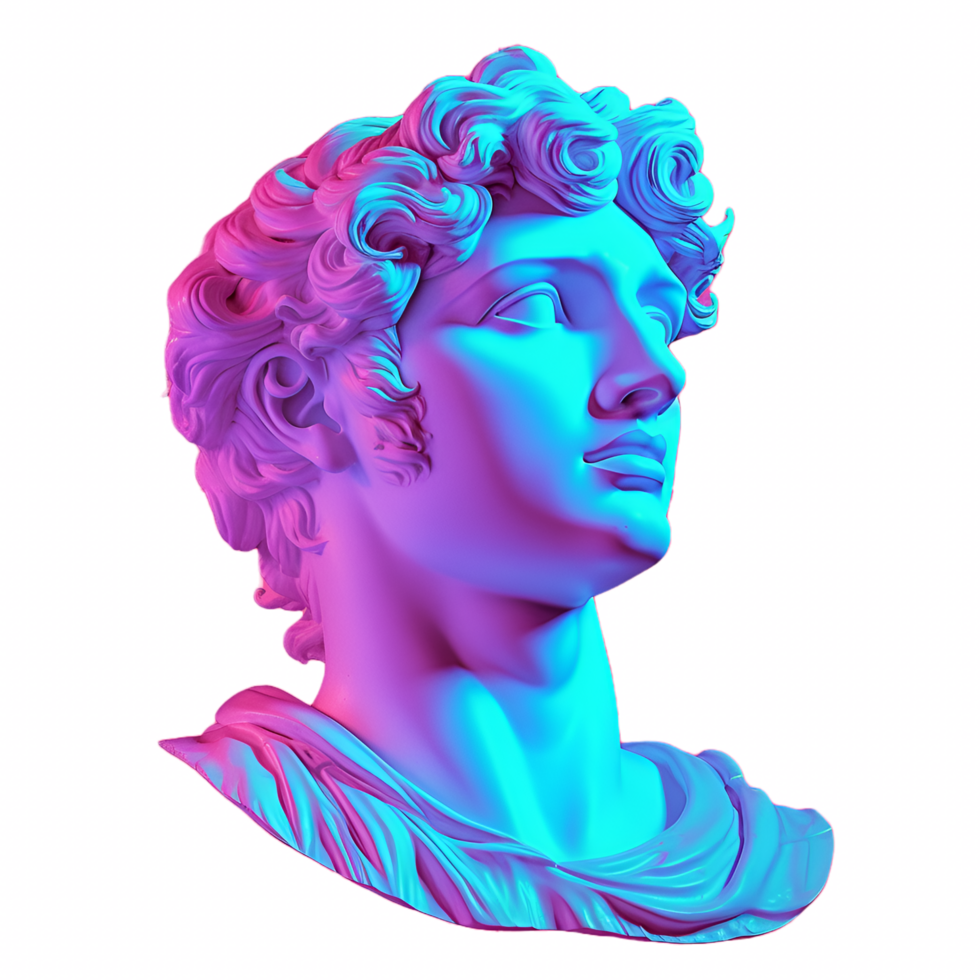
Vaporwave is a microgenre of electronic music and an accompanying visual style that emerged online in the early 2010s. Built largely from slowed-down, chopped, and looped samples of 1980s soft rock, smooth jazz, elevator music, and corporate "mood" recordings, it pairs its sound with a visual language of Greco-Roman statuary, early-1990s computer interfaces, glitch artefacts, and pastel-to-neon gradients [1]. Equal parts homage to and critique of the consumer optimism of the late-20th-century, it treats the recent past — malls, operating systems, muzak — as a ruin already worth excavating [2].
The name is a pun on "vaporware", the software-industry term for a product announced but never shipped — an apt joke for a genre built from the unfulfilled utopian promise of 1980s and 1990s consumer technology and globalised commerce [3].
Origins
Vaporwave grew out of two earlier internet-native strains of production: chillwave, which softened and blurred recognisable pop structures into hazy, nostalgic ambience, and hypnagogic pop, which treated half-remembered media of the artist's own childhood as raw material [2]. Daniel Lopatin's Chuck Person's Eccojams Vol. 1 (2010) is widely credited as the genre's founding gesture: a cassette of warped, looping fragments of half-forgotten radio hits, released under a pseudonym rather than his own name as Oneohtrix Point Never [4].
The style crystallised a year later with Ramona Andra Xavier's Floral Shoppe (2011), released as Macintosh Plus. Its opening track — a slowed, pitched-down loop of Diana Ross's "It's Your Move" set against a cover framed by a marble bust and a grid of Japanese characters — became the genre's single most recognisable artefact, reproduced and parodied so widely that it now stands in for the whole style in casual usage [3].
Aesthetics and sound
Musically, vaporwave is defined less by a fixed set of instruments than by a shared production method: existing recordings — mall Muzak, smooth jazz, R&B, corporate training tapes, in-flight music — are pitched down, slowed, looped, and often left with the original song's tape hiss and vinyl crackle intact, so the source material's own imperfection becomes part of the composition [1].
Visually, the genre borrows the sheen of early 3D rendering and Windows 95-era desktop interfaces, VHS scan lines and colour bleed, Greco-Roman busts and columns standing in for a classical ideal, and a palette of pink, cyan, and purple gradients often cut with a chrome or glitched typeface [5]. The recurring use of Japanese and Chinese text — frequently disconnected from any Japanese-speaking audience or artist — has been read both as an aesthetic borrowing from 1980s Japanese "city pop" and department-store branding, and as a pointed comment on how thoroughly Western consumer culture exported itself abroad in the same period [2].
Subgenres
As the style matured past its founding releases, several more specific strands split off, each keeping vaporwave's sampling method but narrowing its subject matter or sharpening its tone.
Mallsoft
Mallsoft narrows vaporwave's source material to the specific acoustic environment of the American shopping mall: piped-in elevator music, distant food-court chatter, and public-address chimes are layered and reverberated until a track feels less like a song than a recording of an empty building [6]. Where earlier vaporwave sampled corporate media, mallsoft samples corporate space.
Eco-vapor
Eco-vapor (sometimes "eco-vaporwave") turns the same production techniques toward field recordings of rainforests, rivers, and birdsong, layered under warped new-age and environmental-documentary soundtracks from the 1980s and 1990s [7]. It keeps vaporwave's central irony — a commercially manufactured idea of nature, sold back as relaxation media — while shifting the target of its critique from shopping malls to the era's packaged environmentalism.
Hardvapour
Hardvapour strips out vaporwave's smoothness altogether: samples are distorted, pitched down further, and pushed into harsh, industrial textures closer to noise music than easy listening [8]. Its cover art follows the same turn, favouring stark monochrome and religious or occult imagery over pastel gradients — a deliberately unwelcoming reply to vaporwave's growing popularity as background music.
Beyond music
Vaporwave's visual vocabulary escaped its own soundtrack almost immediately. Its colour palette, glitch typography, and statuary became a recognisable "aesthetic" applied to fashion, poster design, and — inevitably — internet memes, often stripped of the music entirely [9]. A parallel strand, sometimes called simpsonwave, spliced vaporwave-processed audio under warped, slowed clips of television animation, extending the genre's method of finding melancholy in reprocessed mass media to a new source.
Legacy and influence
Vaporwave's DIY, internet-distributed production model — releases circulated for free on Bandcamp, cassette runs pressed on demand, cover art made in image editors rather than by professional designers — anticipated a wider shift in how underground music genres would organise themselves over the following decade [1]. Its sound has fed forward into synthwave and outrun production, and its aesthetic has been absorbed, often uncredited, into mainstream advertising and retail branding — a loop the genre itself would likely find appropriate [9]. Academic writing on the genre, beginning within a couple of years of its emergence, treated it as an early and unusually legible case study in internet-native subculture, formed and sustained almost entirely without physical performance venues or traditional music-press coverage [2].
See also
For definitions of the terms used throughout this article, see the glossary. For sources, see the references page.