Week 7: The politics of the office nap
Rest at work is distributed the way status is — who can be seen sleeping, and who would lose something by it
19 April 2027
Week 6 ended on a question: what does a person have to be seen to be, in order to be allowed to sleep? This lecture takes that question out of other people’s cultures and puts it where it is harder to look at, which is the room you work in.
Outline#
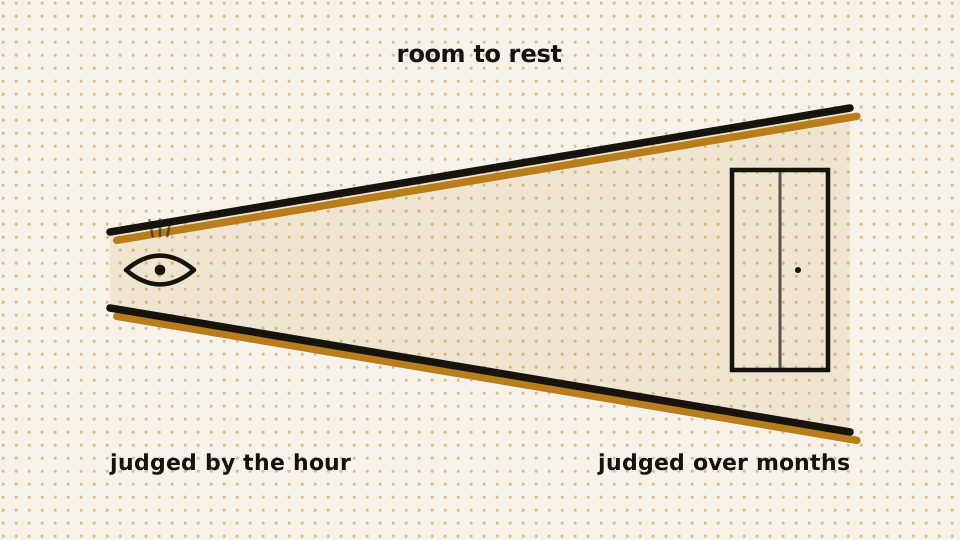
- Autonomy tracks seniority. The people most able to close a door are the people whose output is judged over months. The people least able are judged by the hour, or by a queue. This is the strongest single predictor of who can rest, and it is not about how tired anyone is.
- Visibility is the mechanism. The rule is rarely “no sleeping”. It is that being seen asleep means something about you — and what it means depends entirely on who is doing the seeing and what they already assume.
- Inemuri, revisited. Last week’s case is the cleanest illustration: the same act reads as devotion or as delinquency depending on the sleeper’s position. The behaviour is constant, the interpretation is not.
- Surveillance. Monitored work removes the ambiguity that made informal rest possible. A break that is not logged is not taken, and the discretion that let people manage their own trough disappears without any rule being written.
- The night shift. Where napping is most defensible on safety grounds, it is most often forbidden. Week 9 takes this up properly; note here that the argument against it is about appearances rather than outcomes.
- Who is believed to be tired. Fatigue is not read the same way on everyone. Track who has to prove it and who is taken at their word.
The claim to argue with#
Nap policy is not a wellbeing question. It is a question about who is trusted to manage their own time, and it produces the same answer as every other question of that shape.
Before next week#
Next week the nap comes back as a product — nap pods, sleep apps, rest as something purchased. Bring one example you have actually seen advertised, and we will ask what problem it solves and for whom.
Teaching team
- Marisol Quaye — convenor