Week 5: How the Industrial Revolution killed the nap
Daytime sleep did not fall out of fashion — it was scheduled out, by clocks, factory discipline and artificial light
22 March 2027
For four weeks this course has argued that the nap is a biological need. This week asks the obvious follow-up: if it is a need, what happened to it? The answer is not that people stopped wanting to sleep in the afternoon. It is that a particular way of organising work made it impossible, and then made it shameful.
Outline#
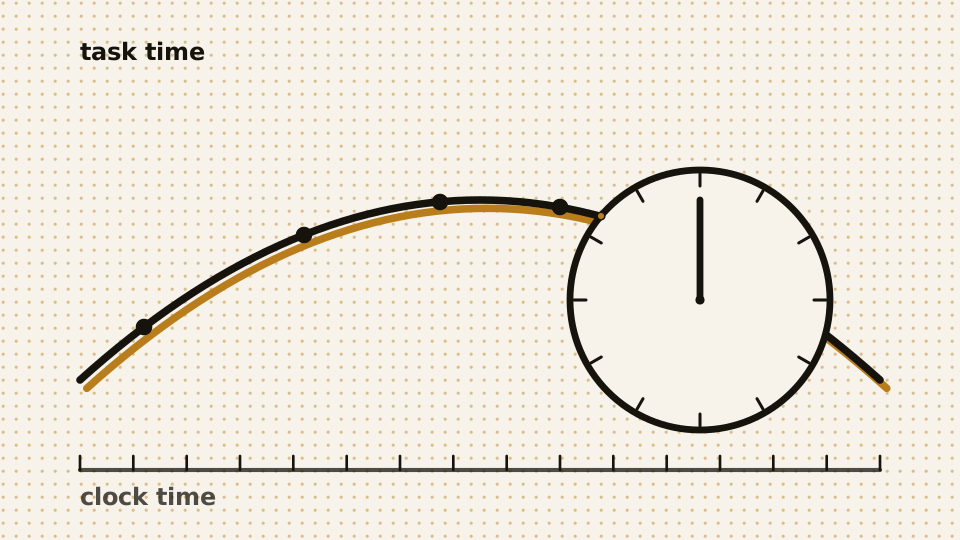
- Task time and clock time. Before industrial work, the day was organised around tasks that had their own natural length. Afterwards it was organised around hours that did not care what you were doing. E. P. Thompson’s account of that shift is the spine of this lecture.
- The factory needs everyone at once. A machine-paced production line only works if the whole shift is present simultaneously. Individual rest becomes not merely unproductive but disruptive — a structural fact, not a moral one.
- Segmented sleep. Roger Ekirch’s evidence that pre-industrial Europeans commonly slept in two nighttime blocks with a waking interval between them. The consolidated eight-hour night is a recent arrangement, not a natural one.
- Artificial light. Cheap lighting pushed bedtime later without moving the start of work, and the compression had to come out of somewhere.
- The moral turn. This is the part worth the most attention. Sleeping in the day moves from ordinary, to inefficient, to evidence of bad character. Once it is a character judgement it no longer needs an argument, and it stops being examined.
The claim to argue with#
We did not lose the nap. It was taken, for reasons that made sense to the people taking it, and the shame attached to it afterwards is what stopped anyone noticing.
Before next week#
Find one rule, timetable or notice — from any period, including now — that governs when people are permitted to rest. Bring it. Next week sets three cultures against each other and your example is the fourth.
Teaching team
- Marisol Quaye — convenor