Week 3: The coffee nap
Caffeine takes about as long to arrive as a short nap takes to finish, and that coincidence is the whole trick
8 March 2027
Last week established that a short nap works because it stops before slow-wave sleep. This week is about the one intervention that makes it work harder, and about why it sounds like folklore when it is closer to a timetable.
Outline#
- Adenosine. It accumulates in the brain across the waking day and binds to receptors that make you feel sleepy. Sleep clears it. This is the closest thing we have to a physical substance for “tiredness”.
- What caffeine actually does. It does not add energy. It is shaped enough like adenosine to occupy the same receptors without activating them, so the adenosine already present cannot be felt. The tiredness is still there and is still accruing.
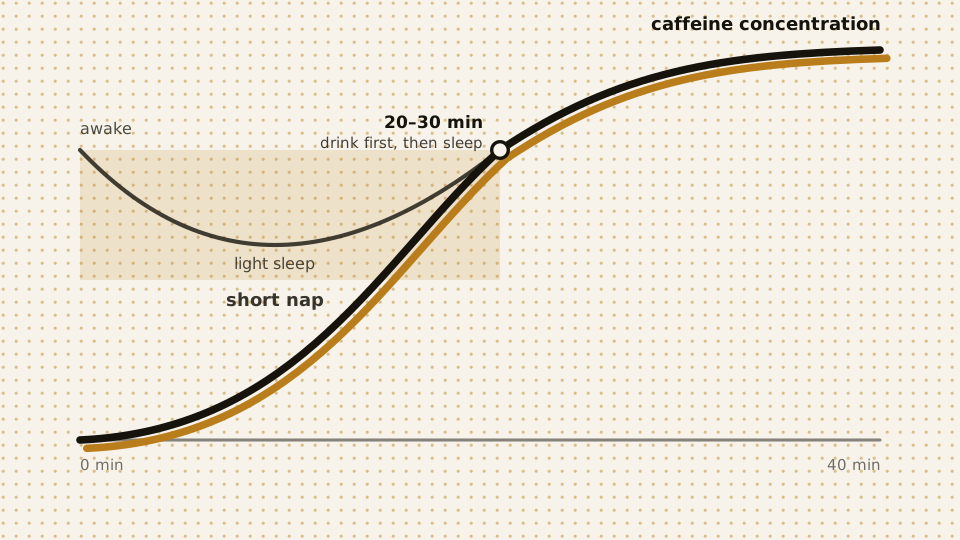
- The arrival time. Caffeine taken by mouth takes roughly twenty to thirty minutes to reach useful concentration. This is the number the whole lecture turns on.
- The coincidence. A nap of about 20 minutes clears some adenosine, and the caffeine arrives to occupy the receptors just as you wake. Drink first, then sleep — the order is the intervention.
- Why the evidence is thinner than the internet suggests. The studies are small, mostly on young adults, mostly on simulated driving. The effect looks real. The size of it does not survive the retelling.
The claim to argue with#
A coffee nap beats a nap and beats a coffee, and the reason is arithmetic about two timelines rather than anything about coffee.
If you do not drink caffeine, you are not excused from this argument. You are the control condition, and this week’s lab needs you.
Before next week#
Notice what time you take your last caffeine of the day, and what time you get to sleep. We are not asking you to change it. Week 4 needs both numbers, and recalled numbers are worse than recorded ones.
Teaching team
- Idris Fenn — tutor