Week 1: What is a nap
Sleep is not one thing but a sequence, and a nap is an entry into it — where you stop decides what you get
22 February 2027
The nap is a biological need that modern work schedules erased. This course studies its science, its history, and its return, and this lecture sets up the first of those by answering a question most people think is already settled: what a nap actually is.
Outline#
- The course’s claim. Most adults feel a dip in alertness in the early afternoon, and most institutions are built as though they don’t. Both halves of that sentence are worth a semester.
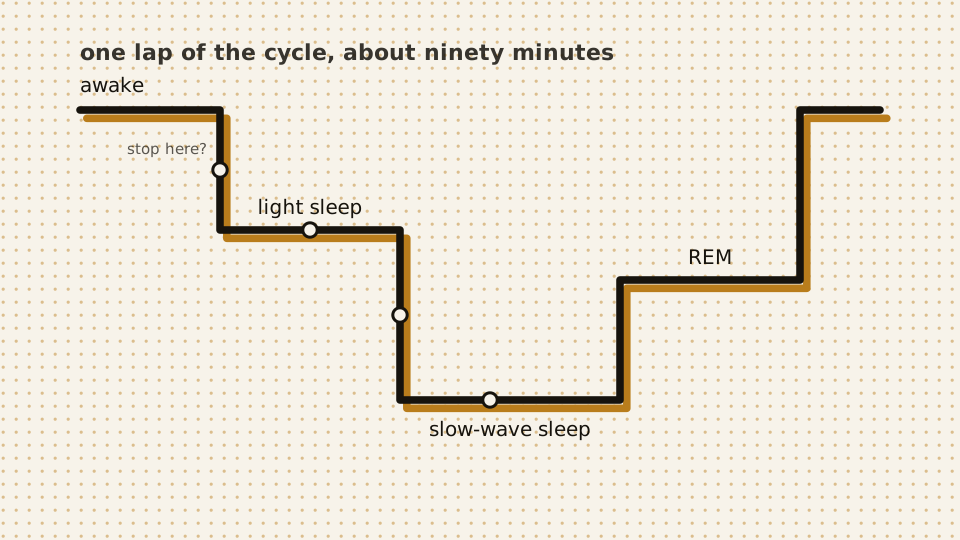
- Sleep is a sequence, not a state. Light sleep, then slow-wave sleep, then REM, and back around. Roughly ninety minutes for a full lap.
- So a nap is not a small night’s sleep. It is an entry into that sequence, stopped partway. Which stage you were in when the alarm went is the single thing that decides how you feel afterwards — not how tired you were, and not whether you are “a nap person”.
- Why this is not obvious. The experience of napping is a poor guide to it. People routinely cannot tell whether they slept, and are confident either way.
- What we can measure, and how badly. Self-reported sleepiness, reaction time, and — from week 10 — the devices that claim to do better than both.
The claim to argue with#
Nobody is bad at napping. People are bad at choosing a length, and the length is not a matter of temperament.
You will get a proper chance to attack this next week, once you have the sleep architecture to attack it with.
Before next week#
Come having noticed, without changing anything, roughly when in the day your own alertness drops. Do not look anything up first. The Nap Lab this week is about locating that dip; week 4 is about why it is where it is.
Teaching team
- Marisol Quaye — convenor