Six mock midterm items, one per week 2–7 concept, each with a model response and the concept it's naming
Six mock items, built the same way the real midterm is: a fictional profile or scenario, a prompt, and a model response that names the concept it’s applying. None of this is the real paper — the real one has twenty items, sat under exam conditions in tutorial 7 — but the format, difficulty, and one-sentence-naming-the-concept requirement are all real. Work through these cold before you check the model responses.
One concept per item, drawn once each from weeks 2 through 7 — the real paper repeats concepts across its twenty items, this one doesn’t need to.
1. About Me — the disciplined swiper#
Scenario. A profile’s About Me section: “I don’t have time to swipe through hundreds of profiles, so if you’re reading this, congrats — you made the shortlist. I go on one date a week, max, because more than that and I stop paying attention to any of them.”
Prompt. What does this bio tell you about this person’s search strategy, and is it working in their favor?
Model response. This isn’t just confidence-signalling — it’s a search cost argument. Evaluating a candidate properly takes attention, and attention split across too many candidates at once degrades the quality of every single evaluation. Capping search at one date a week is a deliberate choice to keep the cost of evaluating each candidate low enough that the evaluation stays informative, not a claim about how desirable they are.
Concept. Search costs (Week 2) — the cost of evaluating each additional candidate, and why more search isn’t automatically better search.
2. About Me — the résumé bio#
Scenario (straight). “Marathon runner, home cook, fluent in Spanish. Ask me about my sourdough starter.”
Prompt. Which claims here are cheap talk, and which are costly signals?
Model response. “Fluent in Spanish” and “marathon runner” are costly signals — both are hard to fake convincingly in conversation or at a meetup, and harder still to sustain a lie about under follow-up questions (splits, pace, verb conjugations). “Ask me about my sourdough starter” is cheap talk dressed up as an invitation: it costs nothing to write, and only becomes a signal once someone actually asks and gets a real, detailed answer back — the signal lives in the response, not the invitation.
Scenario (funnier). “Certified scuba diver, published poet, once fought a goose and won.”
Prompt. Same instructions.
Model response. “Certified scuba diver” is a costly signal — the certification is a verifiable, hard-to-fake credential. “Published poet” is only weakly costly, since “published” costs almost nothing to bluff about vaguely. “Once fought a goose and won” is cheap talk elevated to entertainment: it’s unverifiable, but that’s the point — it isn’t trying to signal the claim itself, it’s signalling that they don’t take the bio-as-résumé format seriously, and that’s informative on its own terms.
Concept. Cheap talk vs. costly signal (Week 3).
3. Profile photo — the only photo they chose#

Scenario (straight). A profile’s only photo: mid-laugh, on someone’s shoulders, wristband still on, unmistakably at a concert — and, based on the blurred lineup poster visible in the background, weeks old.
Prompt. What does choosing this as the only photo tell you, and what’s the adverse-selection risk in trusting it?
Model response. The photo signals an active, socially connected life at the moment it was taken — but one flattering photo from one high-energy night is a lot like a car dealer’s lot photo taken in ideal light: true, but not necessarily representative of the median day. Good nights and bad nights aren’t equally likely to get photographed and posted, so the photos you see oversample the good ones. That’s adverse selection in the photo market, not necessarily deception.

Scenario (funnier). A profile’s only photo: full pirate costume, cutlass raised, at what the background reveals is a Renaissance fair car park — next to someone in a full peacock costume who is never explained anywhere in the profile.
Prompt. Same instructions.
Model response. Same adverse-selection logic, doing double duty as a costly signal of a specific personality type. The photo is a poor estimate of what a random Tuesday with this person looks like — but choosing to lead with it, unexplained, ahead of any more “normal” photo, is itself informative: they’re selecting for people who won’t need the peacock explained to them.
Concept. Adverse selection (Week 4) — the photos you see are a selected, not random, sample of a person’s life.
4. Profile photo — the outdated set#
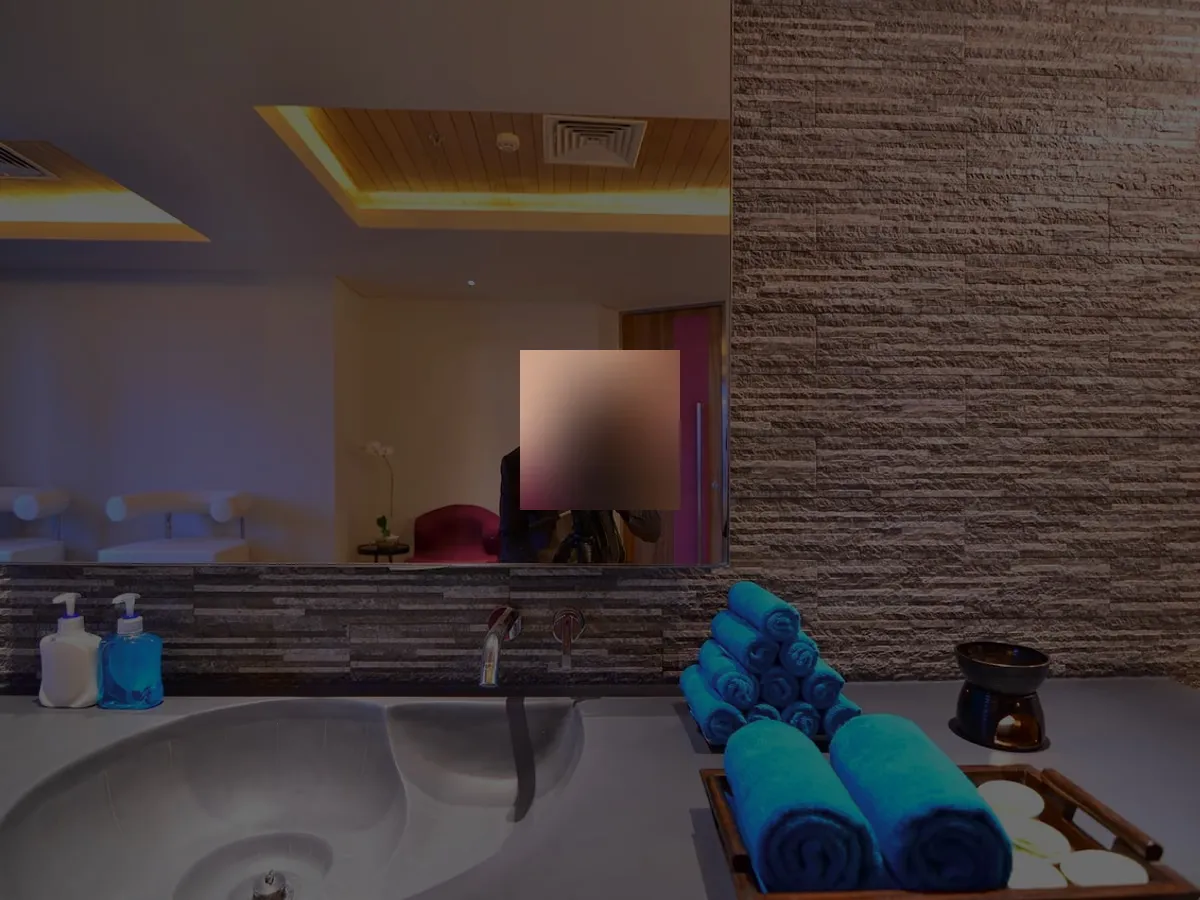
Scenario. A profile has six photos. Five are more than three years old — tagged, geotagged, or just obviously dated by hairstyle and camera quality. The sixth, clearly recent, is a low-light, unflattering mirror selfie.
Prompt. What screening problem does this profile pose to a viewer, and what’s the efficient response to it?
Model response. The viewer can’t verify current appearance directly, and the poster has no incentive to volunteer it if it’s worse than three years ago — so this isn’t a profile to take at face value, it’s a screening problem. The efficient move isn’t to reason from the old photos (irrelevant) or the bad new one (uninformative, given the lighting) — it’s to design a screen: propose a video call or a same-week meetup before investing further, forcing a revelation of current information that a static photo set can’t be trusted to provide.
Concept. Screening (Week 5) — designing a low-cost test that separates types the photos alone can’t.
5. Offline — the birthday party#
Scenario (straight). At a friend’s birthday party, you’re introduced to someone genuinely compelling in conversation forty minutes into the night. The party has three more hours to go, more guests are still arriving, and you don’t know who else might show up.
Prompt. Should you keep talking to them, or “keep circulating” in case someone better is still to arrive? Name the concept.
Model response. This is optimal stopping under the same constraint as the secretary problem: you can’t recall a candidate once you’ve moved past them — you can’t credibly return to “so, before, when we were talking…” after visibly working the room for two hours — and you don’t know the full distribution of who’s still arriving. Forty minutes into a several-hour party with an unknown future applicant pool puts you well within the “keep exploring” phase of the stopping rule in expectation — but if this candidate clears whatever bar your accumulated experience says is “clearly top tier,” the rule says stop searching and commit, not wait for a hypothetical better one.
Scenario (funnier). Same party, except the “genuinely compelling conversation” is with someone who has spent all forty minutes doing a bit where they are, apparently, a marine biologist who has never seen the ocean.
Prompt. Same instructions.
Model response. Doesn’t change the math, changes the input: the secretary problem doesn’t grade the candidate’s quality for you, it only tells you when to stop searching once you’ve decided they clear your bar. If a forty-minute-commitment bit clears your bar, the model says stop circulating — it has no opinion on whether your bar should be that low, and it won’t bail you out of that decision later.
Concept. The secretary problem / optimal stopping (Week 6).
6. Offline — the standoff#
Scenario. You’ve been talking for twenty minutes and it’s going well. Nobody has suggested exchanging numbers. Both of you keep finding reasons to stay in the conversation instead of leaving to get another drink.
Prompt. Why might neither person be the one to ask, even though both apparently want the same outcome? Name the concept.
Model response. Asking first isn’t free — it means revealing interest before knowing it’s reciprocated, and eating the cost of a visible rejection if it isn’t. Both people would prefer the other absorb that initiation cost while they get the same outcome for free; staying in the conversation is a way of signalling willingness without paying to make it explicit. The standoff resolves only when one side’s cost of asking drops below their cost of continued uncertainty — or someone runs out of drink-getting excuses.
Concept. The cost of asking / initiation cost (Week 7) — why a standoff can persist even when both sides want the same resolution.
Photos: concert crowd by Joshua Hoehne on Unsplash; Renaissance fair by Wadams on Pixabay (faces obscured); bathroom mirror selfie sourced from Pixabay (face obscured, darkened). No photo depicts an actual student, staff member, or real dating profile.