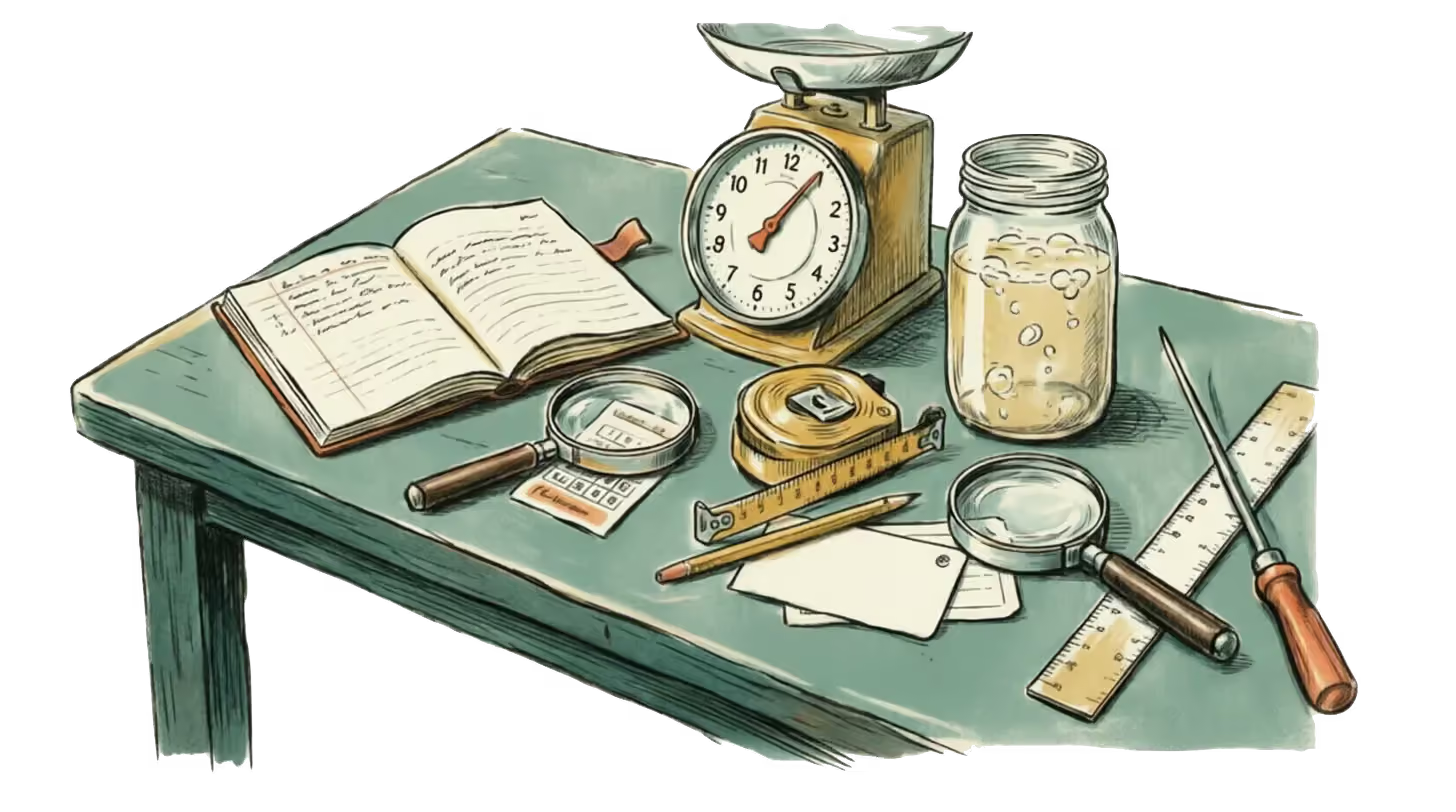
Twelve tutorials, and the twelve things you have to bring to them. This is where the course actually happens.
Lectures make the argument; sessions test it against evidence from a real kitchen — usually yours. Almost every week asks you to arrive with something gathered beforehand: photographs, a drawing, a week of records, ten date labels, a clean jar. The seminar runs on what the room found, not on what the room read, and a session where half the group arrived empty is a different and much worse class.
Sessions run Wednesdays 14:00–16:00 in the Cold Storage Building (7), Room 1.03.
Each page below states that week's question, what to prepare, how the two hours are spent, and what leaves the room. It also names the claim it inherits from the week before, so the twelve weeks read as one argument rather than twelve topics that happen to share a subject. Two of them include a short interactive explainer you work through right on the page: week 7 and week 12.
Blind tasting: is freshness real?
Fresh, three days refrigerated, and freeze-dried — taste all three without knowing which is which, then argue about what "fresh" means
Decoding the advertisement
A visual semiotics workshop on refrigerator advertising, 1950–1980 — who is operating the fridge, and what is the white enamel saying?
The food mileage map
Photograph the three most off-season things in your fridge, then reverse-track where they came from and what it cost to bring them
Fridge archaeology
Bring the interior of your own fridge and we will draw the power map together — authority zones, marginal zones, and the tragedy of the commons
The debate: who owns the food in a shared fridge?
A structured ethical debate on a share-house dispute — ownership, hygiene boundaries, and the contract nobody wrote down
Dual curation: the fridge door and the feed
Compare the two surfaces you curate for other people — one physical and semi-private, one digital and public. They are not saying the same thing.
Label forensics
Bring 5–10 confusing date labels, work out what the regulations actually require, and draft an honest label to replace each one
Personal waste audit
Record everything you throw out for a week, then cost it in money and calories. The illusory fortress, itemised.
Psychological mapping: the ideal fridge and the anxious fridge
Draw the fridge you want and the fridge you have when things are bad, then ask what you were actually buying
Design the dystopia
Build the most exploitative smart fridge you can imagine, in groups, and then take your own design apart
Fermentation and sharing workshop
Make a quick pickle with your hands, or design the rules for a community pantry — preservation that does not need a plug
Final pitches and the unplugged picnic
Present your reconstruction proposal, then eat a meal that never needed a fridge — the argument, in embodied form