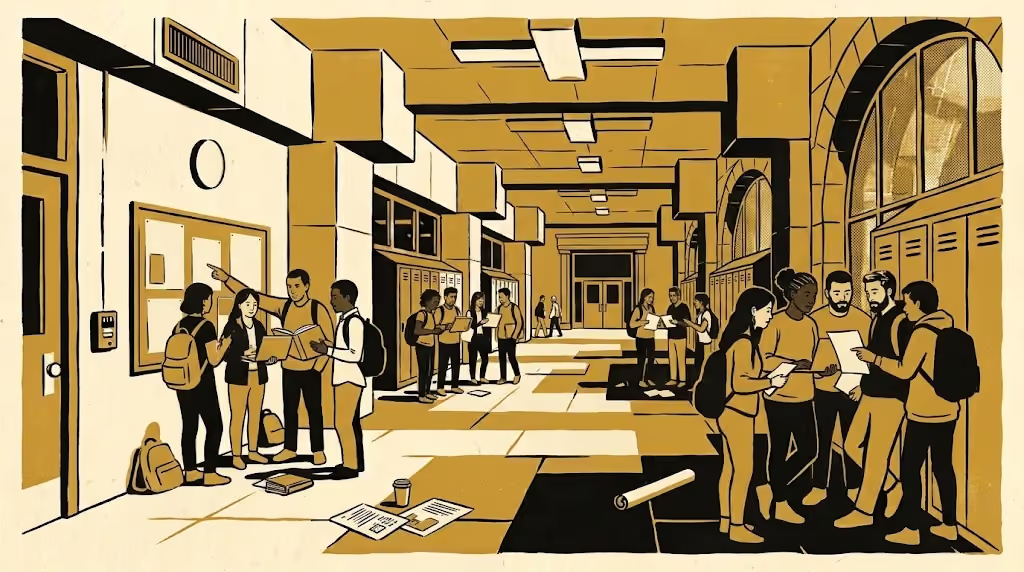
Hallway Economics treats campus as an economy: attention, trust and serendipity are the currency, spent by walking up to strangers — for anyone who'd rather learn by doing than sitting still. You don't just report back what happened, you reflect on what the investment bought.
What you will do
You start conversations with strangers, trade favours, and run a stall to see who stops — then work up to asking for something you might be turned down for. Each of these is a Crossing: two weeks, one out in the hallway and one back reporting what happened, ending with a reflection and a short video clip. The last Crossing breaks that pattern — no hallway work, just the whole room presenting what the semester bought them. What you walk out with: a written record of five real interactions, and one video, built one clip at a time.
Who it is for
Anyone who wants to get better at hearing no, meeting people they wouldn't otherwise talk to, and noticing what's already around them on campus. No portfolio, no pitch deck, no prior networking experience — just a willingness to walk up to someone and start something. If the idea of setting up a stall in the busiest foyer on campus makes you wince a little — good, this is the course for you. If you don't want to consistently try and reflect, it's not for you.