Week 1: Reading a Box - Three Design Logics
Three real packages, three different things each one was actually built to do — and the claim this course spends twelve weeks testing
22 February 2027
The claim#
Sustainability language on packaging is mostly marketing. What actually decides how a package is built is a shipping-cost formula and a return/liability calculation. This isn’t a cynical aside — it’s the thing this course spends twelve weeks trying to break, or fail to break.
Three packages make the case before any formula does.
Three boxes, three logics#
Apple. Lift the lid and the product sits under a layer of its own, accessories tucked behind a hidden second panel you find by touch, not by looking. Every material and colour choice agrees with every other one. None of this is required to get a phone from a warehouse to a doorstep intact — it is required to make opening the box feel like part of buying the phone. Call this brand-experience logic: the box is doing marketing work, and its cost is justified as marketing spend, not as shipping spend.
lululemon, Patagonia. A pair of shoes, or a small backpack, arrives in a box several times the size of the thing inside. Nobody designed this box to look generous. A retailer that ships thousands of SKUs a day gets a real cost benefit from stocking three or four standard box sizes instead of one custom size per product — less warehouse decision-making, faster packing, fewer SKU-specific tooling costs — and eats the extra cardboard and the extra air freight as the price of that standardisation. Call this logistics-cost logic: the box is sized for the warehouse’s convenience, not the product’s.
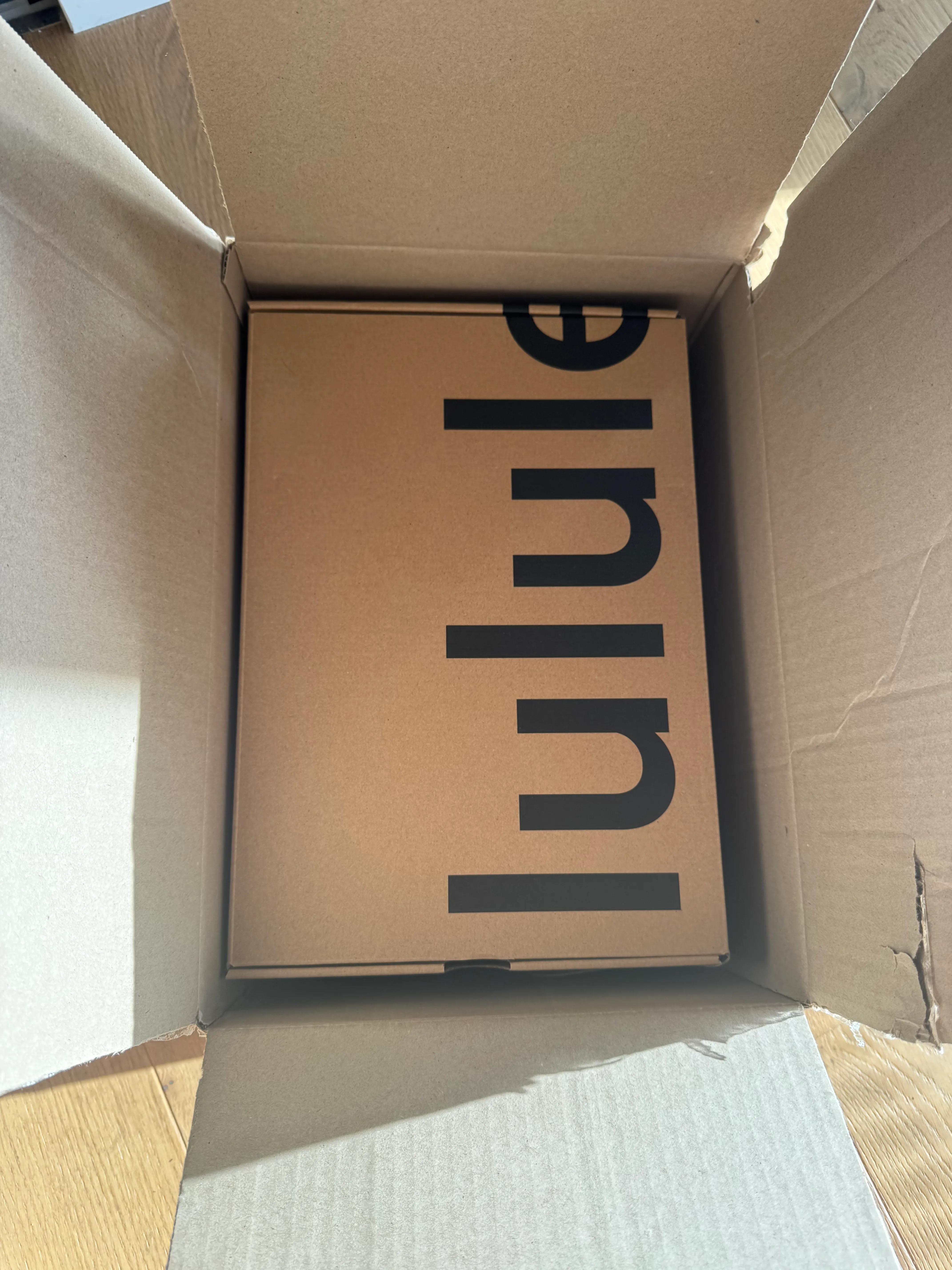
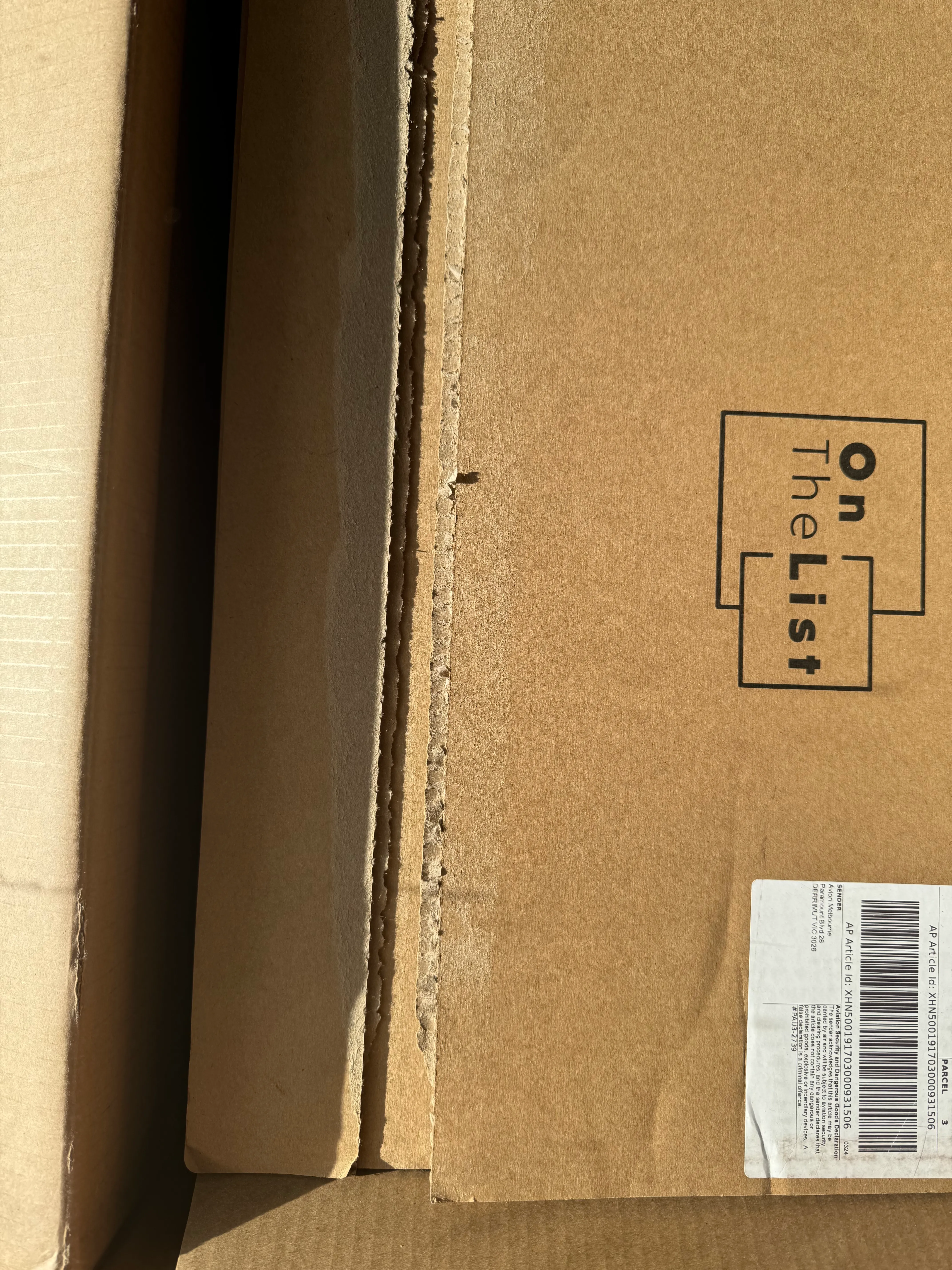
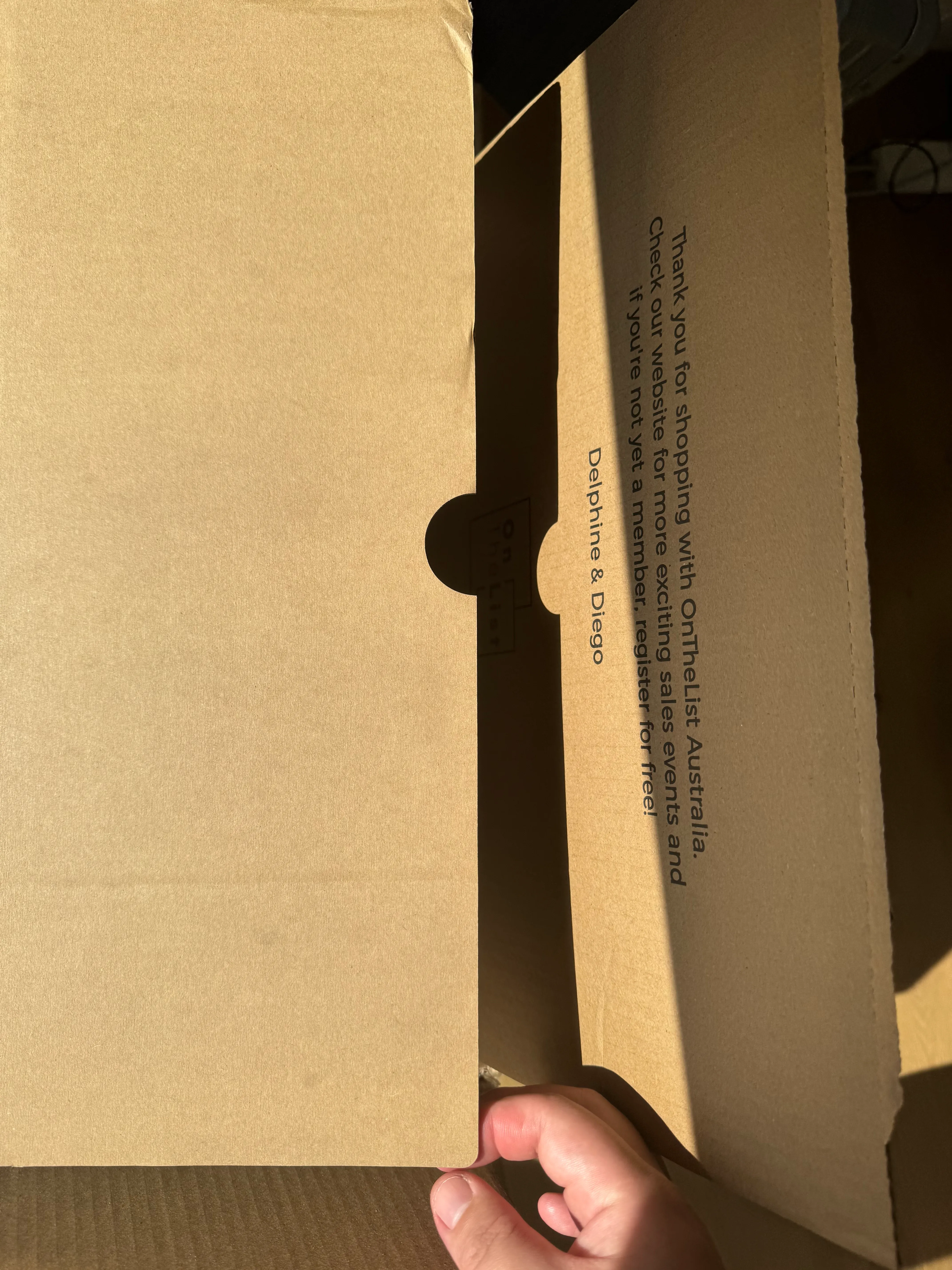
OnTheList (an Australian online fragrance and skincare marketplace). The box has a perforated tear-strip moulded into one side, so it opens without a knife, and a printed “Aviation Security” dangerous-goods declaration label, because the contents are flammable liquids and the carrier is required to know that before it puts the box on a plane. Neither feature is about the customer’s experience or the warehouse’s shelving. Both exist because a regulator or a fulfilment contract requires them. Call this compliance logic: the box is built to satisfy a rule, and the rule was written by someone other than the brand or the buyer.
What none of the three logics needed#
None of these three explanations required an appeal to the environment. Apple’s reveal is about desire. Lululemon and Patagonia’s oversized box is about warehouse cost. OnTheList’s tear-strip and label are about aviation regulation. If a box also happens to carry a recyclability claim, that claim sits on top of one of these three logics — it doesn’t replace any of them, and by the throughline claim above, it usually isn’t the thing actually driving the design.
Where the rest of the course goes#
Each logic above is a description, not a measurement, and a description is easy to argue with. The next eleven weeks put numbers behind it:
- Week 2 asks what the box is actually made of, and what that costs.
- Week 3 asks what “surviving shipping” is actually tested against, and who decided the pass mark.
- Week 4 turns “the box is oversized” into an actual formula a carrier bills against.
- Week 5 turns to the sustainability claims themselves, and asks who publishes them and what they have to gain by publishing them.
By the midterm you should be able to look at an arbitrary package and name, with a number attached, which of these logics is actually paying for it.
This week’s lab#
Unboxing Teardown — bring a real package you’ve received in the last month and test the three-logic framework against it before we have any formulas to check your guess with.
Teaching team
- Marisol Quaye — convenor