Who this is for
Telling someone something about you they couldn’t have known otherwise.
For some of you a diagnosis. For others anxiety, a chronic illness, caring for someone at home, a learning disability, being the first in your family at university.
Research on several concealable identities, alongside autism-specific studies.
Disclosure can help — three routes
- Relief from keeping something concealed
- Social support
- Changes in what other people know
Whether it helps depends partly on the discloser’s goal: moving towards something, or avoiding something.
Chaudoir & Fisher (2010), Psychological Bulletin 136(2)And the research splits
Observers rating first impressions: impressions were more positive when the diagnosis was accurately given than withheld. Raters who knew more about autism rated more favourably.
Sasson & Morrison (2019), Autism 23(1)A review of 37 studies: a disconnect. Vignette studies of others’ perceptions found disclosure helped acceptance. Studies of autistic adolescents and adults found reluctance to disclose, expecting stigma.
Thompson-Hodgetts et al. (2020), Research in Autism Spectrum Disorders 77And at work
238 autistic adults describing disclosing at work: most had disclosed selectively, and just over a third rated the impact of telling supervisors and coworkers positively.
Romualdez et al. (2021), Autism in Adulthood 3(2)Where we were
Week 9: how closeness paces, and the rate limit nobody published.
This week: the thing you might be pacing towards, and what telling somebody actually does.
Keep both options in view
What might telling change? What is keeping something private currently buying or costing?
Anticipated stigma and distress
300 people, holding 13 different concealable identities. Then 235 more.
Four predictors of psychological distress: anticipated stigma, centrality, salience, cultural devaluation.
Study 2: anticipated stigma and cultural stigma related directly to self-reported health.
Quinn & Chaudoir (2009), Journal of Personality and Social Psychology 97(4)Not the effort of concealing. What you expect would happen if people knew.
What could a department change?
Could making adjustments routine lower anticipated stigma for students who never disclose anything at all?
The request can be this small

A fictional case: Rae asks for writing
Rae wants written task instructions from a supervisor.
| Entry | What it is |
|---|---|
| “They may think I cannot do the job.” | predicted consequence of telling |
| “I spend twenty minutes reconstructing instructions after each shift.” | current cost stated in this fictional case |
| “Written instructions would remove that work.” | predicted benefit to check |
The feared reaction and the effort already spent are different entries.
In the room: price both columns (8 min)
Use your own private situation or fictional Rae. Nothing personal is read out.
4 min: left, what telling might buy or cost; right, what keeping it private currently buys or costs. Mark observation, prediction or unknown.
2 min: circle a condition in either column that the institution could change without more personal information.
2 min: write a proposed change and how you would check whether it helped. Share only the proposal if you choose.
Levels, not a switch
Disclosure of a psychiatric diagnosis, approached through what the gay and lesbian community worked out about coming out.
Costs: social avoidance and disapproval. Benefits: psychological well-being and interpersonal relations.
The paper ends with a review of levels of disclosure.
Corrigan & Matthews (2003), Journal of Mental Health 12(3)Here is the part nobody warns you about.
After you tell someone, they go back through everything. The tutorial where you didn’t laugh. The email that was too short. The party you left at nine.
They re-read all of it, and they decide what it meant, and they do not tell you they are doing it.
Sometimes this is a relief. A person who thought you were cold for three years understands, and something between you gets easier, and you wonder why you waited.
Sometimes you lose something. There was a version of you in their head — competent, or funny, or just unremarkable — and it is replaced by a version with an explanation attached.
You do not get to choose which one they keep. You do not get to take it back.
That risk is real and this course is not going to talk you out of it.
It is going to make sure you knew it was there.
Right. Mechanics.
The five audiences
| Audience | Can buy | Can cost | Partial option |
|---|---|---|---|
| Disability services | formal adjustments | a record; they may ask for documentation | ask what they can do first |
| A tutor | flexibility in labs | the tutor re-reads your participation | the need only |
| A group partner | arrangements that fit | it can travel beyond the group | the need, as working style |
| A friend | understanding, less masking | the re-reading | whatever week 9’s rate limit allows |
| An employer | adjustments; relief from concealing | just over a third rated it positively | the need, at a time you choose |
You can disclose a need without the label.
Needs, no labels
“I process written instructions much better than verbal ones. Could you send the task in the chat as well?”
- “I think better if I can look away while I talk. It’s not that I’m not listening.”
- “Loud rooms cost me a lot. Can we meet somewhere quieter?”
- “I’ll answer better by email than on the spot. Can I get back to you tomorrow?”
Each names a need and what would help. None explains why.
- On the envelope
- “I process written instructions much better than verbal ones.”
- Noted on it
- the need, and what would help
- Payload inside
- send the task in the chat as well
- Kept back, never sent
- the diagnosis, the history, the reason
The timing trap
In the workplace survey, many disclosed on an application or after starting — rarely at interview. Many disclosed only after problems had already arisen.
Romualdez et al. (2021), Autism in Adulthood 3(2)The trap, and this part is the course’s own observation: a disclosure that arrives after a problem can be heard as an explanation of the problem.
An explanation can be mistaken for an excuse.
One option: needs before problems
“Before we start: I work best with things in writing.”
An option at the first group meeting or in the first week of a job: make the need part of the working arrangements before a problem needs explaining.
Break
14:55–15:05
Resume at 15:05.
The request can stand on its own
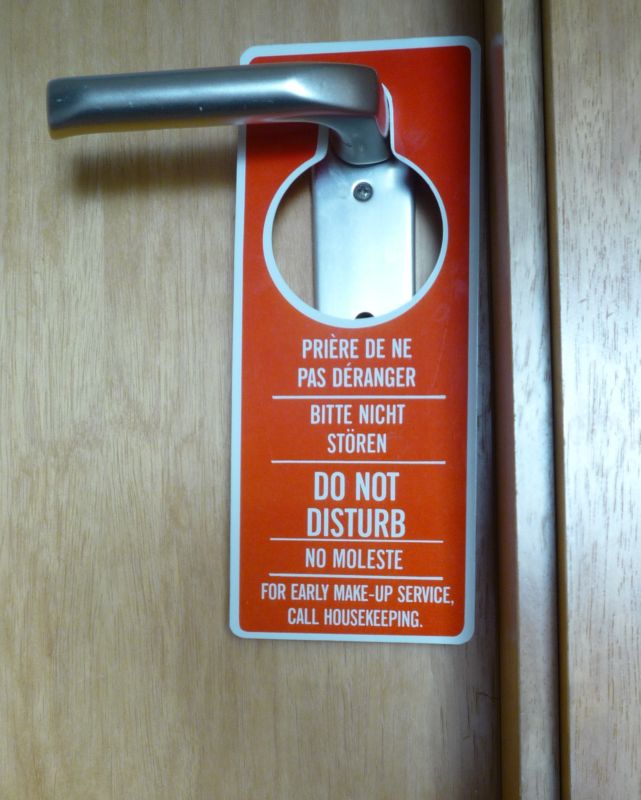

Receiving a disclosure
- Thank them. “Thanks for telling me.”
- Ask about the need, not the label. “Is there anything you’d like me to do differently?”
- Don’t re-read out loud.
And one line to leave out entirely, however kindly meant: “you don’t seem like you have that”.
In the room: one audience, one sentence (7 min)
Four minutes. Choose an audience for your own private situation, or fictional Rae asking a supervisor for written instructions. Write the actual sentence.
Two minutes. Now write what you’d say if it went badly. One line. Week 5’s repair, at a higher stake.
One minute. Hands up if the second line was harder to write.
When it goes badly
| What happens | What you can say |
|---|---|
| They minimise it | “Maybe. The thing I’m asking for is still the written instructions.” |
| They overshoot, and start handling you carefully | “I’d rather nothing changed except the one thing I asked for.” |
| They tell someone else | “I’d like to choose who knows. Can we agree it stops here?” |
All three return to the need, and out of the label.
Who was asked, and how
| Study design | What it found |
|---|---|
| Observers rating short clips | impressions improved when the diagnosis was given |
| Written vignettes about a hypothetical person | disclosure helps social acceptance |
| Autistic adolescents and adults, asked directly | reluctance, anticipating stigma |
| 238 autistic adults describing real workplaces | selective disclosure; just over a third rated it positively |
The split isn’t noise. It’s who got asked.
In the room: what does the finding allow? (10 min)
2 min, pairs: read the conclusions:
- “Tell your employer: a diagnosis improved observers’ first impressions.”
- “Quinn and Chaudoir measured how much distress stopping concealment removes.”
- “A needs-only sentence guarantees an adjustment without the risks.”
3 min: identify each source or model, its actual outcome, and the added claim.
3 min: rewrite within the checked evidence, keeping a useful question or option.
2 min: compare with another pair. Have you kept ratings, workplace reports, distress predictors and untested scripts separate?
And the field noticed its own thumb
The scoping review of 37 studies reported something about the literature itself: it tends to assume disclosure should happen.
Thompson-Hodgetts et al. (2020), Research in Autism Spectrum Disorders 77What disability services actually needs
They need to know what to put in place. That is a different question from what happened to you.
Ask first: “What adjustments can you arrange, and what do you need from me to arrange them?”
Then decide what to share — with the list in front of you instead of behind it.
In the room: receiving (6 min)
1 min: read the fictional lines and checklist: thank, ask about the need, don’t re-read out loud.
- Rae: “I follow written instructions more easily. Could you put the task in the chat as well?”
- Dev: “Loud rooms cost me a lot. Can we meet somewhere quieter?”
2 min: A reads Rae; B answers in two sentences. A checks the steps; B can retry.
2 min: swap roles with Dev’s line. Both practise receiving.
1 min: each privately notes a step to remember. No personal disclosure is requested.
What this week added to the vocabulary
- partial disclosure — the need without the label
- the five audiences — five transactions, not one decision
- the timing trap — configuration before the problem, an excuse after it
- anticipated stigma — what you expect would happen if people knew
Next week: interoperation, not conversion.
Check yourself against this week
Can you name the five audiences, with one thing telling can buy and one it can cost for each?
Have you written a need-without-label sentence for a named audience, using a real or fictional situation?
Can you say why the research disagrees, and which kind of study sits on each side?
If time remains
What could an institution change so that getting a usable adjustment requires less personal disclosure?
Optional discussion. Finish by 15:55.