A Fluid-Dynamics Inquiry into Discontinuity Propagation in Ambulatory Flow
SLOP2950 · Week 8
A footpath at peak hour behaves like a fluid — and copes very badly with sudden change.
Crowd flow as fluid dynamics
Uninterrupted pedestrian flow is arguably one of civilization’s great under-sung achievements: a self-organizing choreography performed entirely by strangers, with zero explicit communication, sustained purely by shared avoidance of the sudden stop. A footpath at peak hour behaves like a fluid, and copes with change exactly the way one does.
- average speed and following distance — the two numbers that hold the whole flow together
- gradual change — absorbed without anyone noticing
- sudden change — the one case the flow can’t absorb at all
A dense line of commuters, moving at a shared pace with a shared following distance, right up until one person stops dead to check a notification — everyone behind them has to stutter-step or collide, and everyone behind those people does the same thing a beat later.
Measuring the pile-up
How far back the disruption propagates, as a function of footpath width and crowd density — and how many people caught in it ever learn why.
Bad manner vs. good manner
🟥 Bad manner — Unilateral Flow Interruption (UFI): Walking through a crowded footpath at peak hour, some pedestrians, overtaken by the urge to consult a screen, stop dead inside the moving current itself rather than at its margin — the three people right behind them have to stutter-step or collide, and the five behind those three do the same a second later. Slop University’s Department of Ambulatory Dynamics classifies this as “unilateral flow interruption,” and notes that the interrupting party typically bears none of the resulting cost themselves, which the department finds analytically convenient.
🟩 Good manner — Margin-Seeking Deceleration Protocol (MSDP): The same pull to check a phone, resolved instead by stepping to the margin — against a shopfront, out of the current — before decelerating. The Department files this under “margin-seeking deceleration protocol,” a maneuver performed so unremarkably, when done correctly, that most of the crowd propagating safely past it will never register that anything happened at all — the department considers this the correct outcome for a well-executed one.
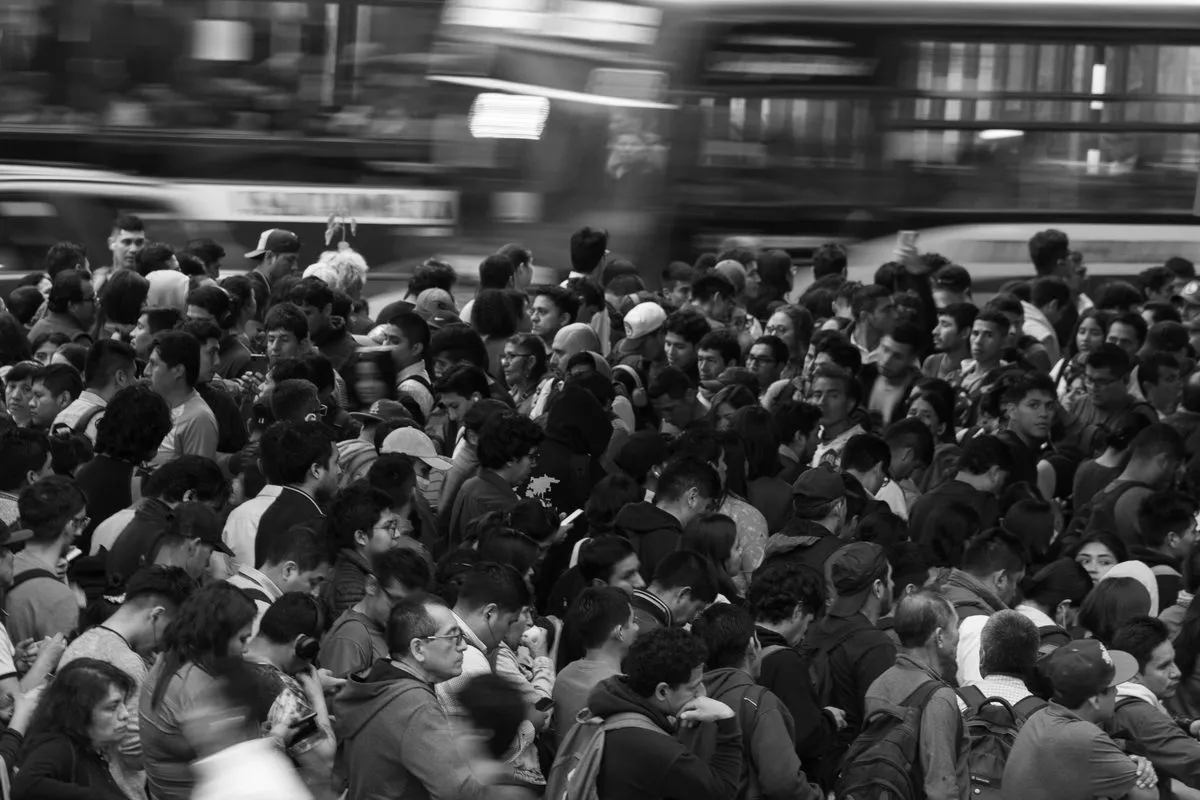 Photo: Luiggi Castillo / Pexels
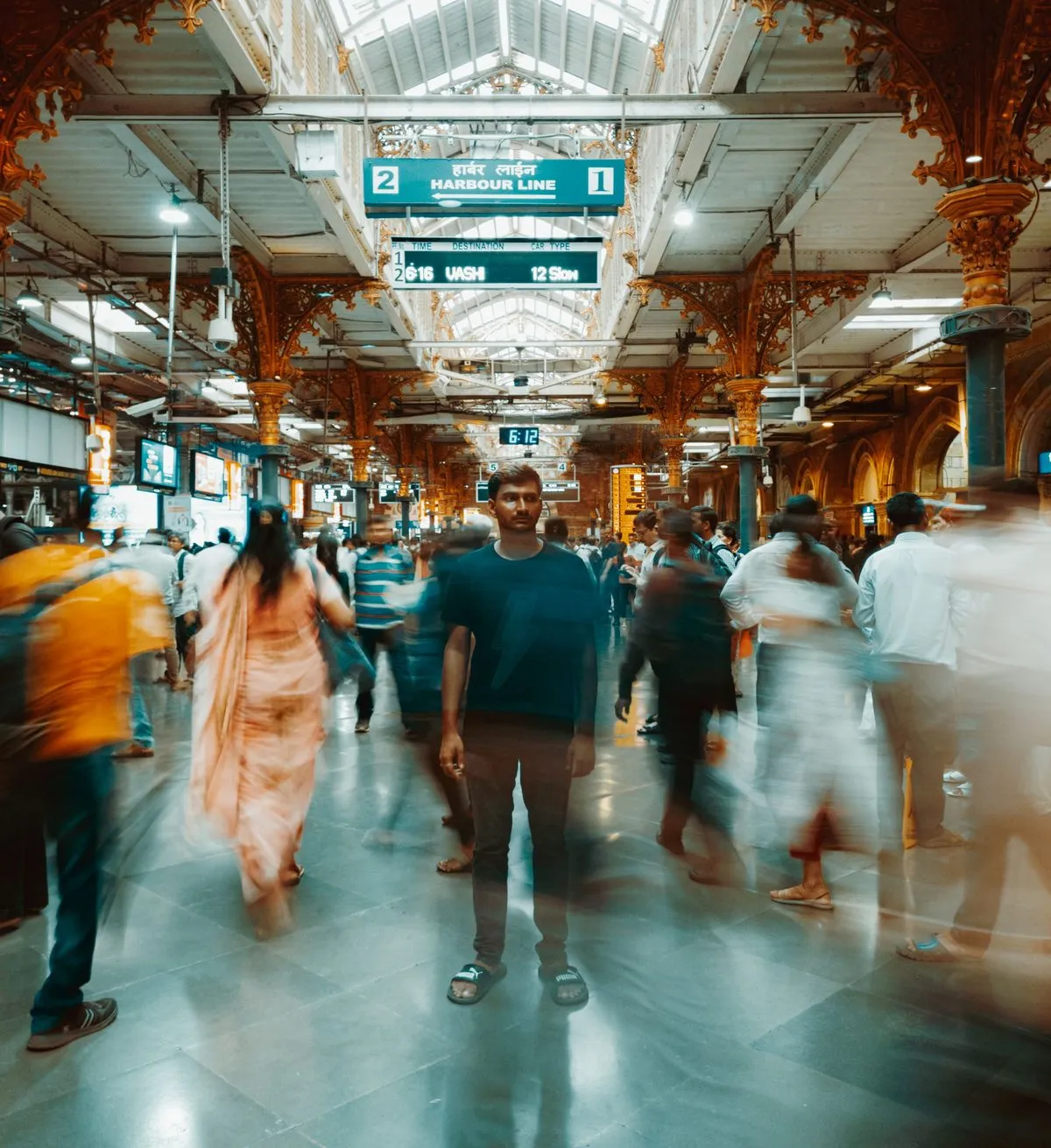 Photo: Deepak Bhandari / Pexels
Case studies
Doorway stops, escalator-exit stops, and the phone-check stop — the same mechanism at the intersection of pedestrian kinematics and unlicensed personal sovereignty over shared thoroughfare, recurring across three different settings.
References
- Osei, E. (2027). Single-Input Disruption in Pedestrian Flow: The Sudden Stop. Journal of Applied Incivility Studies, 5(5).
- Reeve, L. (2026). Fluid Analogies for Crowd Behaviour: Where They Hold and Where They Break. Behavioural Urbanism Quarterly, 11(1).
- Vance, P. (2019). Doorway, Escalator, Phone: A Taxonomy of Instantaneous Disruption. Proceedings of the Symposium on Pedestrian Infrastructure.
- Slop University Department of Ambulatory Dynamics. (2027). Coding Manual for Unilateral Flow Interruption and the Margin-Seeking Deceleration Protocol. Internal technical report.