A Phenomenological Inquiry into Queueing and Threshold Litter in Unmarked Commons
SLOP2950 · Week 7
Dozens of people will stand in a line enforced by nothing but mutual glaring. A few steps away, a public bin sits close enough to reach without breaking stride.
Two commons, one property
Neither of this week’s cases belongs to a single physical space. A queue forms wherever strangers need to agree, without discussing it, on whose turn it is; litter accumulates wherever a bin is close enough to reach and somebody chooses not to. Queueing in particular is humanity’s most primitive yet highly organised social protocol — a technology older than writing, requiring no infrastructure beyond a shared willingness to stand in a line and silently resent whoever breaks it.
- no fixed venue — a store counter, a bus stop, a food stall, a footpath — the pattern repeats wherever the commons does
- no physical enforcement — nothing stops a cut, and nothing stops a dropped wrapper, except what other people are willing to do about it
- the shared question — how much does it cost to do the small, costless thing instead
Where the agreement holds, and where it doesn’t
- structurally strong — a single-file line with one clear front; almost never contested
- structurally ambiguous — a cluster near a counter, or a fork that never cleanly re-merged
- the counter case — one line feeding several service points, moving at several times the speed of any single lane
A store counter with no marked lane at all, and a customer who arrived last steps straight up to the register the moment it frees — not into an empty line, but ahead of several people who were already standing there.
The least contested version of this case: where a single counter serves multiple staff, the settled answer is one line moving at multiple speeds, not several separate lines — precisely the setup this week’s bad-manner case exploits by treating an unmarked counter as a free-for-all instead.
The cutting spectrum
From “excuse me, is this the line?” through an exploited ambiguous merge, to simply walking to the front — each met with a different intensity of reaction, and none of it specific to any one venue: the same spectrum shows up at a store counter, a bus stop, a food stall, or a public restroom queue. Slop University’s Institute of Queue Theory treats this spectrum as a civilisational fault line: every society that has ever formed a line has also, apparently, produced someone willing to test how much of it can be skipped before anyone says something.
Bad manner vs. good manner: queueing
🟥 Bad manner — Unilateral Queue Incursion (UQI): At a busy counter with no marked line, a customer who arrived after everyone else pushes straight up the moment it’s free, ahead of people who were already standing there waiting their turn. Slop University’s Institute of Queue Theory classifies this as an incursion into a civilisational protocol thousands of years in the making, executed here in under two seconds and without a single word exchanged.
🟩 Good manner — Ratified Turn-Order Compliance (RTOC): That same customer checking who else is waiting and asking, “who’s next?” before stepping up — letting the line’s own unmarked order settle the question instead of just claiming it. The Institute notes this as the queue’s whole mechanism operating exactly as designed: turn-order ratified by a single sentence, no tribunal required.
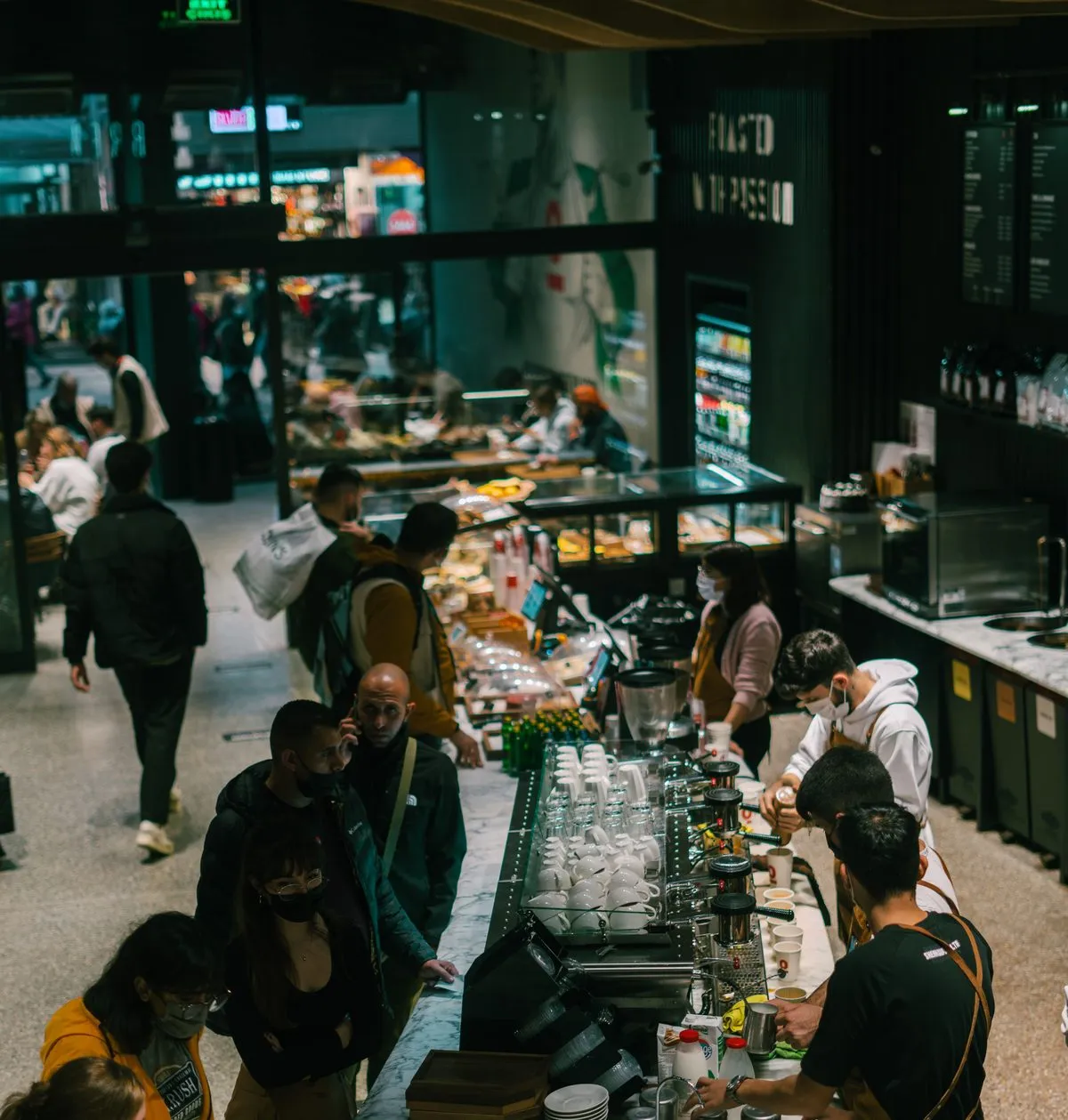 Photo: Sami Abdullah / Pexels
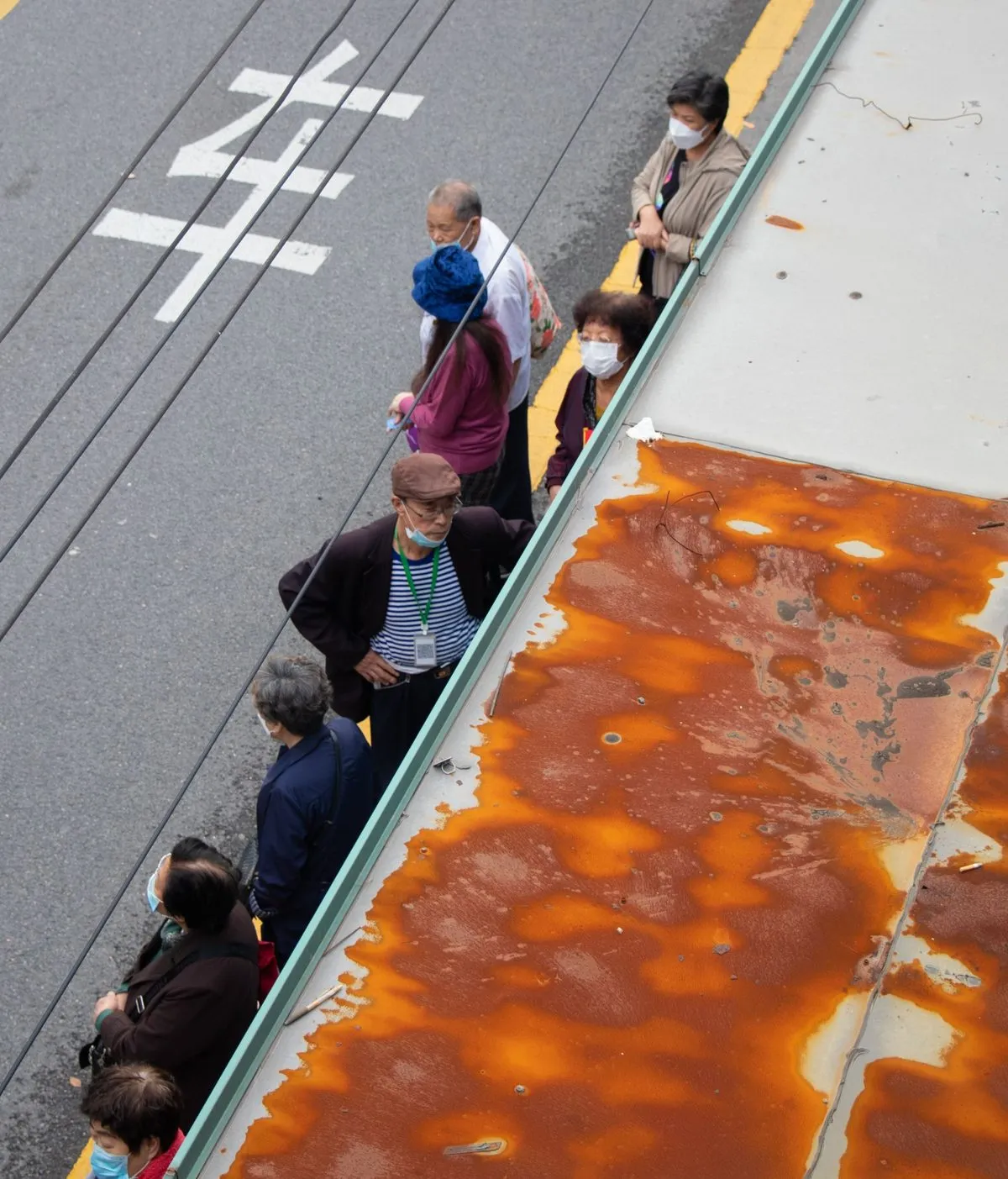 Photo: Wenjin G / Pexels
Threshold litter: the commons’ other unpriced cost
What accumulates in the last few metres before a bin — and what that distance actually tells you about tolerance for inconvenience. Littering has almost no immediate audience: the person who benefits from not carrying a wrapper to a bin is rarely watched doing it, and the person who eventually pays is rarely the person who saw it happen. This occurs at the intersection of micro-interactionism and informal environmental governance — a discharge of cost, delayed just long enough that nobody present has to answer for it.
Empty packaging on the pavement, a public bin plainly visible a few steps away — close enough that reaching it would have cost less effort than the drop itself.
Not every case is this clean. Whether smaller residue — a piece of chewing gum, a cigarette butt — counts as “the same kind of littering” as dropped packaging is a live disagreement; and sometimes the missing bin, not the person, is the actual constraint — several city transit systems removed public bins outright for unrelated security reasons, which reshuffles who the delayed cost lands on.
Bad manner vs. good manner: the litter
🟥 Bad manner — Delayed-Cost Externality Discharge (DCED): Walking past a public bin, close enough to reach it without breaking stride, and letting an empty drink cup fall to the ground instead — leaving it for whoever cleans up, or nobody. Slop University’s Department of Applied Incivility files this as a textbook externality: the cost of disposal is not eliminated, merely discharged onto a party who was never in the room to negotiate it.
🟩 Good manner — Immediate Internalisation Gesture (IIG): Carrying that same cup the extra few steps to the bin and setting it inside — a smaller effort than the one just avoided, and the rare case of a cost being internalised by the party who actually generated it. Filed, like most of this course’s good manners, under micro-heroism: nobody sees it happen, which is precisely why it counts.
 Photo: Markus Spiske / Pexels
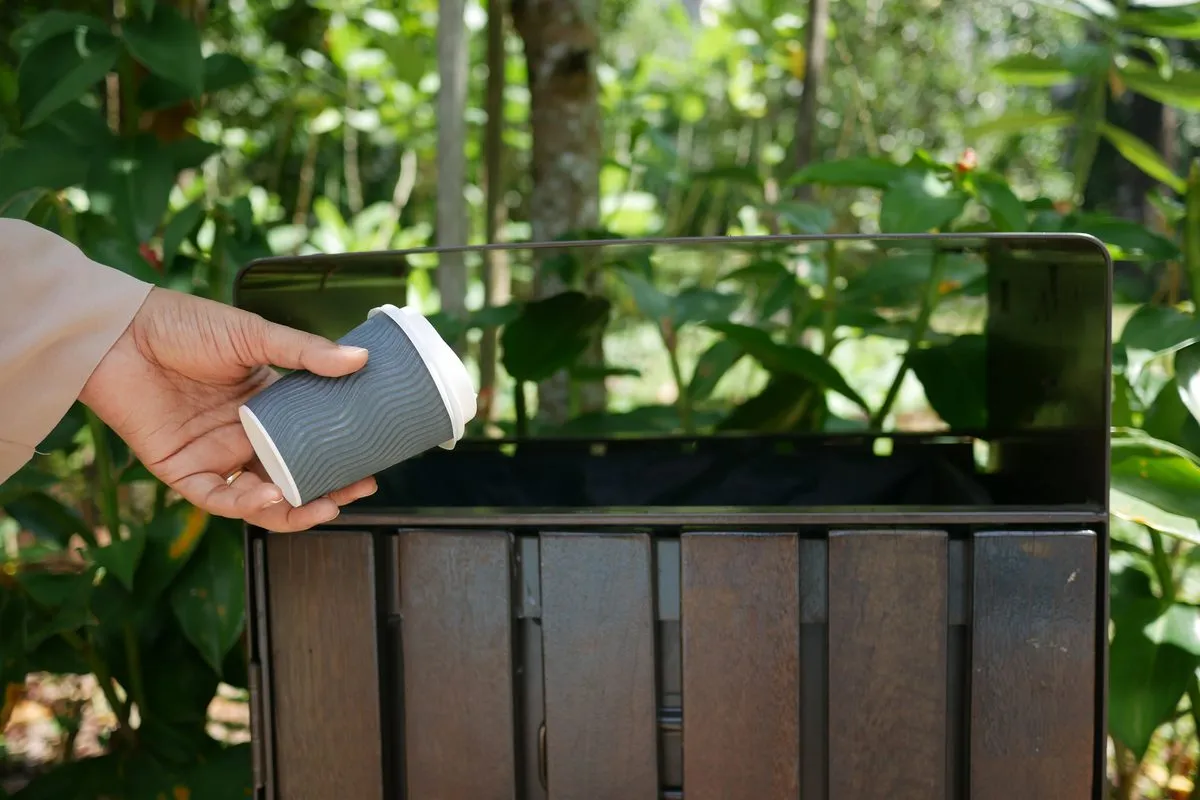 Photo: Towfiqu barbhuiya / Pexels
Discussion
Both cases share a structural gap: no witness at the moment that matters, and no fixed venue that pins either one to one physical space. What should “case study” mean when a norm’s whole shape depends on strangers who never discuss it, wherever they happen to be standing?
Assignment 2
Assignment 2 is due this week — see the assessment page for what it’s marked against.
References
- Halvorsen, I. (2027). The Cutting Spectrum: A Field Taxonomy of Queue Violations. Journal of Applied Incivility Studies, 6(1).
- Chukwu, A. (2022). Structurally Strong and Structurally Ambiguous Queues. Behavioural Urbanism Quarterly, 11(3).
- Vance, P. (2024). A Norm Doing the Work of a Rule: Queueing Without Enforcement. Proceedings of the Symposium on Informal Social Order.
- Chukwu, A. (2027). Threshold Litter: Measuring Tolerance at the Edge of the Bin. Journal of Applied Incivility Studies, 5(4).
- Osei, E. (2019). The Audience-Less Nuisance: Enforcement Without Witnesses. Behavioural Urbanism Quarterly, 9(4).
- Halvorsen, I. (2026). Who Pays, and When: Delayed-Cost Norms in Public Space. Proceedings of the Symposium on Environmental Behaviour.
- Slop University Institute of Queue Theory. (2027). Incursion and Ratification: Coding Manual for UQI, RTOC, DCED, and IIG in Unmarked Commons. Internal Technical Report, 4th revision.