Socio-Political Dynamics of Seat-Saving in Contemporary Cafés
SLOP2950 · Week 5
No deed, no lock, no treaty — and yet the claim holds, the way most contested borders do: because everyone agrees not to test it today.
Seat-saving as an unrecognised territorial claim
Café seat-saving is, in the strict sense, a territorial dispute: a unilateral assertion of sovereignty over a table, lodged without treaty, without a deed, and without so much as a courtesy notification to the neighbouring powers (other customers), who nonetheless mostly comply. This phenomenon sits squarely at the intersection of micro-interactionism and informal property law — a jurisdiction this course insists on taking seriously specifically because nobody else will.
An unattended jacket enforces a property claim with no deed, no lock, and no authority behind it but a stranger’s willingness to look elsewhere.
- the claim — an object left behind, standing in for a person who isn’t there
- the enforcement — nothing but social pressure; anyone could ignore it and nothing stops them
- the variable — scarcity: how much the claim actually costs someone else
A jacket over a chair, a queue out the door, and a customer already holding coffee circling the room for somewhere to sit. Nobody moves the jacket. Nobody has to be told why not.
What breaks the claim
A single occupied seat in an empty café reads as inviolable. The same jacket, same café, at peak hour — reads completely differently.
This is, in the fullest sense, a border dispute: some hold that saving a seat for a friend who is minutes away is completely standard, especially once a room fills up — moving a jacket for a stranger costs nothing. Others call the same act presumptuous, since it works only because the claimant is “banking on nobody saying anything” — and read a busy room’s silence as resignation, not agreement. Neither side has ratified a treaty; both sides act as though one exists.
Bad manner vs. good manner
🟥 Bad manner — Unilateral Territorial Annexation (UTA): At a packed café with a queue out the door, a customer drapes a jacket over the last open table and departs to order — a manoeuvre Slop University’s Department of Applied Territoriality classifies as a unilateral annexation, complete with an implied flag-planting gesture. Under this framework, the claim’s validity is simply asserted rather than negotiated, and enforcement relies entirely on the surrounding population’s reluctance to escalate.
🟩 Good manner — Provisional Occupancy Protocol (POP): That same customer ordering first, then taking the table only once they actually hold something to sit down with — a claim backed by demonstrated occupancy rather than declared sovereignty. The Department files this under “recognised statehood”: nobody has to take your word for it, because you already showed up with the paperwork.
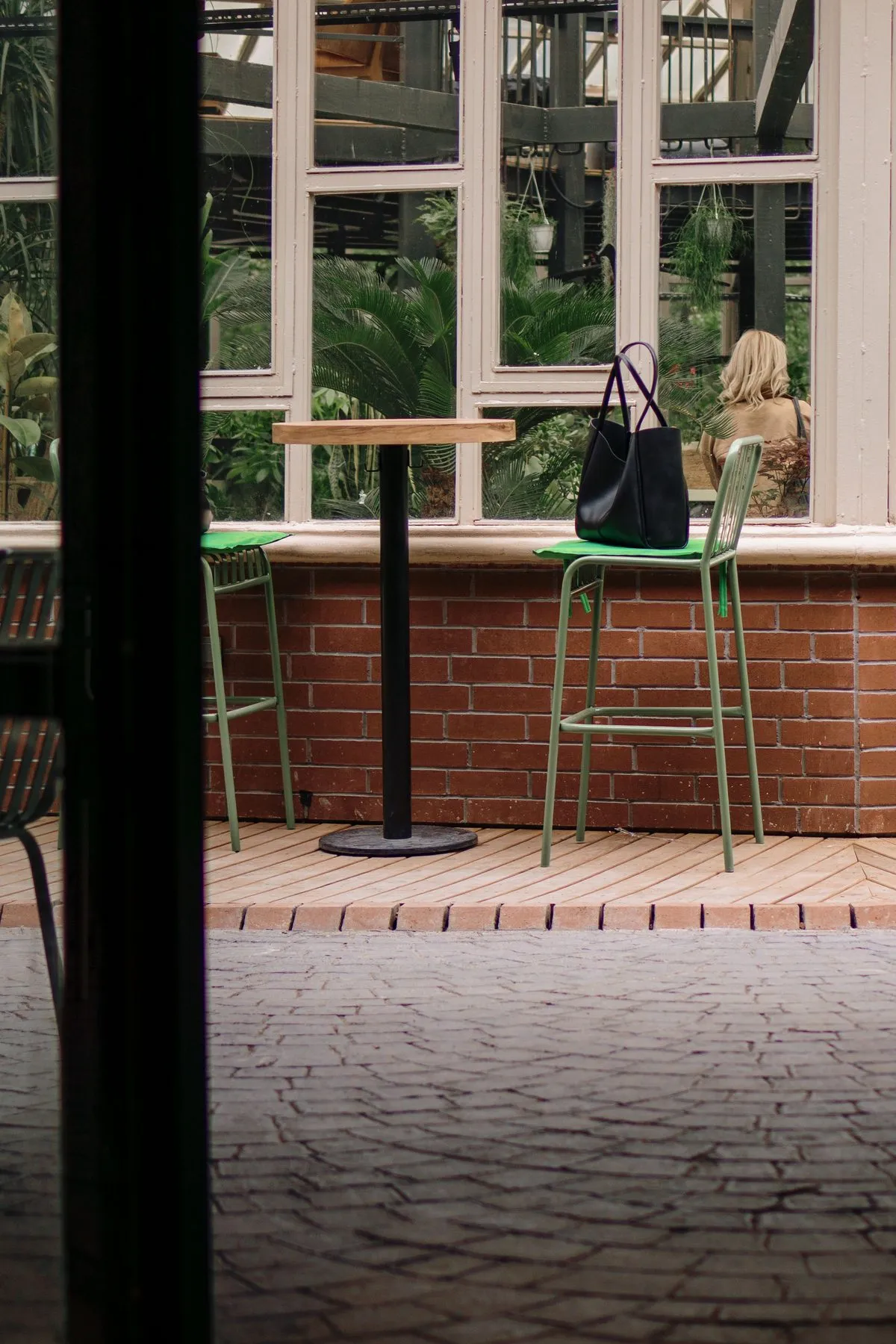 Photo: Berna / Pexels
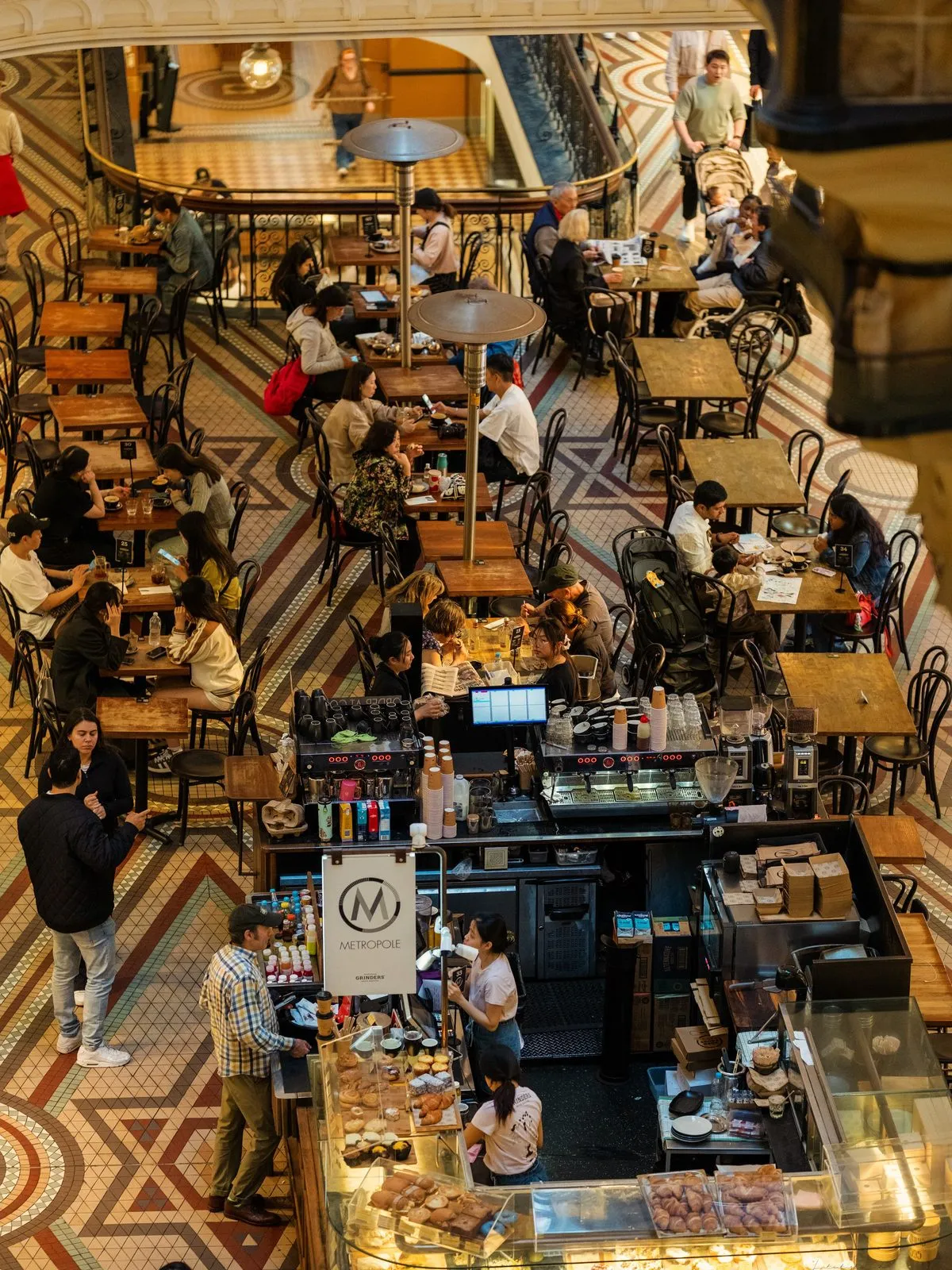 Photo: Reymundo Tadena / Pexels
Discussion
Is “no seat left” a state of the room, or a decision one person made for everyone else?
Assignment 1
Assignment 1 is due this week — see the assessment page for what counts as evidence.
References
- Mercado, R. (2027). Property by Convention: The Unenforced Claim in Shared Seating. Journal of Applied Incivility Studies, 5(2).
- Vance, P. (2025). Scarcity as the Hidden Variable in Seat-Saving Norms. Behavioural Urbanism Quarterly, 10(1).
- Chukwu, A. (2026). When a Claim Collapses: Contested Seats in Public Cafés. Proceedings of the Symposium on Shared Interior Space.
- Slop University Department of Applied Territoriality. (2027). Annexation or Occupancy? Coding Manual for UTA and POP in Shared Seating. Internal Technical Report, 2nd revision.