Socio-Political Dynamics of Confinement in Vertical Transit
SLOP2950 · Week 3
All of it is settled in the first two seconds, silently, by people who have never discussed it and never will.
The elevator as a closed system
A lift car is one of the few public spaces where nobody can leave until it decides to let them.
- fixed capacity — a hard ceiling on how many people share the space
- fixed exits — one door, opening on its own schedule
- short duration — whatever the etiquette is, it only has to hold for a minute or two
- high density — strangers closer together than almost any other public norm tolerates
That combination is what makes its etiquette so rigid — and so easy to disrupt with a single small deviation. Slop University’s Institute of Vertical Micro-Politics treats the elevator car as the smallest fully sovereign territory a stranger can involuntarily be annexed into: no elected government, no constitution, and yet a fully binding etiquette regime is enforced, wordlessly, before the doors have finished closing.
What gets contested
- the panel as a status object: who operates it
- door-holding as a negotiation with no words
- the “wrong third” of the car
The “door close” button, mashed by someone in a hurry, does almost nothing in most buildings — accessibility rules require the doors to dwell open for several seconds regardless. The gesture is entirely symbolic, and almost nobody who does it knows that.
Whether holding the door counts as a favour owed or a favour freely given is genuinely unsettled — one etiquette line holds that another car is a minute away and nobody should be made to wait for a straggler; another holds that basic courtesy costs the whole car a few seconds it will never notice losing.
Bad manner vs. good manner
🟥 Bad manner — Unilateral Border Closure (UBC): Seeing someone jogging across the lobby toward the car and holding the close-door button anyway, on the reasoning that they should have moved faster — leaving them to wait for the next one over a saving of two or three seconds. The Institute of Vertical Micro-Politics classifies this as a unilateral act of territorial enforcement, notable for costing the enforcer nothing and the excluded party a full diplomatic delay.
🟩 Good manner — Open-Border Transit Accommodation (OBTA): Holding the door for the few extra seconds it takes that same person to reach the car — a cost every passenger already inside shares for a moment, against a cost the latecomer would otherwise carry alone. Filed under micro-heroism, once again: the shared few seconds are never noticed by anyone who wasn’t about to miss the car.
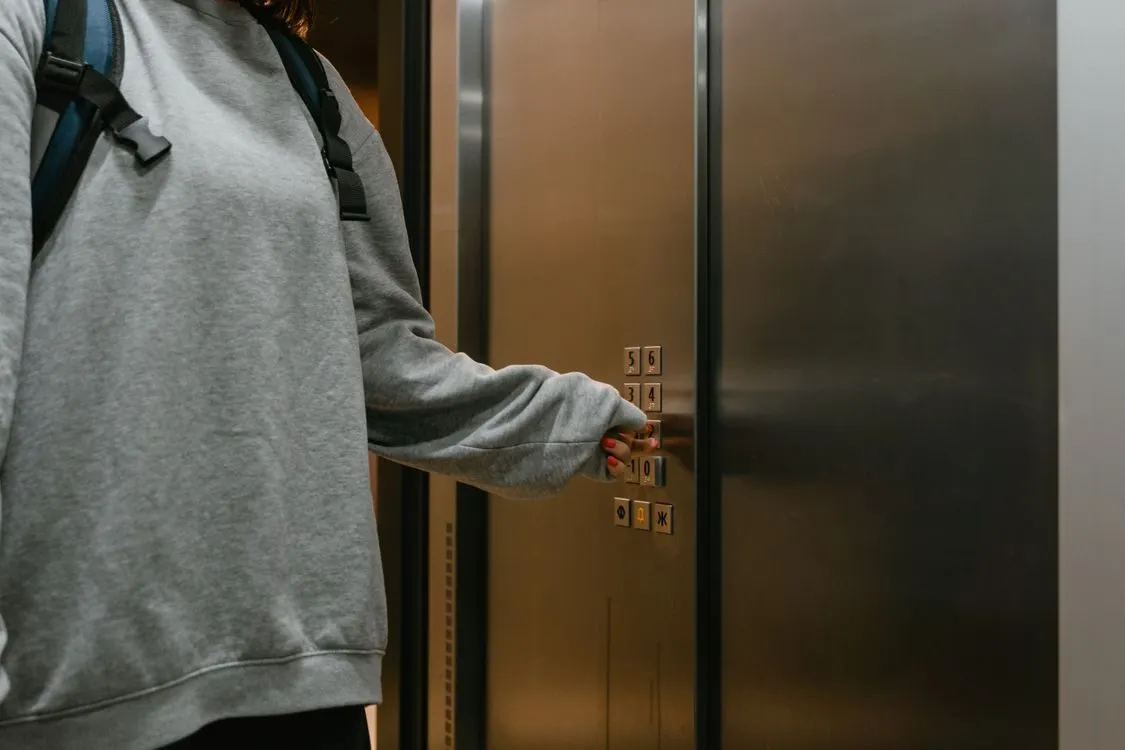 Photo: MART PRODUCTION / Pexels
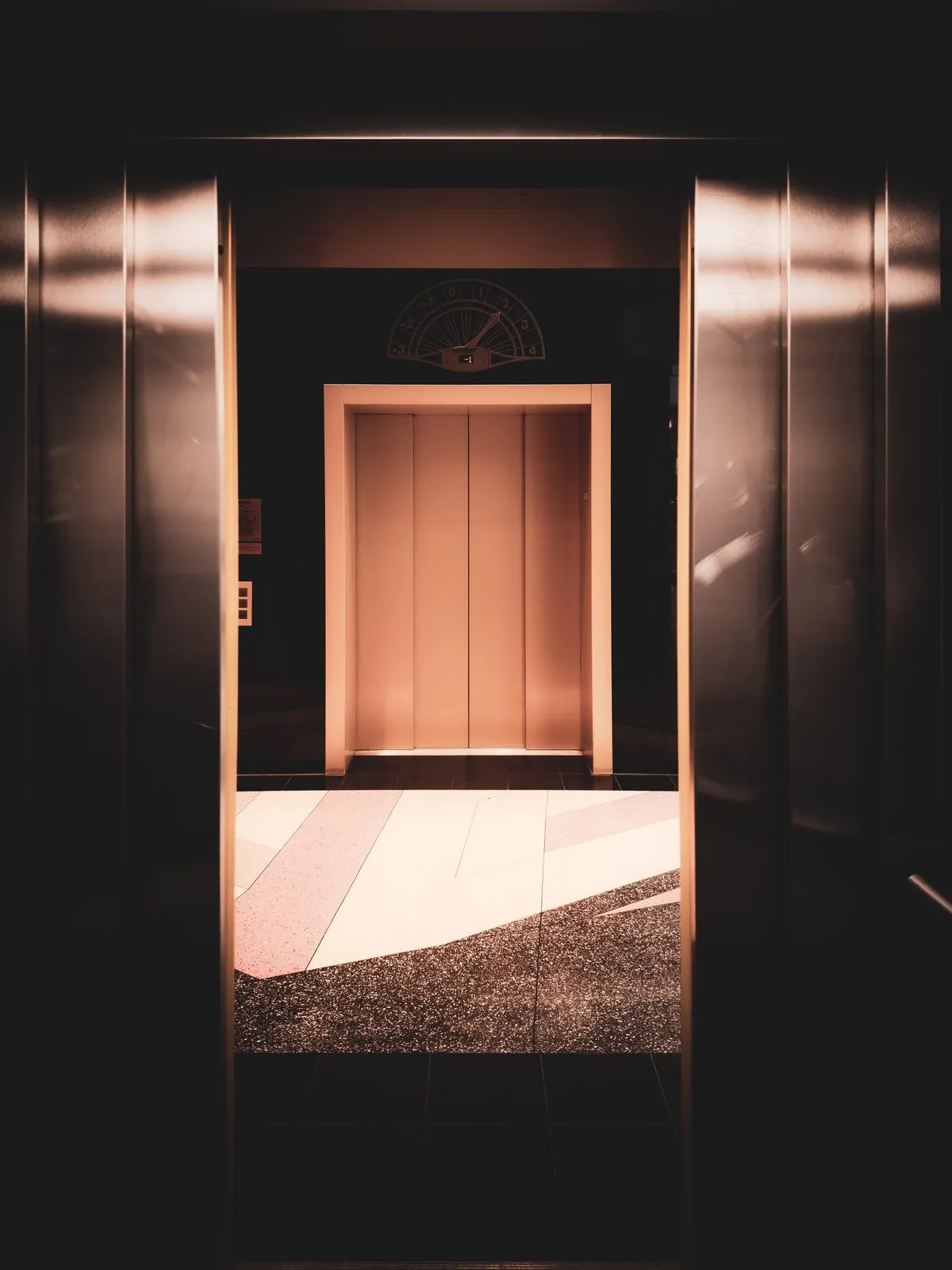 Photo: Patrice Werner / Pexels
Case studies: single-input disruptions
One small deviation — a beat too long on the door, a step into the wrong third of the car — and a car full of strangers recalibrates instantly.
References
- Vance, P. (2027). The Panel as Status Object: Micro-Negotiation in Vertical Transit. Journal of Applied Incivility Studies, 5(1).
- Halvorsen, I. (2021). Closed Systems, Open Contests: Density and Etiquette Rigidity. Behavioural Urbanism Quarterly, 9(3).
- Reeve, L. (2025). A Short History of the Door-Close Button. Proceedings of the Symposium on Everyday Infrastructure.
- Slop University Institute of Vertical Micro-Politics. (2027). Sovereignty Without Government: UBC, OBTA, and the Two-Second Constitution. Internal Technical Report, 2nd revision.