Food safety and the cold chain
SLOP1640 — week 10
Marisol Quaye
Why this week is different
Every week since week 2 has stored something: a vegetable, a bird, a fish, a cut of beef or lamb, a piece of fruit. This week does not add a new material.
- it takes the storage logic scattered across weeks 2, 3, 4 and 9 and states it once, as a single account
- it is the last week before the course does anything that requires that account to have already been understood
The range, and how fast it works
Foodborne bacteria multiply fastest between 4 °C and 60 °C (40 °F to 140 °F) — the range USDA’s Food Safety and Inspection Service names, plainly, the danger zone.
- inside the middle of that band, some common bacteria can double in number in as little as twenty minutes
- this is not a new rule; it is the rule week 3 already applied to poultry and fish, restated as the general case it always was
The two-hour rule
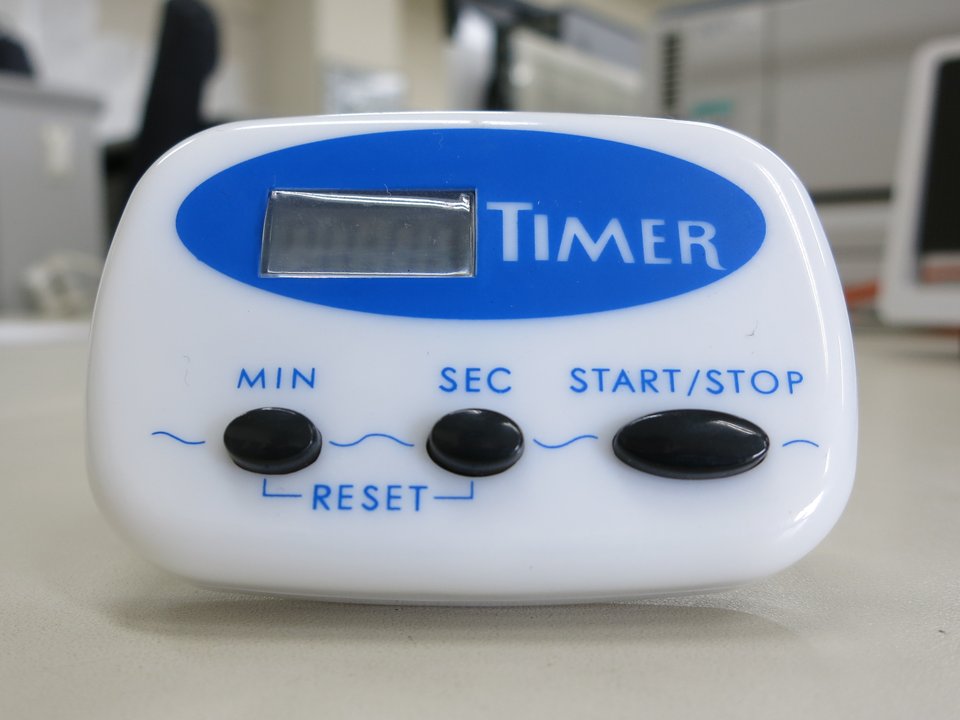
Perishable material must be refrigerated within two hours of leaving a controlled temperature — or within one hour if the surrounding air is above 32 °C.
The clock starts the moment the material leaves refrigeration, cooking, or the shop’s own cold chain — not when it is next convenient to deal with it.
Worked example
A tray of raw chicken thighs sits on a bench at 24 °C for ninety minutes before someone remembers it. Ninety minutes is inside the two-hour limit, so the tray is still safe to refrigerate — but only just, and only because the room was not above 32 °C. The same tray left for two and a half hours must be discarded, not smelled and judged.

The four-step framework
The same organisms that make raw poultry, fish and meat perishable transfer to whatever a knife or a board touches next. The public-health framework behind this is stated in four steps:
clean → separate → cook → chill
This week closes out three of them.
What this week covers, and what it doesn’t
- clean and separate — the boards, knives and hands kept apart between raw material and anything eaten as-is
- chill — the refrigeration clock already described
- cook — the fourth step, is next week’s subject, not this one’s
Poultry, fish and red meat
Once refrigerated at or below 4 °C:
| Material | Refrigerated holding time |
|---|---|
| Raw poultry, raw ground meats | 1–2 days |
| Raw steaks, chops, roasts | 3–5 days |
These are the same figures week 3 and week 4 gave for their respective materials, gathered here rather than repeated.
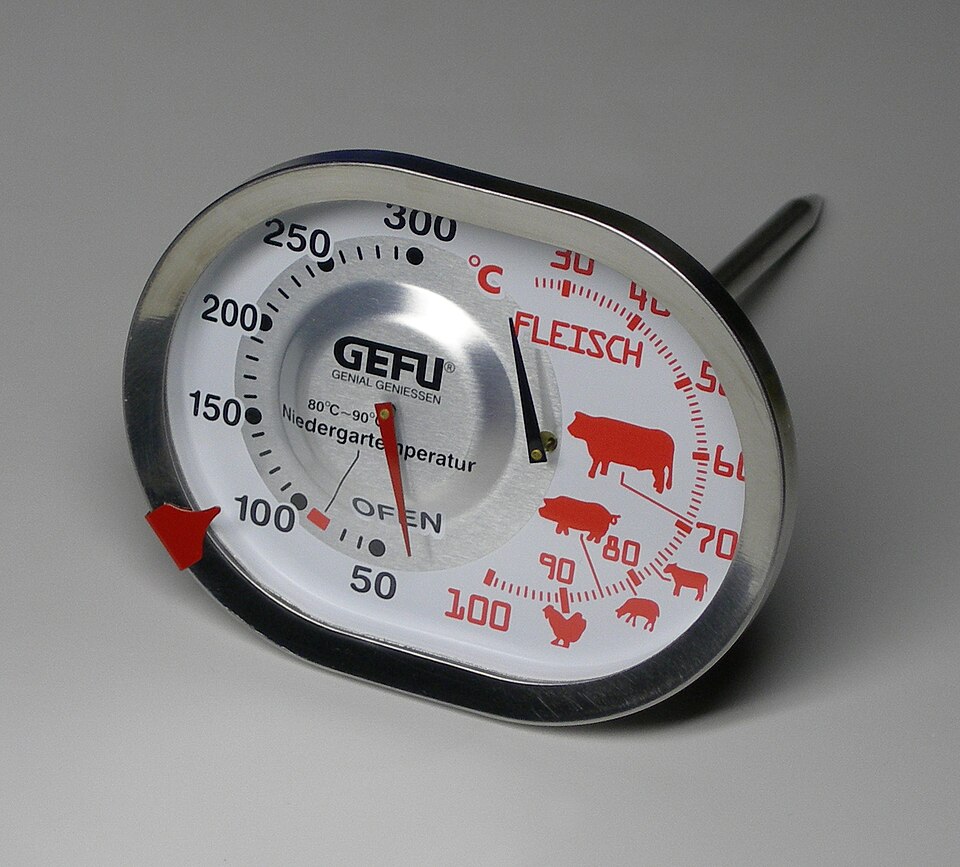
Whether the reading being checked is a refrigerator’s or a roast’s, the number on a dial is a claim to verify, not to trust — the same point week 3 made with an appliance thermometer left on a shelf holds equally for a probe read directly from the food.
Vegetables carry the same clock, differently
Week 2 did not give vegetables a single holding-time figure, because the question there was which shelf and which humidity, not how many days. The same cold-chain principle still applies: an ethylene-sensitive vegetable stored correctly keeps longer not because it is a different kind of material, but because its clock was started correctly, at the right temperature, from the beginning.
Fruit is different
Cut and ripening fruit from week 9 sits on a shorter, less uniform clock — set by ripeness rather than by a fixed rule. Of the material named this week, fruit is the one that keeps shortest and the one a fixed number is least able to describe on its own.
One argument, not four pieces of advice
Weeks 2, 3, 4 and 9 each taught a storage rule for one kind of material. Read on their own, they look like four unrelated pieces of advice.
Read together, they are one argument: a kitchen’s preparation work is only as good as its coldest link, and the material this course has spent nine weeks handling has been on that clock the whole time, whether or not it was named.
The storage-duration calculator
This week’s exercise takes a prep date and time plus an ingredient or dish type, and returns a safe-until date and time — the danger-zone and holding-time rules on this slide, applied to a specific case rather than read as a general figure.
- the same USDA FSIS cold-chain guidance cited on this slide feeds the calculator’s data
- an answer that looks close to right and an answer that is right are not the same thing when the margin is measured in hours
A kitchen’s preparation work is only as good as its coldest link.
— Marisol Quaye
Reading
USDA FSIS, “‘Danger Zone’ (40°F - 140°F)”
FoodSafety.gov, “4 Steps to Food Safety”
USDA FSIS, “Refrigeration and Food Safety”
Next: week 11 is the first week this course applies heat — and applies it only to test whether the preparation this account describes actually decided the result.