Time management under service
SLOP1640 — week 8, guest lecture
Dominic Achterberg, head chef, The Coalhouse
A guest, not a member of staff
This week is taught by a visiting chef, not a member of the regular teaching staff.
- the material is the same preparation this course has argued for since week 1
- now observed under a constraint the course itself cannot impose: a ticket that must leave the pass in a stated number of minutes, repeated for hours, with no allowance for a slow afternoon
- nothing in this lecture is cooked in front of the class — the subject is the schedule that precedes the heat
Finished ahead of time
Work that is finished to completion well before service starts, because its quality does not depend on how recently it was made.
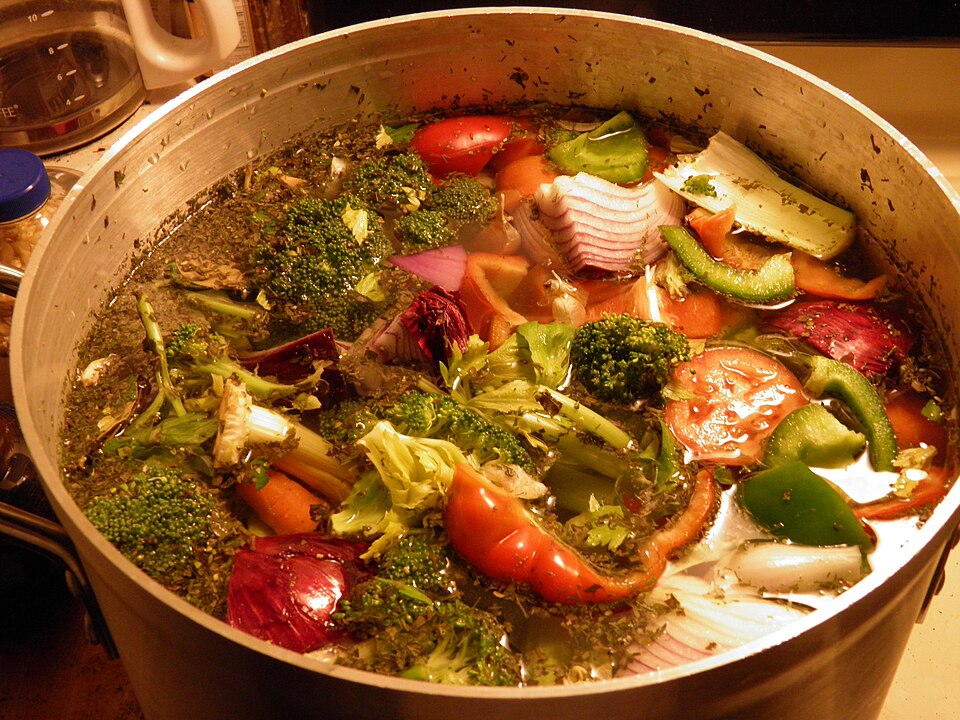
- stocks
- cured or brined items
- anything improved by resting
This is preparation in its purest form: work done when no one is waiting for it, at a pace the cook controls rather than the clock.
Stable, not finished
Work brought to a stable, safe intermediate state and kept there under controlled temperature until called.
- portioned
- blanched
- staged, ready for a final step but not yet taken through it
The decision to hold rather than finish is deliberate: finishing early would cost the item quality just as finishing late would, so it is kept one step short of both failure points until a ticket calls for it.
Deliberately left undone
Work left undone until the ticket arrives, because any earlier finishing point degrades it faster than the wait for the order does.
- the decision is not “what can be prepared ahead”
- it is “what is harmed less by waiting unfinished than by waiting finished”
This is the category most often assigned by habit rather than by checking which failure mode is actually cheaper — the guest’s argument is that it should always be the latter.
Deciding the order of work
Once the first three categories are fixed, the order of work across a service still has to be decided.
- which stations depend on which others
- where a bottleneck forms if two slow items land on the same ticket
- planning for that bottleneck in advance, rather than discovering it mid-service
The order, timed
A schedule that only sorts tasks into categories and never sequences them still fails the first time two of them compete for the same station at the same moment.
Closing the loop on week 1
Week 1 made the case for preparation with a claim about time: most of it, for most people, is already spent before any heat is applied, so that is where attention pays off.
- this week does not add a new argument
- it takes the same claim into a setting where getting the order of preparation wrong is not an inconvenience but a missed ticket
- the same three categories — finish now, hold, or wait — do the work under pressure that week 1 only had room to state as time budgets on a page
The distinction from weeks 11 and 12 is deliberate: this lecture describes how a kitchen times its preparation. It is not itself a cooking session, and no dish is made to order in this room.
The same clock, under a stated deadline
This week’s tutorial exercise is a storage-duration calculation.
- everything sorted above into “before doors open” and “held” is only usable if it is still safe when the ticket calls for it
- a stock finished on Monday and a portion blanched an hour before service are governed by the same cold-chain clock this lecture has been assuming throughout, just running for very different lengths of time
- the tutorial takes a prep date and time, and an ingredient or dish type, and returns the point at which “held” quietly becomes “no longer safe to serve”
Open the storage-duration calculator on this week’s session page to work through it against a stated service scenario.
Running against the clock
A service does not create a timing problem so much as reveal whichever one was already sitting in the prep list.
— Dominic Achterberg
Reading
- Wikipedia, Mise en place.
- Wikipedia, Brigade de cuisine.
This week’s session runs a timed version of the sorting decision above against a fixed task sheet. Next: week 9 returns to material — fruit, and ripening as a process that can be scheduled rather than waited on.