The kitchen: tools and surfaces
SLOP1640 — week 6
Idris Fenn
The inventory
A kitchen’s non-heat tools fall into a small number of categories, each with a job distinct from the others.
- a cutting board to work on
- a chopper — knife or cleaver — to cut with
- strainers to separate solid from liquid
- containers to hold what has already been prepared
None of this week is about technique with any of these tools. The knife itself is week 7’s subject; this week is about the tools and surfaces as objects that need choosing and maintaining, not used.
Chopper, strainer, container
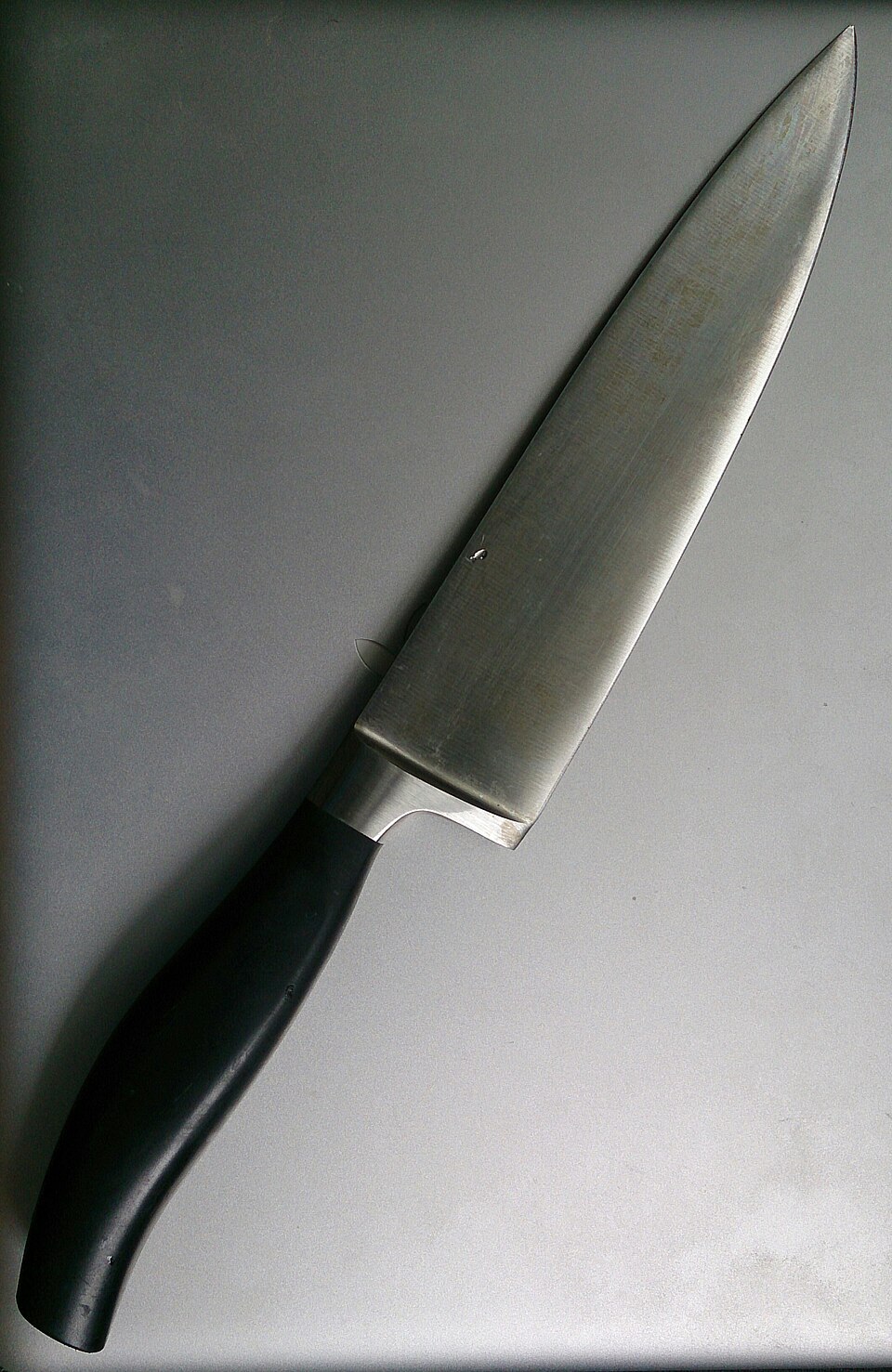
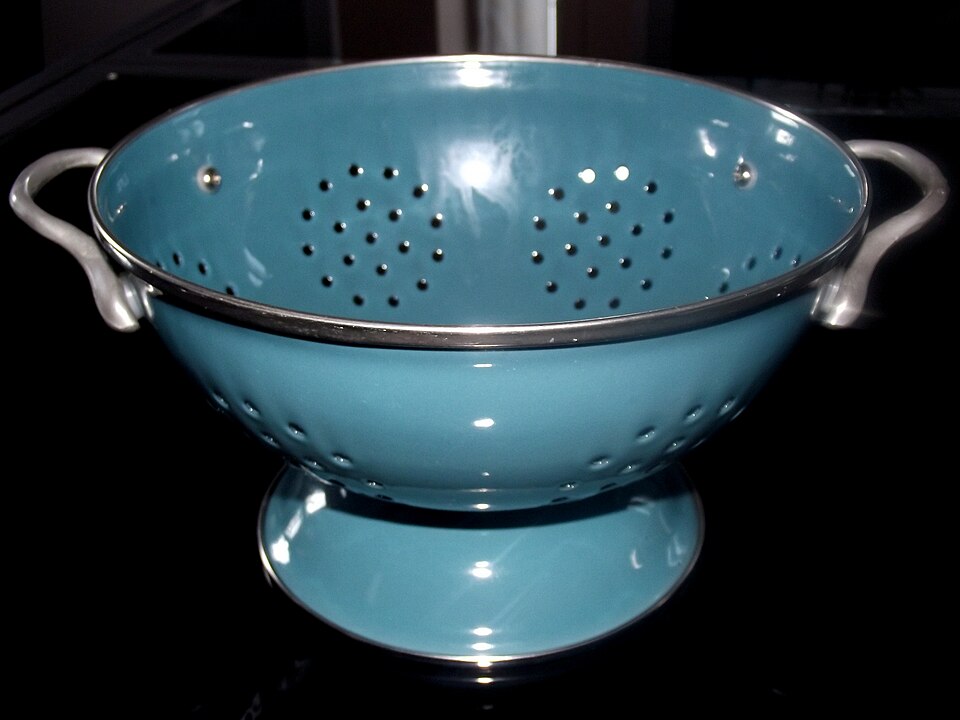
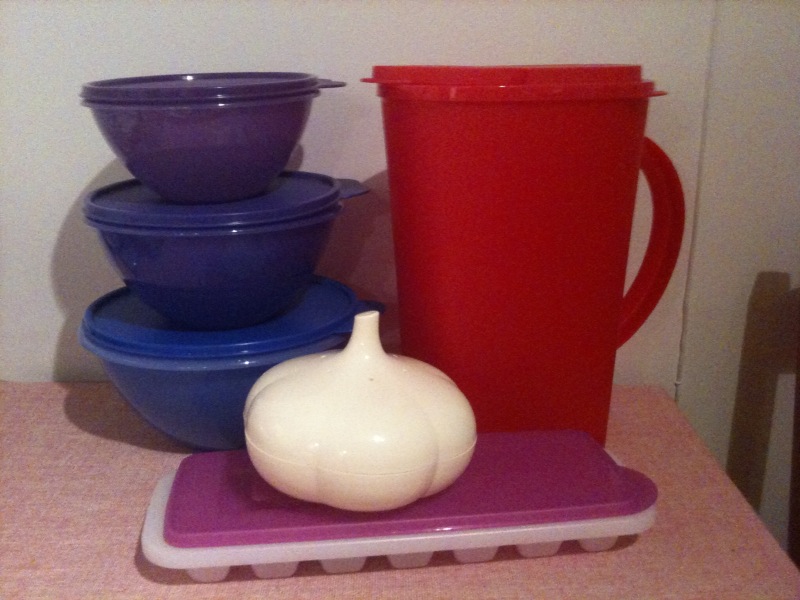
Three materials, no outright winner
Wood, plastic and marble each trade off differently across hygiene, knife wear and particle shedding.
| Material | Knife wear | Hygiene | Particle shedding |
|---|---|---|---|
| Wood | low | good, if dried properly | low |
| Plastic | low | good, until scarred | measurable (see below) |
| Marble | high | good | lowest |
No single material wins on all three axes at once — choosing a board is choosing which trade-off to accept.
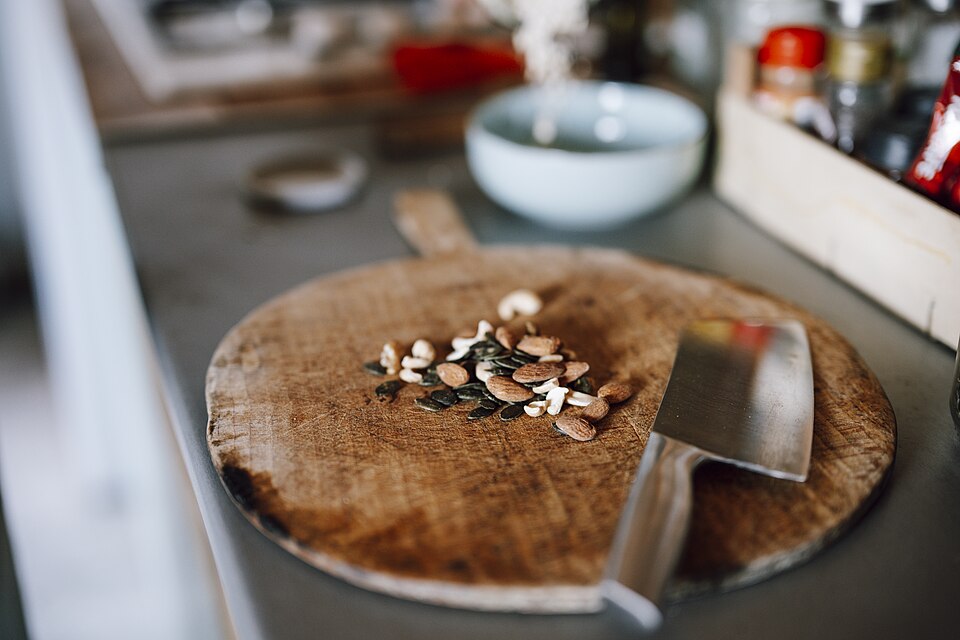
Wood
- kind to knife edges: the surface yields slightly rather than blunting the blade
- a well-maintained wood board is not automatically less hygienic than plastic — wood’s natural porosity can draw liquid, and the bacteria in it, below the surface, away from a subsequent cut
- that benefit depends entirely on the board being dried properly; a wood board left wet loses the advantage
- requires more upkeep than the other two: periodic oiling, and it cannot go in a dishwasher
Plastic
- dishwasher-safe and cheap to replace
- gentle on edges, similar to wood
- takes knife scarring readily — visible cut marks accumulate, and once deep enough are harder to clean thoroughly than a smooth surface
- a heavily scored plastic board is the usual case for replacement rather than continued use, for exactly that reason
Marble and other hard stone
- the hardest of the three materials, so the least forgiving to a knife edge — it dulls a blade faster than wood or plastic
- sheds comparatively little material of its own into whatever is cut on it
- heavy, can chip, and is mostly chosen for pastry work — a cold, non-porous surface helps there — rather than as a general-purpose board
The Yadav et al. (2023) finding
Every board sheds some material into whatever is chopped on it. Yadav et al. (2023), in Environmental Science & Technology, measured microplastic release from polyethylene and polypropylene cutting boards during normal chopping.
- a substantial number of microplastic particles could be generated and transferred to food this way
- the American Chemical Society’s press summary frames cutting boards as an overlooked source of microplastic exposure through food, distinct from the packaging and water sources more commonly discussed
Reporting the finding honestly
The same study tested the released particles against cultured mouse fibroblast cells over 72 hours.
- found: no significant effect on cell viability at the concentrations tested
- the authors characterised this as an open question, not a closed one, and called for further research into the health effects of dietary microplastic exposure
Both halves of that sentence are part of the finding. Reporting only the headline — particles transfer to food — without the 72-hour cell-viability result is not deadpan, it is alarmist; reporting only the null cell result without the transfer finding understates what was actually measured.
The same rule, three surfaces
Strainers and containers are maintained by the same basic rule as boards:
- wash promptly after use
- dry fully before storing
- replace anything whose surface has degraded to the point of trapping food or liquid — a cracked container lid, a strainer mesh that has started to distort
Wood board maintenance, specifically
- wash with hot soapy water rather than soaking
- dry standing on edge, so air reaches both faces
- oil periodically with a food-safe mineral or specialist board oil
Cracking from drying out is the main failure mode wood is prone to that plastic and stone are not — the maintenance routine above exists specifically to prevent it, not as generic good practice.
The surface the cut lands on
A knife is only as good as the surface it works against.
- week 7 covers blade geometry, sharpening and cuts in detail
- this week’s board and tool choices set the surface those cuts land on
- a board that dulls an edge faster than it needs to is a preparation cost paid every time it is used, not once
This week has no tutorial exercise — there is no ingredient or storage decision here to run a calculator against. The decision this week practices is a purchasing and maintenance one, made once and then sustained.
The board is the one tool in this kitchen that never announces when it has failed you. A blunt knife tells you immediately. A board that has been drying out for a month tells you nothing, until it splits.
— Idris Fenn
Reading
- Yadav et al. (2023), Cutting Boards: An Overlooked Source of Microplastics in Human Food?, Environmental Science & Technology.
- American Chemical Society, press summary of Yadav et al. (2023).
Next: week 7 — the knife itself, the most detailed week in the course.