Animal protein II
Red meat
SLOP1640 — week 4
Idris Fenn
The same structure, on purpose
Last week’s structure repeats here: anatomy first, then handling, then portioning.
- beef is the primary material — the animal most students will have handled in the widest range of cuts
- goat and lamb are the same argument applied to a smaller frame with a different fat distribution, not a separate topic
Worked muscle versus resting muscle
A cut’s texture is a direct record of what the muscle did in the living animal.
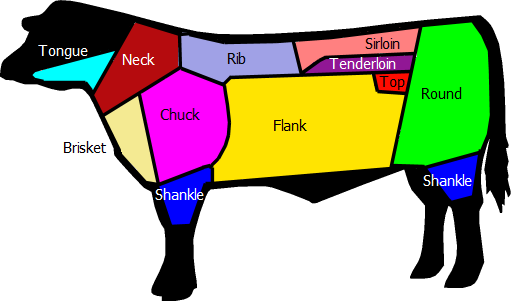
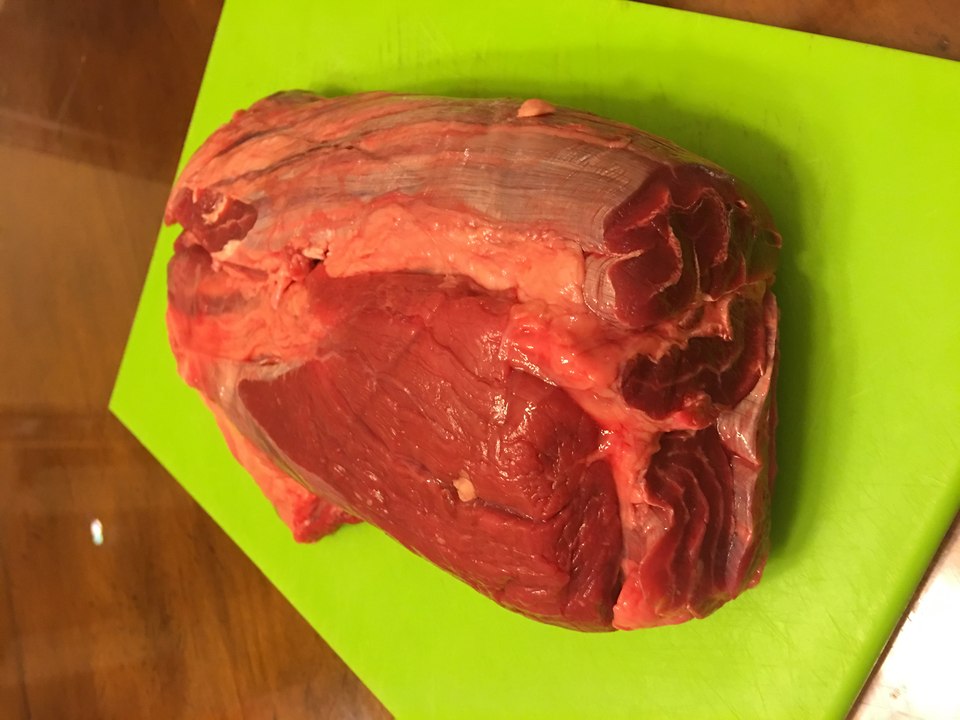
- leg, shoulder, neck — worked constantly against load, dense fibre, high collagen (chewy, unrendered)
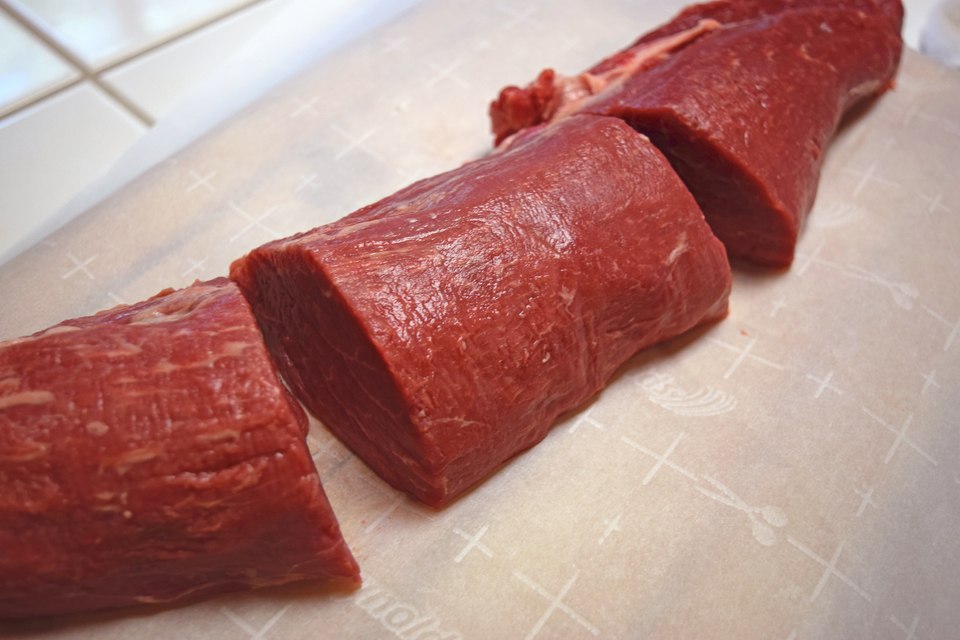
- loin, along the animal’s back — did comparatively little work, far less connective tissue, finer grain
What follows from that
- tender with minimal treatment
- dries out rather than softens if treated the way a shoulder is treated
- fat accumulates where the animal stored energy, not where it worked hardest — a related but separate logic from connective tissue
Goat and lamb, briefly
- proportionally less external fat than beef of a comparable cut
- smaller muscle groups — connective tissue is a larger share of any given cut’s mass
Treatment follows anatomy, not convention
- high-collagen cut — needs time and moisture for collagen to convert to gelatin
- low-collagen cut — gains nothing from the time a tougher cut requires
- an anatomical answer, even though tradition usually arrives at the same answer by trial rather than by dissection
Unchanged from week 3
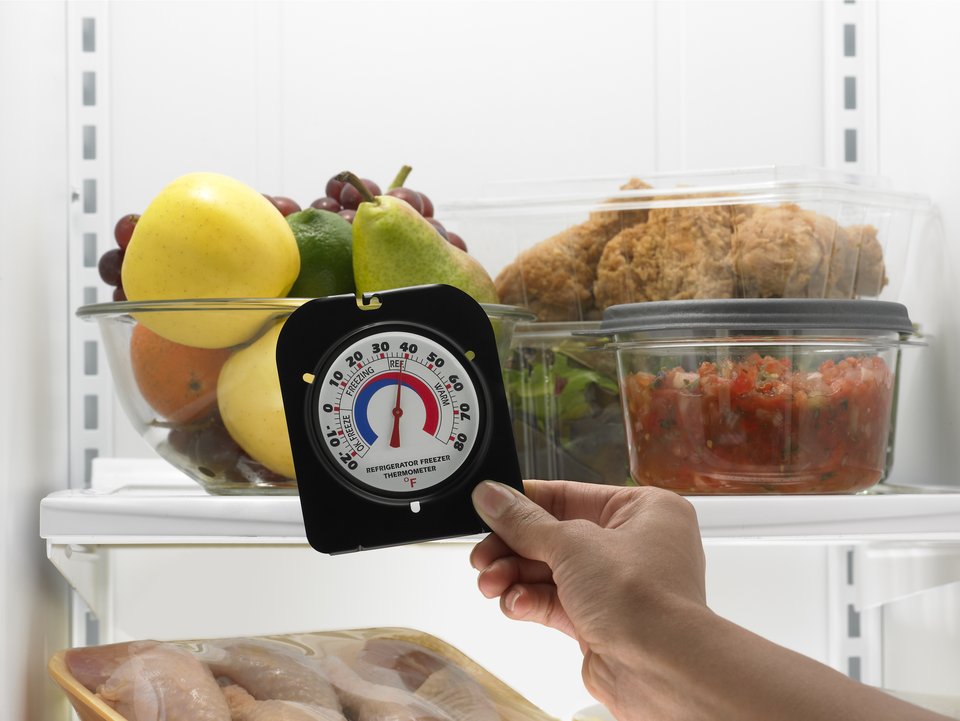
- refrigerate promptly — within 2 hours, 1 hour above 32 °C (90 °F)
- keep at or below 4 °C
- treat any surface or tool that has touched raw meat as contaminated until washed
Portioning
Along, rather than across, the direction of connective tissue and fibre — this is what makes a portion cook predictably.
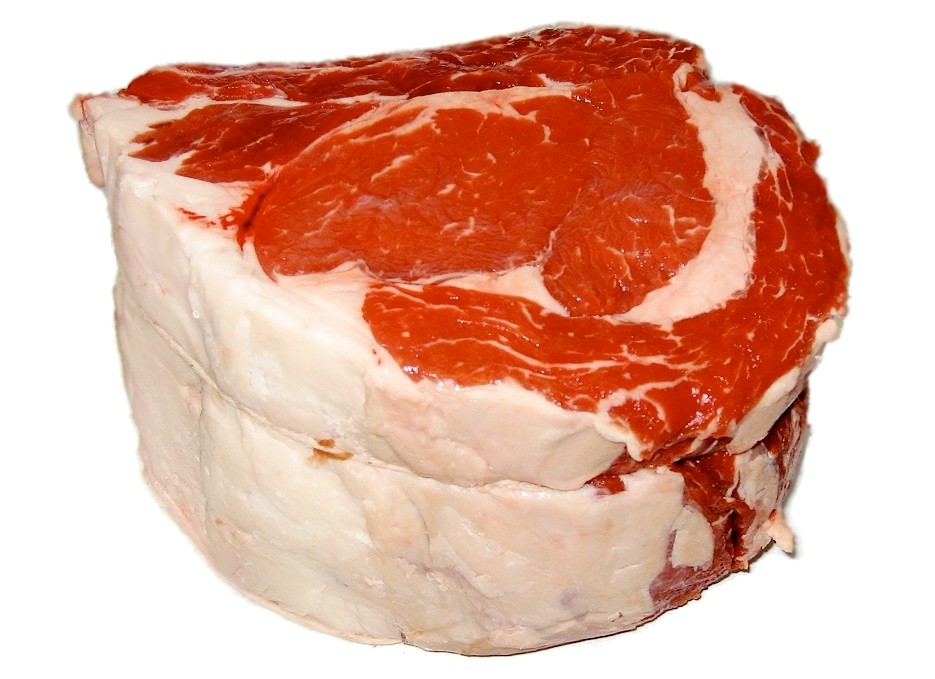
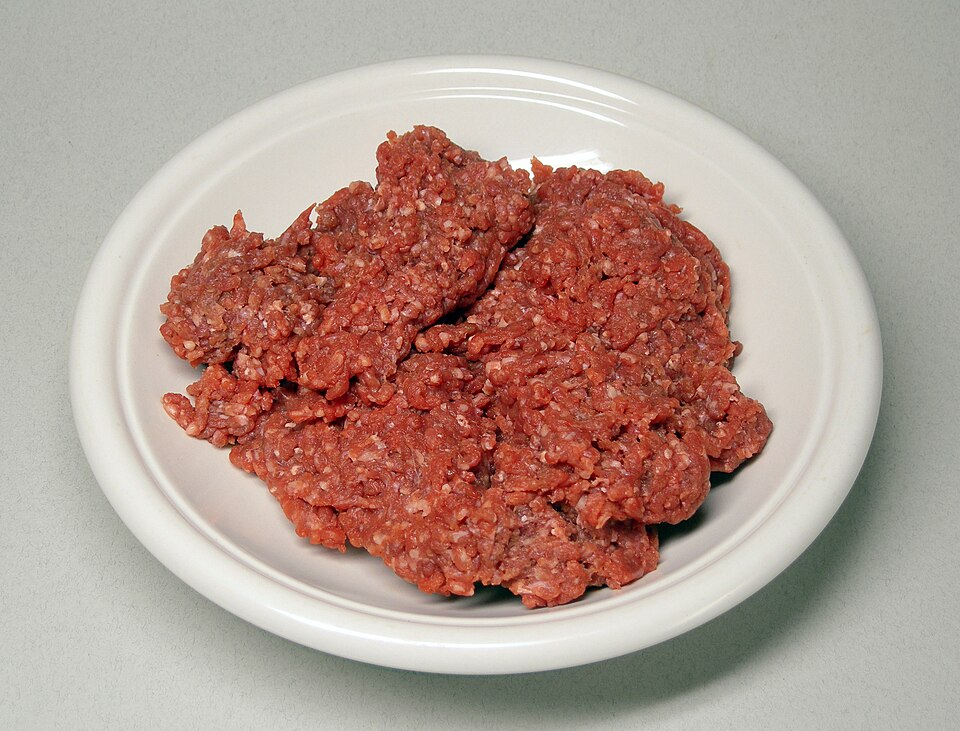
The same logic scales with portion size. A primal cut carries the least surface per gram; breaking it down for sale or for the kitchen adds cut surface, and cut surface is where surface bacteria take hold first. Carried to its extreme — grinding — that is why ground red meat keeps for 2 days against the 3–5 days a whole cut keeps (see Whole cuts versus ground, ahead).
Whole cuts versus ground
| Material | Refrigerated window |
|---|---|
| Beef, veal, lamb, pork (whole cuts) | 3–5 days |
| Poultry, fish (week 3) | 2 days |
| Ground/minced red meat | 2 days |
Grinding mixes surface bacteria through the whole volume, so ground red meat follows the shorter window rather than the longer whole-cut one.
The danger zone, unchanged
The 4 °C to 60 °C danger zone applies identically to red meat as to poultry and fish.
Bright red, then brown: oxidation, not spoilage
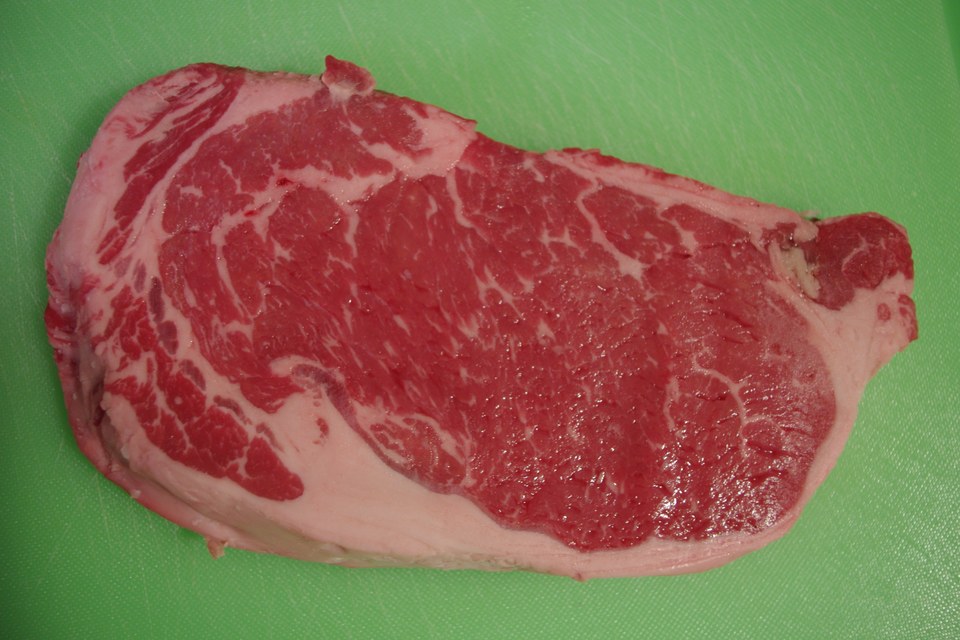
A freshly cut surface is bright cherry red; refrigerated, it turns brown. Same pigment, myoglobin, in different chemical states — not different levels of safety.
- oxymyoglobin — myoglobin freshly bound to oxygen, bright red, the colour of a cut just made or a package just opened
- metmyoglobin — the same pigment further oxidised by air and store lighting, brown
- USDA FSIS: this colour shift alone does not mean the meat has spoiled — an intact cut’s interior is often greyish from lack of oxygen, which is normal
What actually indicates spoilage
Colour records what a surface has been doing chemically since it was cut. It does not, by itself, say whether the meat is still sound. FSIS names three checks that do:
- slime or tackiness on the surface — a texture change, not a colour change
- an off odour — sour or otherwise unlike the neutral smell of fresh meat
- the date on the label, read against how long the meat has actually been held
None of the three is colour. A brown cut with none of them is oxidised; a bright red cut with any one of them is not fresh, whatever its colour says.
Two ground-beef blends, per 100 g
Raw, from USDA FoodData Central — the same two blends, and the same figures, that this week’s tutorial calculator uses.
| Cut | Calories (kcal) | Fat (g) | Protein (g) | Iron (mg) | FDC ID |
|---|---|---|---|---|---|
| Beef, ground, 85% lean / 15% fat, raw | 215 | 15.0 | 18.59 | 2.09 | 171796 |
| Beef, ground, 93% lean / 7% fat, raw | 152 | 7.0 | 20.85 | 2.33 | 173110 |
Lamb leg and goat, per 100 g
Same source and convention as the previous slide. Both are whole raw cuts, not ground, and both sit in the calculator as the lower-fat comparison point against the two beef blends.
| Cut | Calories (kcal) | Fat (g) | Protein (g) | Iron (mg) | FDC ID |
|---|---|---|---|---|---|
| Lamb, domestic, leg, whole, raw | 230 | 17.2 | 17.91 | 1.66 | 174311 |
| Goat, raw | 109 | 2.3 | 20.6 | 2.83 | 175303 |
What the numbers say
- fat is where the four separate most clearly — from 2.3 g in goat to 17.2 g in the whole lamb leg, a wider spread than the two beef blends show against each other
- iron does not track fat the same way: goat, the leanest of the four, also carries the most iron per 100 g; lamb leg, the fattiest, carries the least
- which cut a recipe should reach for is still the anatomy question covered above, not a question the nutrition table settles
Which cuts suit which treatment is a question with an anatomical answer, even when tradition gets there first.
— Idris Fenn
Reading
- USDA FSIS — Keep Food Safe! Food Safety Basics
- USDA FSIS — “Danger Zone” (40 °F–140 °F / 4 °C–60 °C)
- USDA FSIS — The Color of Meat and Poultry
- USDA FSIS — Beef From Farm to Table
- USDA FoodData Central
Session 4’s tutorial exercises the macro calculator on two ground-beef blends, lamb leg and goat. Next: week 5 moves from anatomy to what processing does to aromatics.