Animal protein I
Poultry and fish
SLOP1640 — week 3
Idris Fenn
Order, deliberate
Chicken and fish are the primary material this week; duck is touched on briefly as a point of contrast.
- anatomy first — so the reason a cut behaves the way it does is visible before any handling instruction is given
- handling second — so the anatomy explains the rule rather than the rule sitting on its own
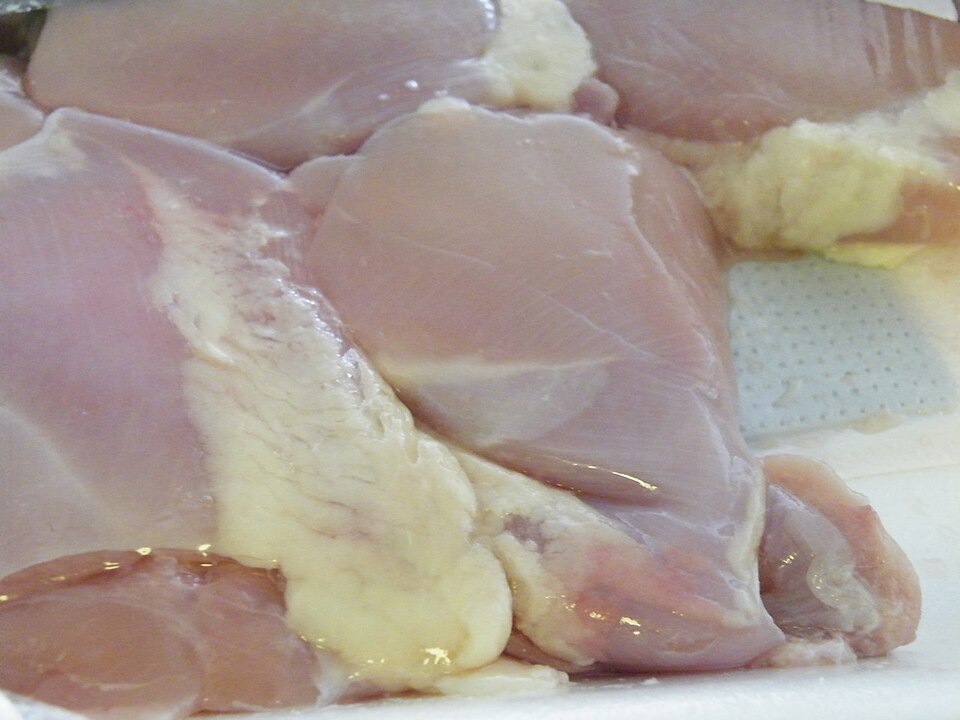
The bird: leg and thigh versus breast
- leg and thigh work constantly — walking, standing, bearing weight
- more connective tissue, more slow-twitch, myoglobin-rich fibre (“dark meat”)
- the breast, in a bird that does not fly far, does comparatively little work — leaner, paler
- fat sits mostly under the skin, not running through the muscle
Duck, briefly
A bird bred for sustained flight or cold-water swimming differs mainly in degree:
- thicker subcutaneous fat layer
- darker meat across the whole carcass, including the breast
- meat only, raw, per 100 g: 135 kcal, 5.95 g fat, 18.28 g protein, 2.4 mg iron (FDC ID 172410) — more than six times chicken breast’s iron, consistent with dark meat running through the whole bird
Fish anatomy
Fish have no need to support their own weight against gravity.
- connective tissue is thinner than in poultry or red meat
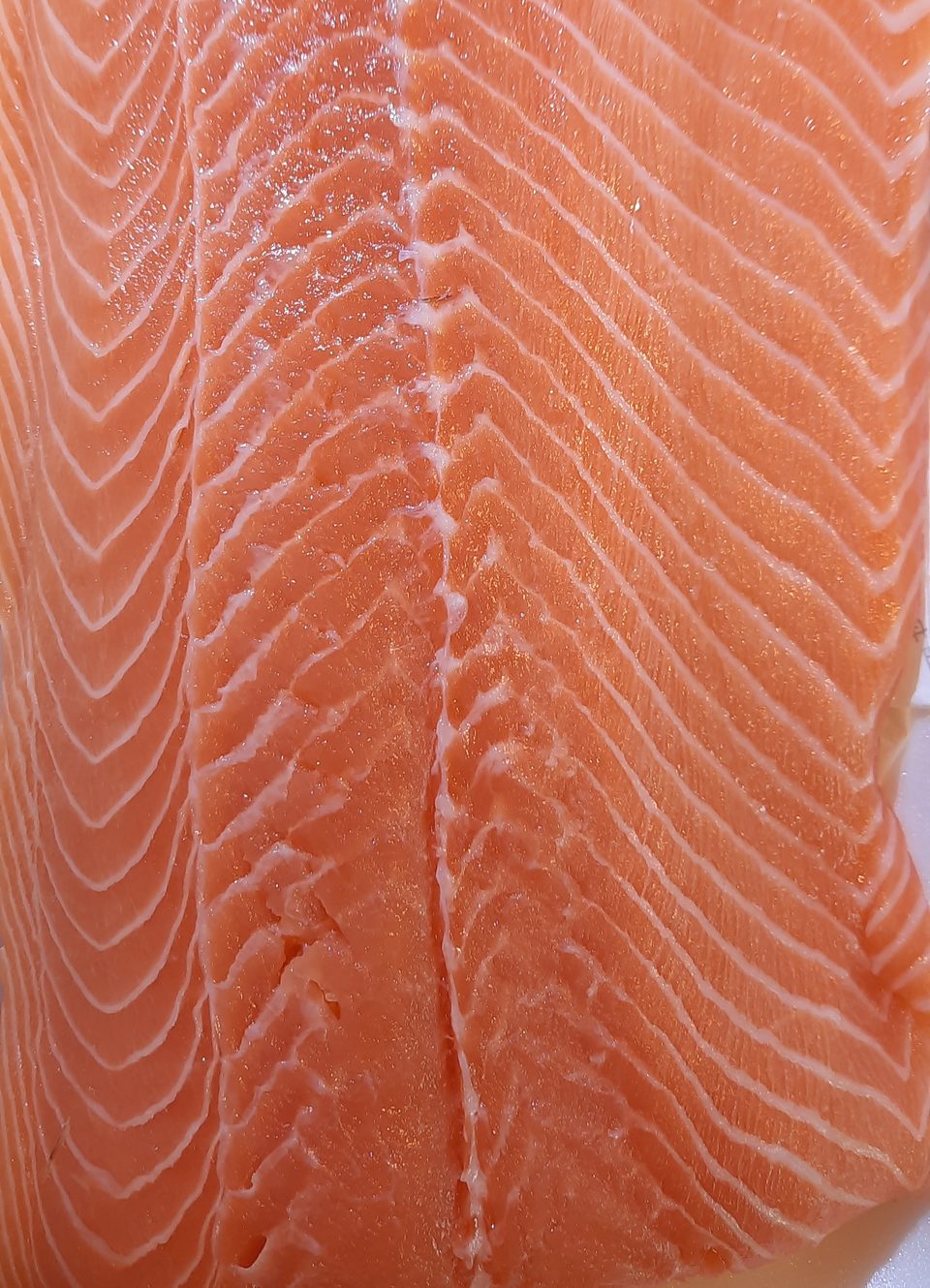
- muscle is arranged in short segments (myotomes), not long fibres
- this is why fish flakes apart along clean lines under far less force
- fillets are portioned along those natural seams, not cut across them
Fish portion forms
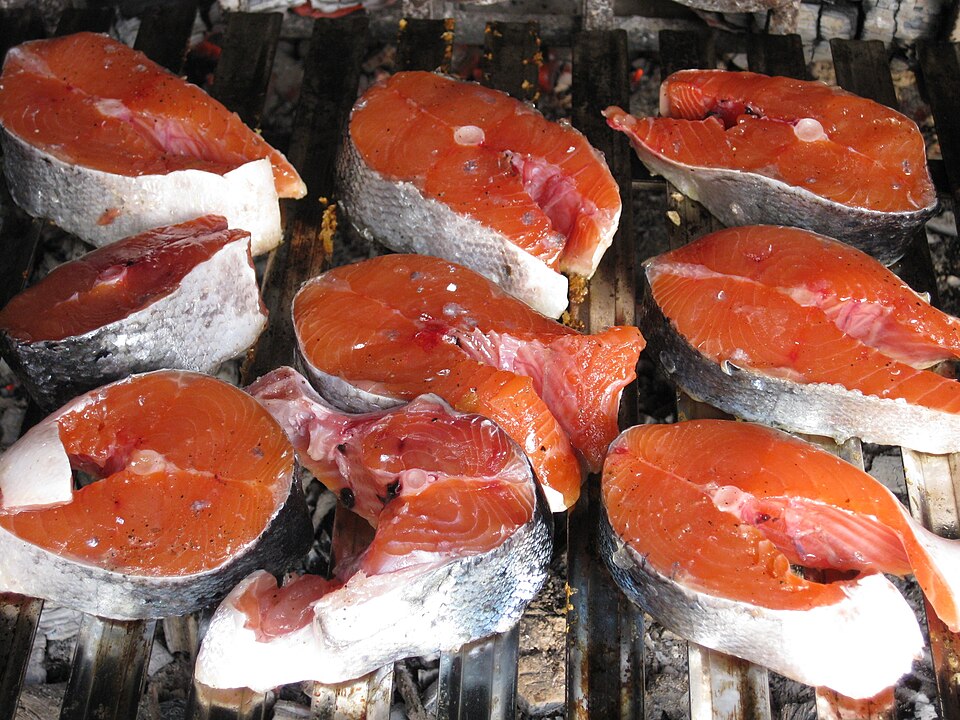
Portion form follows the same seams. A fillet runs the length of one side of the fish; a steak (or darne) is a cross-section through the whole fish, backbone included; a supreme is a skinless, boneless fillet portion. The pin-bone line — a row of small bones down the centre of each fillet — is a separate anatomical feature from the myotome seams that set where a fillet can be taken cleanly.
Fish, checked before it is bought
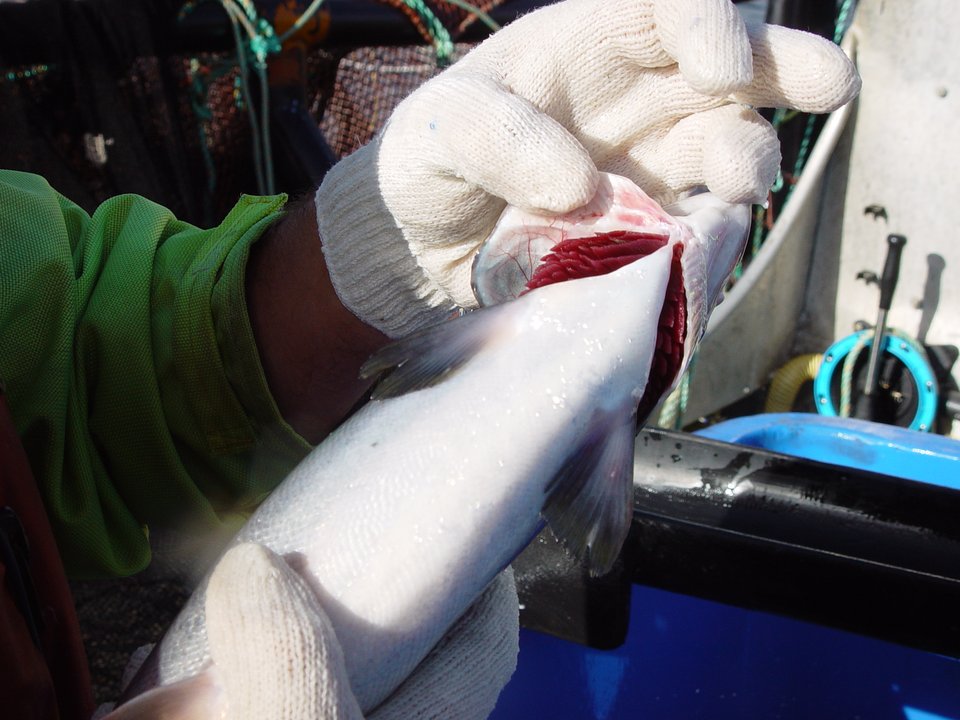
A fish’s anatomy is what a freshness check actually reads. Four checks, each traceable to a visible or smellable change as the fish ages:
- eyes — clear and shiny when fresh; cloudiness is the sign to refuse
- gills — bright red when fresh; dulling toward brown or grey marks decline
- flesh — springs back when pressed; flesh that stays indented has already begun to break down
- smell — mild, of the sea; ammonia or sourness means the fish should be refused, not just discounted
Eyes and gills together, on one fish
No matched pair of a fresh and a declining fish, comparably photographed, could be sourced — the epic’s own sourcing risk, realised. This single, labelled close-up names the checks it shows; it does not stand in for a comparison.
Scale condition, a fifth check, is not documented in the FDA source above; the freshness-grading standard on the next slide covers it.
What the grading standard adds
The EEC freshness grading system used across European fish markets extends the same four checks with published wording, and adds scale and skin condition as a fifth:
- top-grade eyes are described as convex; the flattest, most sunken eyes and greyed, opaque corneas mark the unfit end of the scale
- top-grade skin and scales are bright, shining and iridescent, loosening and dulling as the fish declines
- gill colour and odour move the same direction already named above
This is a grading standard, not a safety threshold — a fish graded below top quality is not automatically unsafe — but the direction of every change matches the FDA checks above.
Cold chain
Raw poultry and raw fish are both perishable enough that the two-hour rule applies:
- never left out of refrigeration more than 2 hours
- more than 1 hour if the ambient temperature is above 32 °C
- bacteria common to raw poultry and seafood grow fastest between 4 °C and 60 °C, and can double in as little as 20 minutes within that band
Cross-contamination
A cutting board and knife used on raw poultry or fish should not touch produce, or anything already cooked, without being washed first.
- hot, soapy water, a clean rinse, a full dry — or a dishwasher cycle for a nonporous board
- the point is not fastidiousness: the same organisms that make raw poultry and fish perishable transfer readily to whatever the board touches next
Portioning
Work with the anatomy already established, not across it.
- poultry — broken down along the joints, where connective tissue is thinnest, avoiding splintered bone
- fish — portioned along the myotome seams and away from the pin bones
What the eight-piece breakdown costs
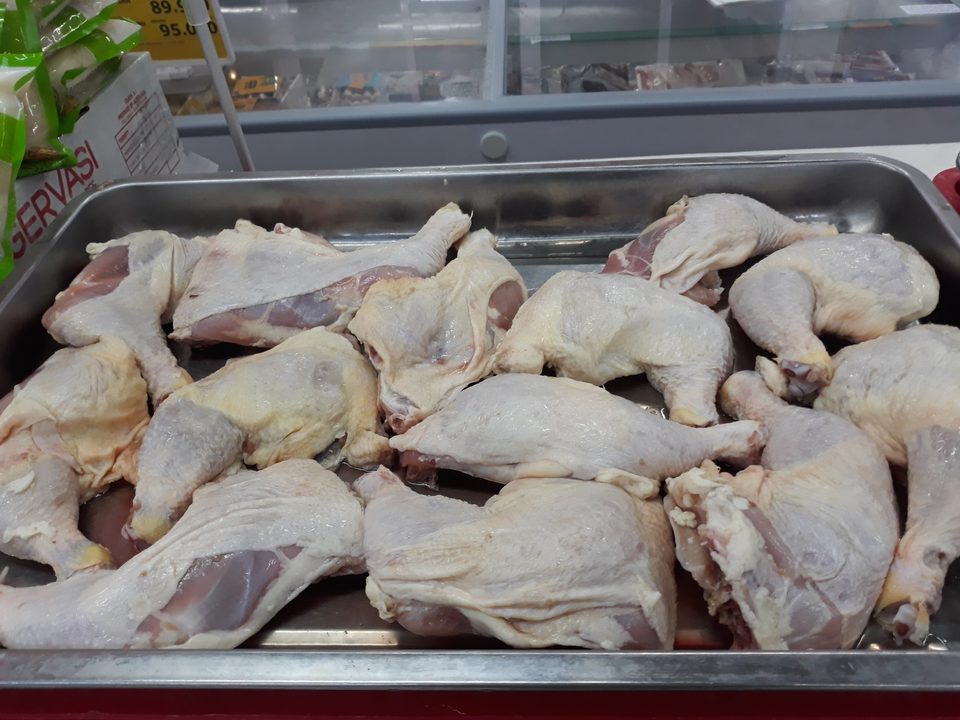
Jointing a whole bird into leg, thigh, drumstick, wing and two breast halves does not shorten the refrigerated window — FDA’s storage chart holds whole poultry and poultry parts to the same 1–2 days at 4 °C or below. What it does shorten is frozen quality life: about 9 months for parts against about 1 year for a whole bird, the same figures already on this week’s poultry storage table.
No equivalent figure is documented for fish portion form. FDA’s chart distinguishes fish storage by fat content — lean versus fatty — not by whether the fish is left whole or cut into fillets or steaks, so no holding-time cost is claimed for fish portioning here.
Poultry
| State | Temperature | Holding time |
|---|---|---|
| Refrigerated | 4.4 °C (40 °F) or below | 1–2 days |
| Frozen | −17.8 °C (0 °F) or below | indefinite; quality falls off after ~9 months (parts) / ~1 year (whole bird) |
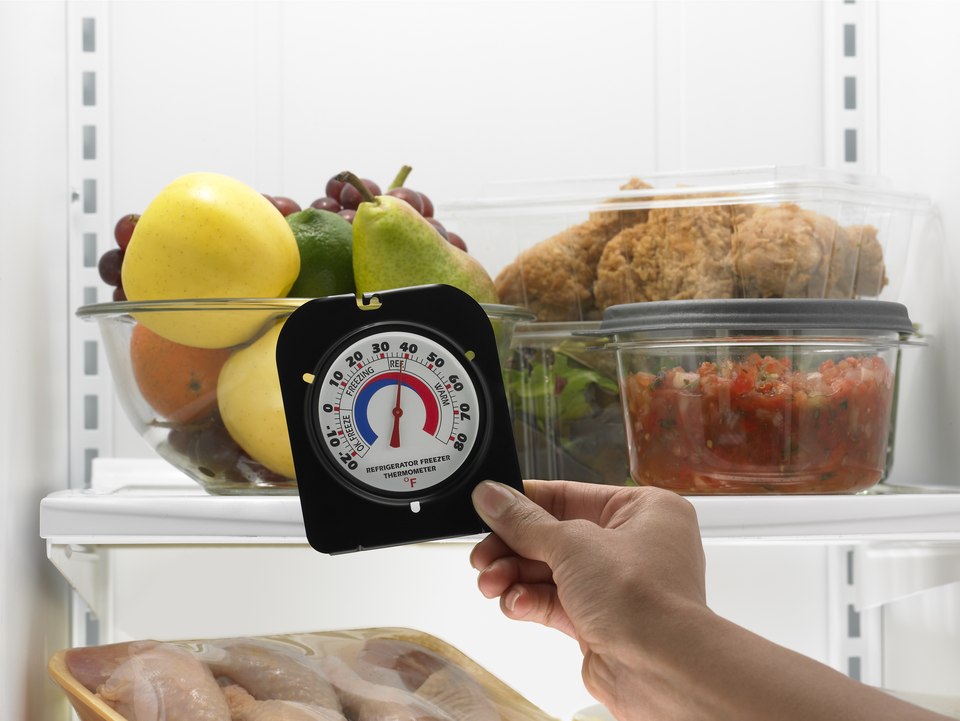
The 4.4 °C line is a target to verify, not to assume — an appliance thermometer left on the shelf is the only way to know the refrigerator itself is holding it, rather than trusting the dial on the door.
Fish and shellfish
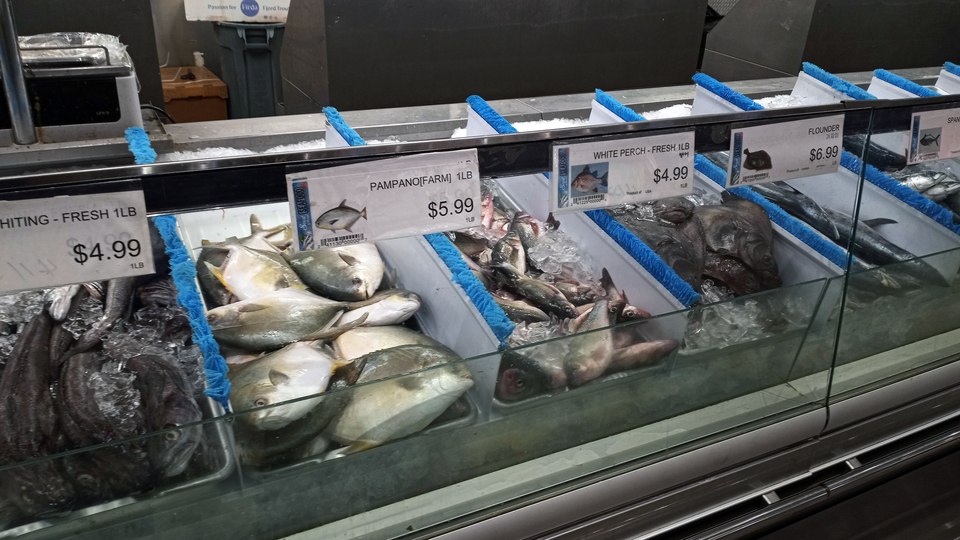
- same 1–2 day window under refrigeration
- onto ice or into the fridge within 2 hours of purchase
- 1 hour if the ambient temperature is above 32 °C
These are food-safety limits, not cooking instructions — this week teaches a student to read the storage clock, not to cook against it.
Fat, protein and calories per 100 g
Raw, from USDA FoodData Central — the same database the invent-a-recipe assessment names, and the same four materials Session 3’s tutorial ranks.
| Material | Calories (kcal) | Fat (g) | Protein (g) | FDC ID |
|---|---|---|---|---|
| Chicken breast, meat only, raw | 120 | 2.62 | 22.5 | 171077 |
| Salmon, Atlantic, farmed, raw | 208 | 13.42 | 20.42 | 175167 |
| Cod, Atlantic, raw | 82 | 0.67 | 17.81 | 171955 |
| Duck, meat only, raw | 135 | 5.95 | 18.28 | 172410 |
Why salmon’s figure is higher
Salmon’s higher fat figure is consistent with the anatomy already covered: a cold-water swimmer stores more fat through its flesh than a bird whose breast, in particular, was bred to do comparatively little work.
Iron, and the same dark-meat story again
A second nutrient, read off the same four USDA entries:
| Material | Iron (mg) | FDC ID |
|---|---|---|
| Chicken breast, meat only, raw | 0.37 | 171077 |
| Salmon, Atlantic, farmed, raw | 0.34 | 175167 |
| Cod, Atlantic, raw | 0.38 | 171955 |
| Duck, meat only, raw | 2.40 | 172410 |
Duck — dark meat across the whole carcass — carries by far the most iron; chicken breast, the leanest, whitest muscle at this table, carries the least. The two fish sit close together in between, without the light-meat/dark-meat split that separates the two birds.
Anatomy explains what a cut can do; handling determines whether it is still safe to do it by the time it reaches a pan.
— Idris Fenn
Reading
- USDA FSIS — “The Poultry Label Says ‘Fresh’”
- FDA / FoodSafety.gov — Safe Selection and Handling of Fish and Shellfish
- FAO — Guide to EEC Freshness Grades
- USDA FSIS — “Danger Zone” (40 °F–140 °F)
- USDA FSIS — Cutting Boards
- FDA — Refrigerator & Freezer Storage Chart
- USDA FoodData Central
Session 3’s tutorial exercises the macro calculator on all four of this week’s materials — chicken breast, salmon, cod and duck. Next: week 4 applies the same anatomy-then-handling structure to red meat.