Vegetables
SLOP1640 — week 2
Marisol Quaye
Where this week sits
A vegetable’s life after purchase is mostly decided by where it goes next, not by anything done to it at the stove. This week is entirely inside the preparation-only remit of weeks 1 through 10.
- refrigerating something that does not tolerate cold — one common mistake
- leaving out something that spoils quickly at room temperature — the opposite mistake, equally common
Grouped by behaviour, not species
| Family | Examples |
|---|---|
| Roots and tubers | potato, carrot |
| Alliums | onion |
| Leafy greens | spinach, lettuce |
| Brassicas | broccoli, cauliflower, Brussels sprouts |
Storage behaviour tracks the family more reliably than it tracks any single vegetable’s popularity.
More surface, faster decline
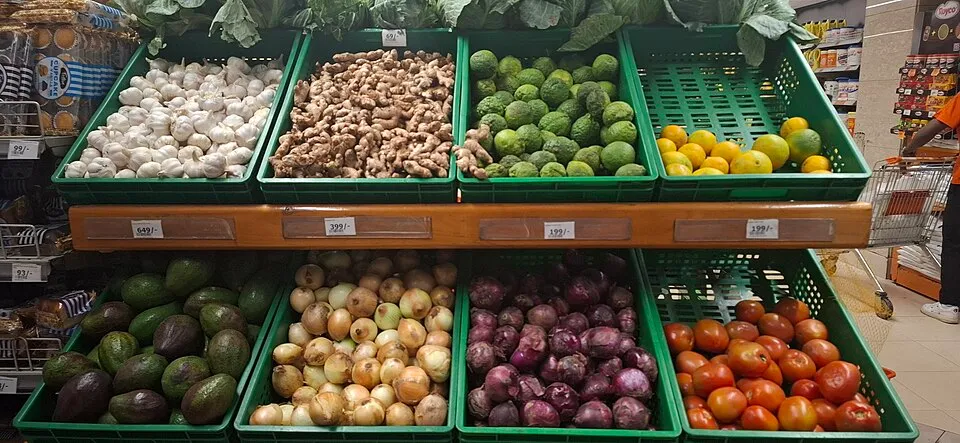
A cut face is new surface that was, a moment before, sealed inside the vegetable’s skin. FDA guidance treats cut produce as more time-sensitive than whole produce: refrigerate anything bought pre-cut, and cut away any damaged or bruised area before use. More cut surface exposed per gram means faster moisture loss and easier access for surface microbes — this is reasoning from surface area, not a measured figure, and no source is claimed for a specific spoilage rate.
- the shape does not change what a carrot is, only how much of it is exposed
- five shapes recur through a professional kitchen’s prep: julienne, batonnet, brunoise, small dice, chiffonade
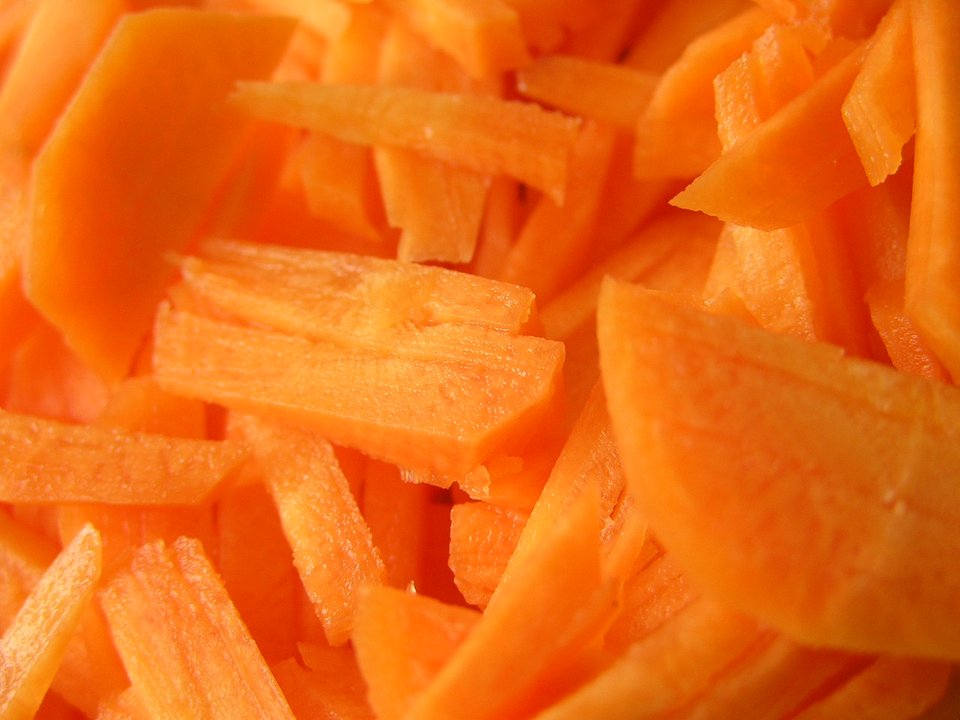
Julienne
Carrot, julienne: about 3 mm × 3 mm, 65 mm long (1⁄8 in × 1⁄8 in × 2½ in) — Auguste Escoffier School of Culinary Arts.
A thin matchstick puts a large share of the carrot’s volume within a cut face. Julienned vegetables are usually held briefly rather than stored.
Batonnet
Carrot, batonnet: about 6 mm × 6 mm, 65 mm long (1⁄4 in × 1⁄4 in × 2½ in) — Auguste Escoffier School of Culinary Arts.
Twice the julienne’s cross-section at the same length, so less of the carrot sits within a millimetre of a cut face — the reason a batonnet holds slightly longer under refrigeration.
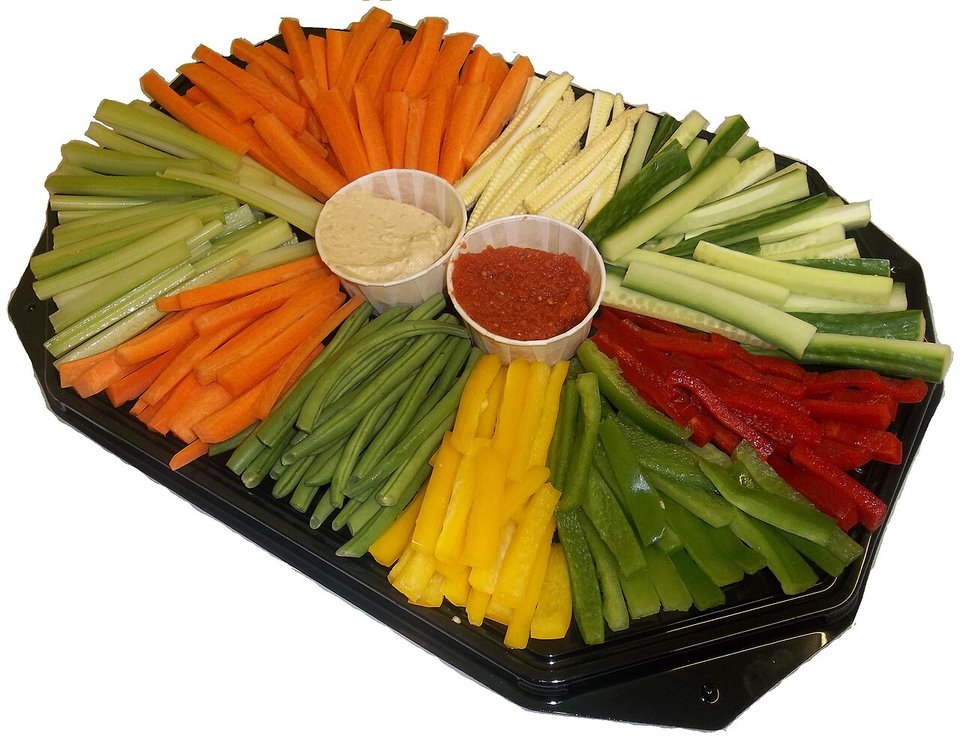
Brunoise
Carrot, brunoise: about 3 mm cubes (1⁄8 in) — Auguste Escoffier School of Culinary Arts.
A julienne cut again, crosswise, which roughly doubles the cut surface for the same piece of carrot. Brunoise is usually cut for the same session it is used in, not stored.
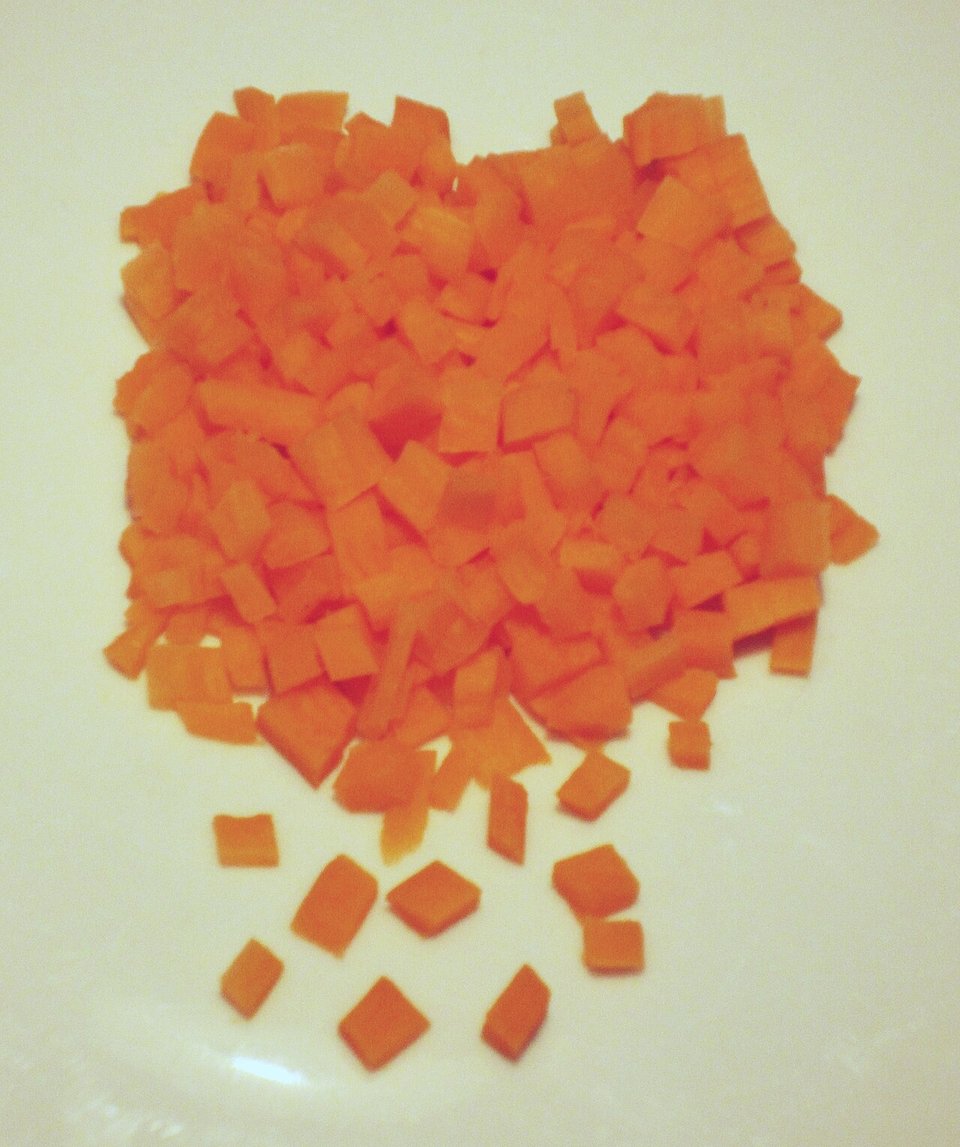
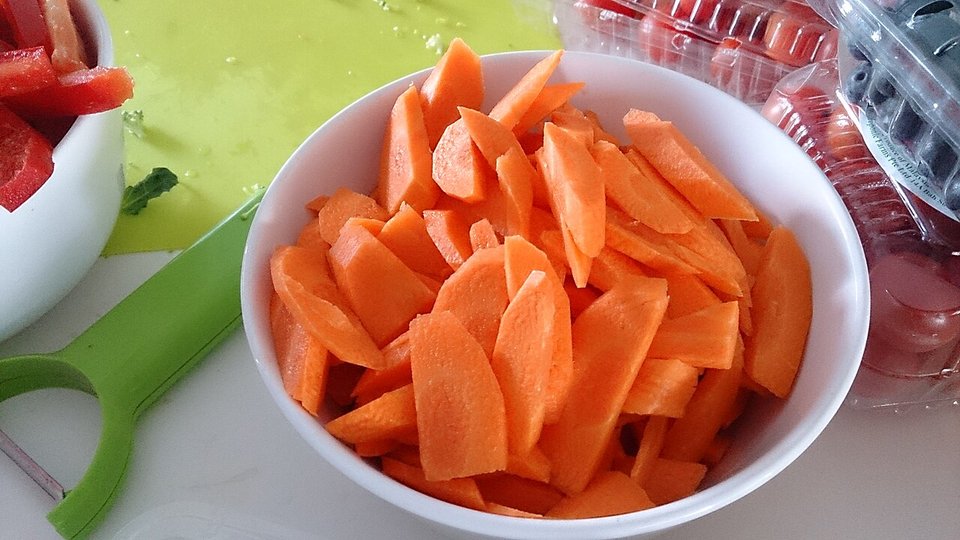
Small dice
Carrot, small dice: about 6 mm cubes (1⁄4 in square) — Auguste Escoffier School of Culinary Arts.
Doubling every side of a batonnet’s cross-section into a cube roughly doubles the cut surface again. Diced carrot is refrigerated the same day it is cut.
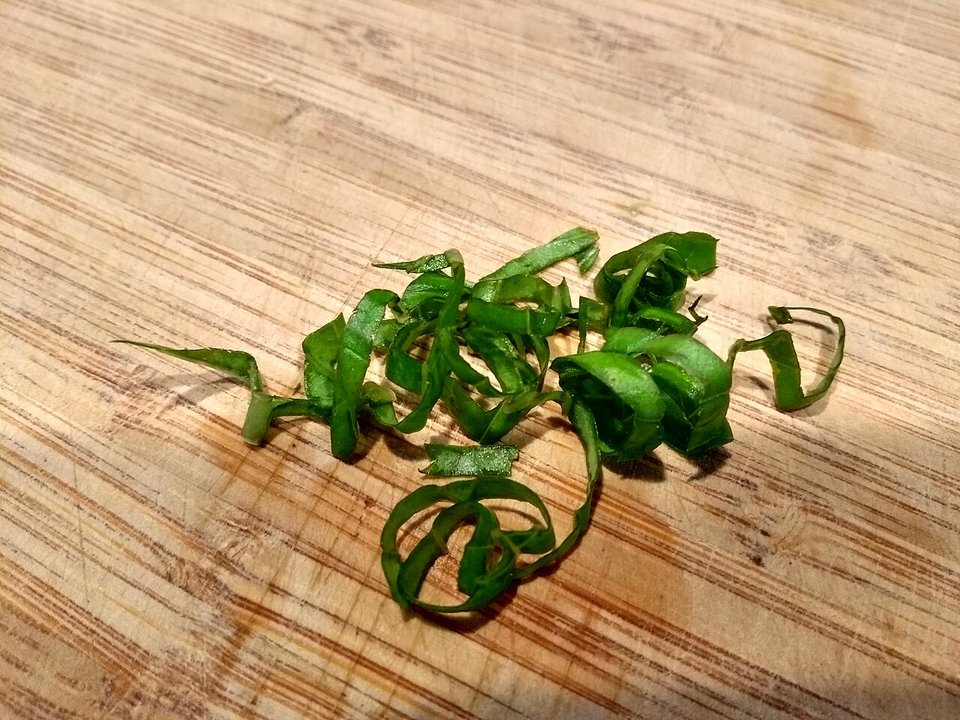
Chiffonade
Chiffonade is a ribbon cut for leaves, not roots — it does not apply to a carrot, which is why this slide shows basil rather than carrot. No standard ribbon width is documented in the culinary references checked for this deck, so none is given.
The same reasoning still holds: a rolled and sliced leaf exposes far more cut edge per gram than a whole one, and wilts faster for it.
Not refrigerated
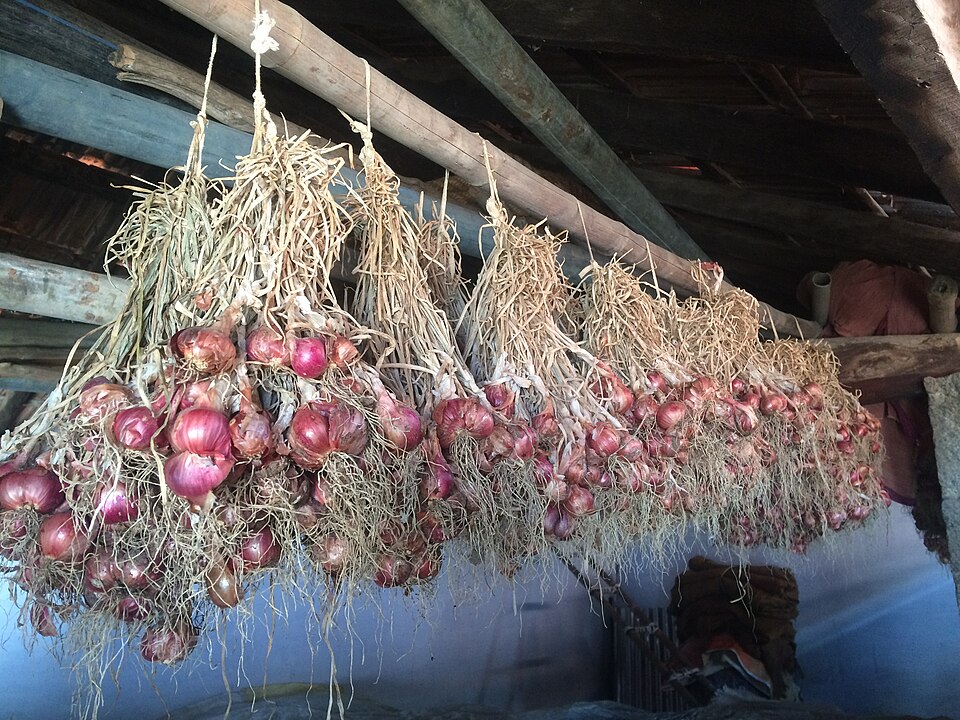
Potatoes, sweet potatoes, whole winter squash and dry onions keep best somewhere cool and dark.
- cold temperatures convert starch to sugar in a potato
- refrigeration shortens rather than extends its useful life
Refrigerated
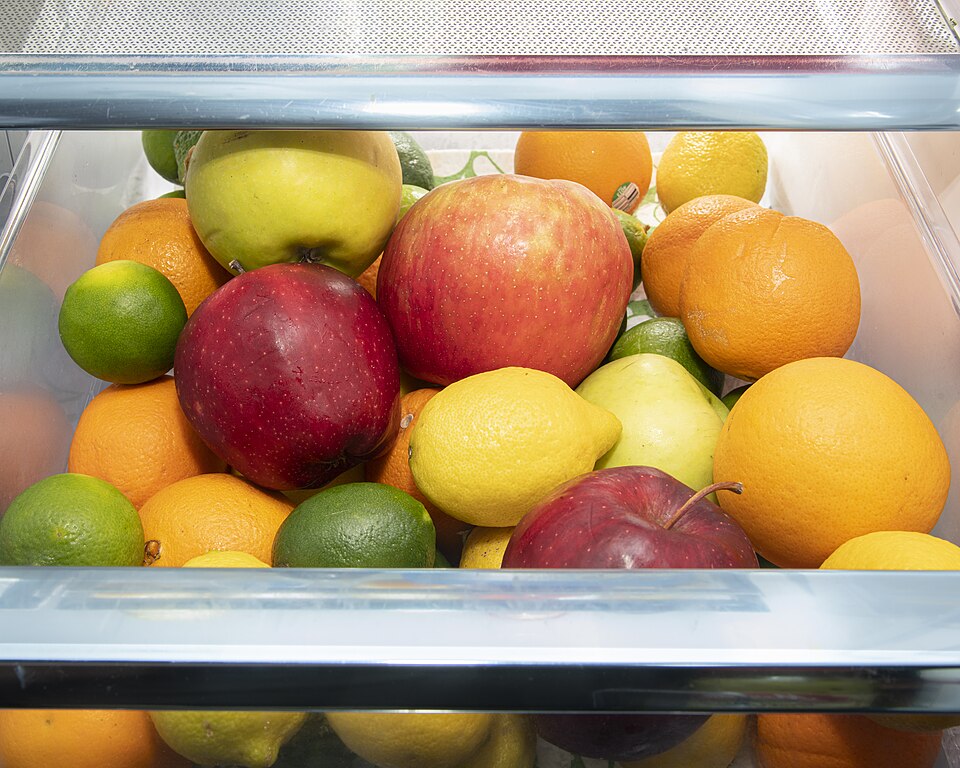
Leafy greens, most brassicas, carrots and herbs go into the refrigerator, ideally in the crisper drawer.
- FDA: refrigerator at or below 4 °C (40 °F)
- FDA: freezer at or below −18 °C (0 °F)
- checked with an appliance thermometer, not assumed from the dial setting
Humidity setting
- high humidity (vent closed) — slows moisture loss, suits leafy greens
- low humidity (vent open) — lets moisture and ethylene escape, suits produce that would soften faster sealed and damp
University of Arkansas Cooperative Extension: leafy greens, broccoli and asparagus belong in the high-humidity drawer.
What ethylene does
Ethylene is a plant hormone that accelerates ripening — and, past a point, decay — in whatever produce sits near it.
Producers versus sensitive
USDA Agricultural Marketing Service technical report on ethylene:
| Role | Produce |
|---|---|
| High producers | apples, bananas, avocados, pears, stone fruit, tomatoes |
| Sensitive | leafy greens, broccoli, carrots, cucumbers |
Why the separation matters
Separating the two groups — different drawers, or at minimum not sealed together in the same bag — is the single highest-value habit this week teaches.
Week 9 returns to this same chemistry from the fruit side of the exchange.
Three checks before anything goes in a bag
- firmness — already soft is already declining
- colour — discoloured at cut edges is already declining
- smell — faintly fermented is already declining
Storage can only slow a decline that has already started; it cannot reverse it.
Colour at the cut face
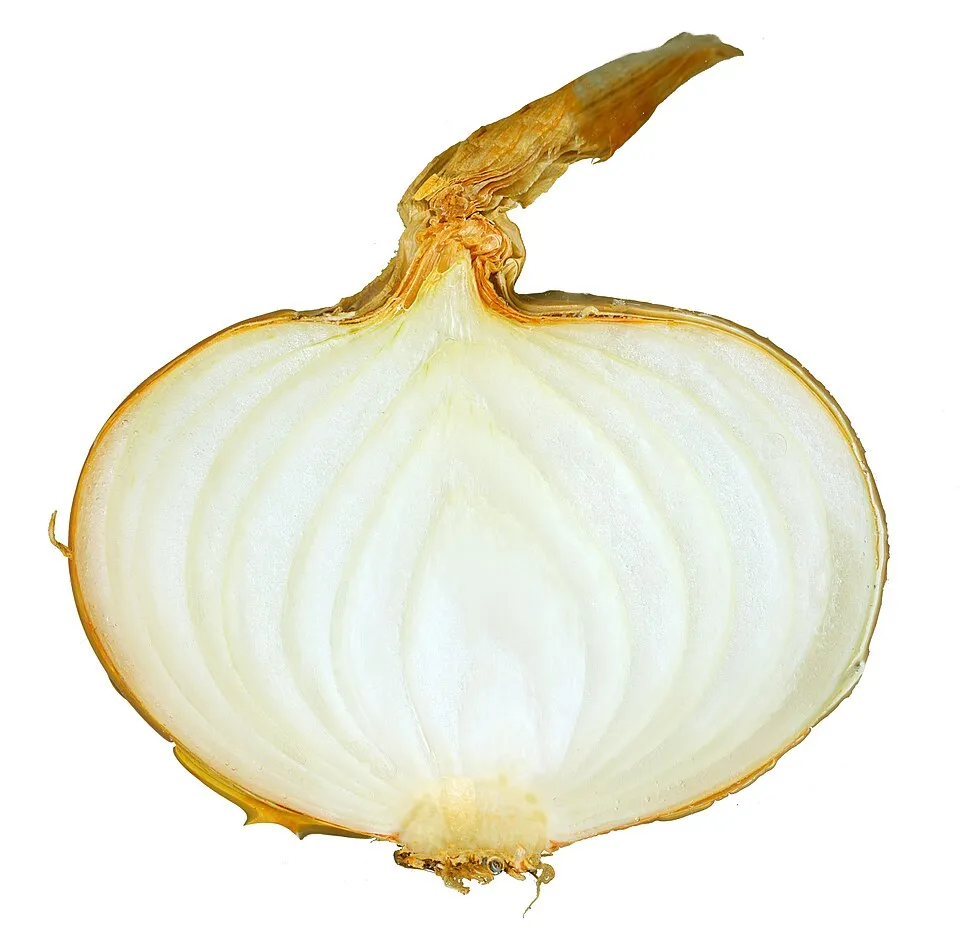
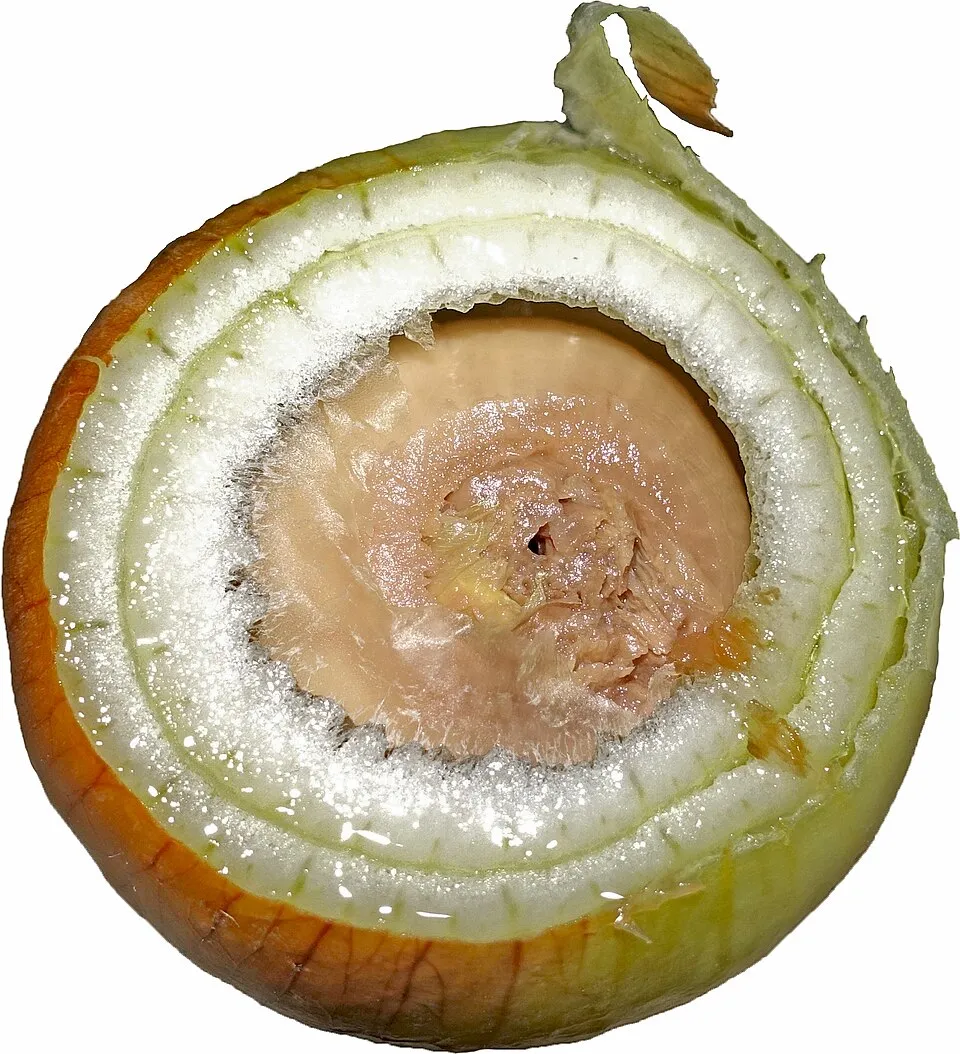
The colour check named on the previous slide is exactly this: onion is this week’s example, but the same cut-face comparison applies to any vegetable bought whole.
Roots, tubers and alliums, per 100 g
Figures are for the raw, edible portion, from USDA FoodData Central — the same database the invent-a-recipe assessment names.
| Vegetable | kcal | Fat (g) | Protein (g) | Fibre (g) | FDC ID |
|---|---|---|---|---|---|
| Potato, flesh and skin, raw | 77 | 0.10 | 2.05 | 2.10 | 170026 |
| Carrot, raw | 41 | 0.24 | 0.93 | 2.80 | 170393 |
| Onion, raw | 40 | 0.10 | 1.10 | 1.70 | 170000 |
| Garlic, raw | 149 | 0.50 | 6.36 | 2.10 | 169230 |
Leafy greens and brassicas, per 100 g
Same source and convention as the previous slide.
| Vegetable | kcal | Fat (g) | Protein (g) | Fibre (g) | FDC ID |
|---|---|---|---|---|---|
| Spinach, raw | 23 | 0.39 | 2.86 | 2.20 | 168462 |
| Lettuce, cos/romaine, raw | 17 | 0.30 | 1.23 | 2.10 | 169247 |
| Broccoli, raw | 34 | 0.37 | 2.82 | 2.60 | 170379 |
| Cauliflower, raw | 25 | 0.28 | 1.92 | 2.00 | 169986 |
What the numbers say
- none of the eight is a meaningful source of fat
- calorie content tracks carbohydrate and water content, not protein or fat — garlic’s low water content is why it is the outlier at 149 kcal
- the tutorial’s macro calculator offers five of these — onion, carrot, potato, spinach and broccoli — using the same per-100 g figures shown here; garlic, lettuce and cauliflower widen this table beyond what the calculator currently selects from
Vegetables are frequently the largest component by weight in a prepared recipe, and the easiest to assume is nutritionally interchangeable. It is not.
— Marisol Quaye
Reading
- FDA — Are You Storing Food Safely?
- FDA — Selecting and Serving Produce Safely
- Auguste Escoffier School of Culinary Arts — Knife Skills: 10 Knife Cuts Every Professional Cook Should Know
- FoodSafety.gov — Cold Food Storage Chart
- University of Arkansas Cooperative Extension Service — Spoiled Rotten
- USDA AMS — Technical Report, Ethylene (Crops), 2023
- USDA FoodData Central
Session 2’s tutorial exercises the macro calculator on five of this week’s vegetables. Next: week 3 moves to animal protein, starting with poultry and fish.